

Spore-friendly habitat
Leave a small patch of surrounding grass or groundcover uncut and undisturbed during fruiting season to allow spores to settle and support future colonies when growing mealy pinkgill.

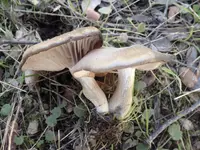
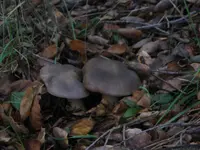
Mealy pinkgill, Entoloma prunuloides, is not a true plant but a small grassland mushroom found in unimproved meadows and pastures, mainly in Europe. It forms fruiting bodies in short turf, often in autumn, and depends on stable, low-fertilizer habitats. Caps are usually pale to pinkish with a mealy or floury surface, and the gills turn pink as the spores mature. This species is considered rare due to habitat loss and changes in grassland management, so it is not a typical choice for home cultivation. Anyone wanting to care for mealy pinkgill should understand that it is adapted to undisturbed, species-rich, moist but well-drained soils with moderate light.

Care Difficulty
Hard Care

Light Preference
Partial Shade

Water Requirements
Regular Water

Temperature Preference
Cool Climate

Hardiness Zone
Unknown

Soil Texture
Loamy, Silty, Organic-rich

Soil pH
Acidic (5.5–6.5), Slightly acidic (6.5–7.0)

Soil Drainage
Moist but well-drained

Fertilization
Minimal (feed rarely)
Scan your plant to receive care tips personalized for your specific plant
Available on iOS and Android
This grassland fungus prefers cool, moderate light typical of open meadows with scattered shade.
This species depends on consistently moist but not saturated grassland soil to support its underground mycelium.
This temperate-climate fungus fruits best in cool to mild conditions typical of undisturbed, permanent grassland.
This species is a wild, soil-dwelling fungus and not suited to controlled humidity culture like a houseplant.
In nature, Entoloma prunuloides fruits in undisturbed, semi‑natural grasslands rather than in prepared potting substrates.
This grassland fungus is not suitable for container growing and is best conserved by maintaining its natural meadow habitat.
This wild fungus grows in low-nutrient grassland and does not benefit from supplemental fertilization in cultivation.
Pruning is not applicable to Entoloma prunuloides, as it is a short-lived fruiting fungus rather than a perennial plant with persistent stems or foliage.
Transplanting this mycorrhizal fungus is rarely successful because it depends on specific soil conditions and microbial partners.
Practical propagation of this species is very difficult and not recommended for typical home growers.
Winter care is generally unnecessary, as this grassland fungus survives in the soil and fruits seasonally when conditions suit it.

Plant Health Check
Not sure what's wrong with your plant? Check your plant's health inside the app.
This species is strongly associated with old, unimproved, nutrient-poor grasslands, often in so-called waxcap grasslands that have not been ploughed or heavily fertilized.
The fruitbodies have a characteristic mealy or farinaceous odor, especially noticeable in fresh specimens, which helps distinguish it from similar pink-spored mushrooms.
It is considered rare and declining in several European countries due to loss of traditional grassland habitats, and in some regions it is included on national Red Lists as a conservation priority fungus.

Although commonly called mealy pinkgill, this fungus is not a plant but a basidiomycete mushroom, and molecular studies have helped confirm its placement within a complex genus where many similar species were historically misidentified based only on appearance.
This fungus is considered inedible and potentially poisonous. Identification within the Entoloma group is difficult, and several related species are toxic. It should never be eaten or used as food, even in small amounts.
Keep your plants happy and healthy with plant identification, disease detection, and easy care guidance.

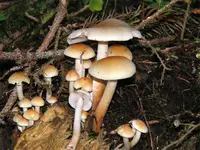
Smoky-gilled Hypholoma
Hypholoma capnoides
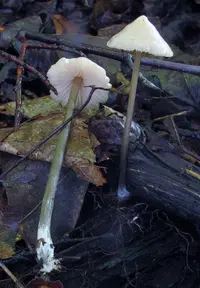
Entoloma conicum
Entoloma conicum
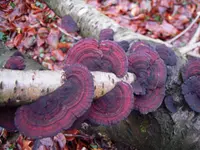
Daedaleopsis tricolor
Daedaleopsis tricolor
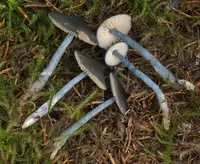
Entocybe nitida
Entocybe nitida
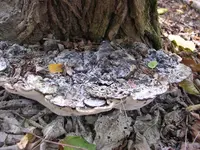
Perenniporia fraxinea
Perenniporia fraxinea
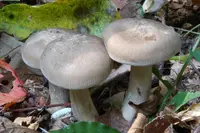
Fried Chicken Mushroom
Lyophyllum decastes
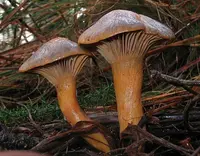
Brownish Chroogomphus
Chroogomphus rutilus
Bleachy Entoloma
Entoloma ferruginans