Perenniporia fraxinea Care

Perenniporia fraxinea

About Perenniporia fraxinea

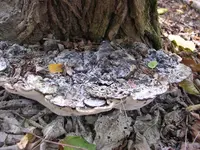
Perenniporia fraxinea is a perennial bracket fungus, not a leafy houseplant. It forms large, thick, woody shelves on the trunks and roots of living or dead broadleaf trees, especially ash. The surface is usually pale to yellowish, while the interior is tough and corky.

This species occurs widely in temperate regions, including parts of Europe, Asia, and North America, where it acts as a wood-decaying organism that causes white rot. It is not suited to ornamental indoor culture, and how to care for Perenniporia fraxinea mainly concerns managing it in arboriculture, since it can weaken host trees rather than serve as a decorative plant.

Main Plant Requirements

Care Difficulty

Moderate Care

Light Preference

Partial Shade

Water Requirements

Keep Soil Moist

Temperature Preference

Cool Climate

Hardiness Zone

Unknown

Soil Texture

Loamy, Silty, Organic-rich

Soil pH

Slightly acidic (6.5–7.0), Neutral (7.0)

Soil Drainage

Moist but well-drained

Fertilization

Minimal (feed rarely)

Get Personalized Care Plan

Scan your plant to receive care tips personalized for your specific plant

Available on iOS and Android

How to Care for the Perenniporia fraxinea

This wood-decaying fungus develops best on host trees with stable, moderate light exposure rather than intense direct sun.

  • Provide bright, indirect light or light dappled shade, such as woodland edges with 2–4 hours of soft morning sun and the rest of the day in shade or filtered light.
  • Shield Perenniporia fraxinea from harsh midday and afternoon sun, which can overheat exposed wood and dry substrates too quickly, slowing fruiting-body development.
  • In summer, increased canopy shade is acceptable, but very deep shade that prevents any indirect light can reduce spore production and slow visible growth.

This fungus relies on consistently moist but not waterlogged wood rather than direct surface watering.

  • Aim for the host tree base or dead wood to stay evenly moist; the surface should feel damp but not saturated, and standing water around roots or logs should drain within 24 hours.
  • Poor drainage and chronic waterlogging promote anaerobic conditions, leading to foul odors, insect buildup, and faster structural decay of the wood than typical for Perenniporia fraxinea.
  • Extended dry spells that crack surrounding soil or bark indicate insufficient moisture; in managed landscapes, slow, infrequent soaking of the root zone helps maintain stable substrate humidity.

This decay fungus is adapted to temperate outdoor conditions and tolerates a fairly wide temperature range across seasons.

  • Optimal activity generally occurs around 60–80°F (16–27°C), when wood moisture stays stable and fruiting bodies can expand without rapid cracking or desiccation.
  • Growth slows below about 45°F (7°C) and may pause near freezing; persistent hard frost below 25°F (-4°C) can damage exposed brackets, though internal mycelium in wood often survives.
  • In hot periods above 85°F (29°C), combined heat and dryness can cause surface shrinkage and discoloration of brackets, so shaded, humid microhabitats help moderate extremes.

Humidity is not a meaningful factor for cultivating Perenniporia fraxinea, which develops as a wood-decaying bracket fungus on outdoor trees rather than as a managed plant in controlled air conditions.

Soil preparation is not relevant, as Perenniporia fraxinea colonizes and decays woody tissue rather than growing in mineral or potting soil.

  • This fungus establishes in the heartwood and sapwood of living or dead trees, especially ash and other hardwoods, instead of in ground soil or containers.
  • Attempts to use loamy, sandy, or organic-rich soil mixes will not support its natural wood-decaying lifestyle or reproductive structures.
  • Managing tree health and avoiding trunk injuries are more practical than modifying soil pH, structure, or drainage for this species.
  • If present, arborists focus on host tree stability and safety management rather than any form of Perenniporia fraxinea plant care in soil.

This species is not suitable for container growing, as it is a wood-decay bracket fungus that develops on trees rather than as a standalone potted organism.

This wood-decaying fungus grows on established trees and does not need direct fertilization, as it obtains nutrients from host wood.

Perenniporia fraxinea is not pruned in a horticultural sense, but fruiting bodies can be removed for safety or monitoring tree health.

  • If brackets obstruct pathways or structures, cut them off flush with the trunk using a sharp pruning saw.
  • Remove damaged or crumbling fruiting bodies wearing gloves to limit spore spread and debris exposure.
  • Disposal in sealed bags is recommended so spores do not disperse around vulnerable host trees.

This species is a wood-decay fungus on living or dead trees, so it is not repotted but sometimes managed through host tree decisions.

  • Transplanting is not practical; instead, assess whether the infected tree shows decline, cracking, or fungal brackets at the base.
  • If structural stability is a concern, consult an arborist to decide on staged reduction or tree removal rather than moving the fungus.
  • When felling an infected tree, remove as much stump and major roots as feasible to reduce ongoing fungal activity.
  • Avoid wounding nearby susceptible trees during site work, as fresh injuries provide new entry points.

Intentional propagation of Perenniporia fraxinea is rarely appropriate, since it is a serious wood-decay pathogen of urban and forest trees.

This fungus is naturally cold hardy and typically requires no intentional winter care or protection.

Care Tips

Host tree monitoring

Inspect host trees at least 1–2 times per year for crown dieback, bark cracks, and fruiting body expansion, and document changes with dated photos to track how quickly the decay associated with caring for Perenniporia fraxinea is progressing.

Targeted crown reduction

Where local regulations allow, work with a certified arborist to carry out light, well-planned crown reduction to decrease wind sail and mechanical load on trees colonized by this fungus, reducing the risk of stem or root plate failure.

Root zone protection

Keep heavy vehicles, frequent foot traffic, and construction activities out of the critical root zone under and just beyond the canopy drip line to avoid extra stress on already weakened roots.

Moisture management belt

Maintain an even, moderate soil moisture regime around the base of the host by using a wide organic mulch ring and avoiding both chronic saturation and severe drying, which can accelerate structural decline.

Risk-based retention

For valuable but infected landscape trees, combine periodic decay detection methods such as sounding with a mallet or, if available, resistance drilling with formal risk assessments to decide whether to retain, reduce, or remove the tree before failure occurs.

Common Pests and Diseases

White rot decay

This disease causes a progressive white, stringy decay of heartwood in ash and other hardwood hosts, leading to structural weakness and crown dieback above infected zones.

Solution

This disease cannot be cured; management focuses on safety. Arrange for a qualified arborist to assess trunk stability, reduce weight in the crown, and remove or prune hazardous limbs or the entire tree if structural failure is likely.

Butt and root decay

This disease starts at the tree base and main roots, hollowing lower trunk tissues and compromising anchorage while the crown may still look relatively healthy.

Solution

This condition is also not reversible; have an arborist perform a detailed inspection, including sounding or drilling tests if needed, then implement risk‑reduction pruning, cabling, or full removal in high‑risk locations such as paths, roads, or buildings.

Secondary bark cankers

These diseases occur when other fungi colonize stressed trees already weakened by this heart-rot fungus, producing sunken bark areas, cracking, and localized dieback.

Solution

Management relies on reducing overall tree stress, promptly pruning out dead or cankered branches back to healthy tissue, and improving site conditions such as soil compaction and irrigation; severely affected or hazardous trees should be removed based on professional assessment.

Wood‑boring beetles

These insects are attracted to declining or dead wood around the fungal brackets and create galleries that further weaken already compromised stems or branches.

Solution

This pest is usually managed by removing and properly disposing of heavily infested deadwood and by reducing tree stress so living tissues are less attractive; avoid storing cut, infected logs nearby, and keep the tree under regular professional monitoring as part of broader Perenniporia fraxinea care instructions.

Interesting Facts

Ash and beech specialist

This wood-decay fungus most frequently colonizes ash (Fraxinus) and beech (Fagus) trees, showing a strong preference for these hardwood hosts in parks, streets, and forests across Europe and parts of Asia and North America.

Brown-rot strategist

It causes a brown rot, selectively breaking down cellulose and hemicellulose while leaving modified lignin, which leads to a characteristic cubical cracking and brittle, brown wood in affected trunks and roots.

Hidden root pathogen

In urban trees it often begins decay in the root butt and lower stem, so fruiting bodies appearing at the base of a trunk can signal advanced internal structural damage long before obvious external symptoms develop.

Botan icon

Did you know?

Genetic and morphological studies have shown that this species represents a distinct lineage within the Polyporales, and it was moved from the broad Trametes concept into the genus Perenniporia as fungal systematists refined groups based on detailed microscopic features and DNA data.

FAQs about Perenniporia fraxinea

This wood-decaying fungus does not spread aggressively in the sense of garden invasives. It colonizes weakened or stressed trees through spores, usually on ash and other broadleaf trees, but does not typically overrun healthy landscapes.

Grow Healthy Plants with Botan Care

Keep your plants happy and healthy with plant identification, disease detection, and easy care guidance.

Botan plant care app — identify plants on mobile

Explore More Plants