Use native leaf litter
Collect unsprayed, partially decomposed leaf litter from the same or similar woodland habitat and mix a thin layer into the top of the substrate to introduce compatible fungi, microbes, and structure that this species prefers.

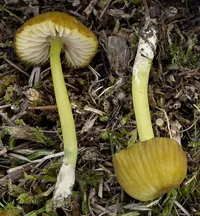
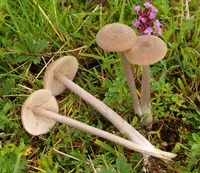
Mouse-pee pinkgill, Entoloma incanum, is a small, grassland mushroom rather than a leafy houseplant. It produces slim, yellowish-green caps with pale, angular spores and a distinctive, sharp odor that inspires its common name.
This fungus typically appears in short turf, meadows, and pastures across parts of Europe and some temperate regions, often in unimproved or low-fertilizer grassland. It is not a beginner-friendly species to cultivate, since many grassland fungi are difficult to establish and maintain outside their natural soil and microbe communities.
Those attempting to care for Mouse-pee Pinkgill need stable, undisturbed turf, low nutrient soils, and consistent but not waterlogged moisture, conditions that are hard to reproduce in typical garden or indoor settings.

Care Difficulty
Hard Care

Light Preference
Partial Shade

Water Requirements
Keep Soil Moist

Temperature Preference
Cool Climate

Hardiness Zone
Unknown

Soil Texture
Loamy, Silty, Organic-rich

Soil pH
Acidic (5.5–6.5)

Soil Drainage
Moist but well-drained

Fertilization
Minimal (feed rarely)
Scan your plant to receive care tips personalized for your specific plant
Available on iOS and Android
This woodland mushroom favors low to moderate light similar to a shaded forest floor.
This species requires consistently moist, but not waterlogged, soil to support its fungal network.
This fungus performs best in cool to mild conditions typical of shaded woodland or grass-edge habitats.
This woodland fungus prefers consistently moist air typical of damp leaf litter rather than dry, heated indoor conditions.
This species develops in undisturbed, moist, organic forest soil rather than in typical garden or potting mixes.
This fungus is generally unsuitable for container growing because it relies on complex interactions with soil and surrounding vegetation.
This woodland fungus relies on natural soil nutrients and normally should not be fertilized when caring for Mouse-pee Pinkgill.
Pruning is not part of normal care for Entoloma incanum, as it is a wild, non-ornamental fungus with no structural framework to shape.
This fungus is not suited to typical repotting or transplanting, since it depends on specific soil conditions and microbial partners.
Propagation of Entoloma incanum in home or garden settings is highly specialized and rarely successful.
This species overwinters naturally in the soil and typically needs no special winter care in regions where it is native.

Plant Health Check
Not sure what's wrong with your plant? Check your plant's health inside the app.
Fresh fruiting bodies release a strong, sharp smell often compared to mouse urine, which is the source of the common name mouse-pee pinkgill.
The cap is typically bright greenish-yellow with a slightly translucent, greasy look when moist, a color combination that is unusual among gilled mushrooms in temperate grasslands.
This species is most often found in short, unimproved, nutrient-poor grasslands on calcareous or otherwise base-rich soils, making it an indicator of old, relatively undisturbed pasture habitats.

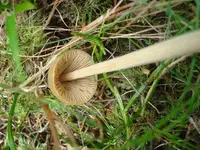
Entoloma incanum produces pinkish spores that give its gills a characteristic pink tone as the mushroom matures, placing it within the pinkgill group that mycologists use to help separate it from superficially similar green or yellow grassland fungi.
This mushroom is considered poisonous and must not be eaten. It contains toxic compounds that can cause gastrointestinal upset and other symptoms. Identification errors are common, so foraging or tasting is strongly discouraged, even in small amounts.
Keep your plants happy and healthy with plant identification, disease detection, and easy care guidance.