Midnight Entoloma Care (Entoloma medianox)

Midnight Entoloma

About Midnight Entoloma

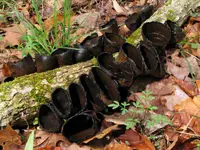
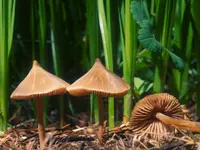
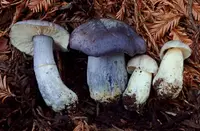
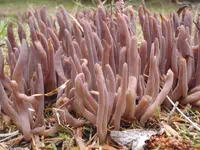
Midnight Entoloma (Entoloma medianox) is a dark-colored, small to medium mushroom, not a leafy houseplant. It forms smooth, conical to bell-shaped caps with gray to blackish tones and pale gills that turn pink as the spores mature. Stems are slender and often slightly curved, giving it a delicate look in leaf litter.

This species is associated with forest habitats, typically in temperate regions, where it grows on the ground among decaying organic matter. It is not a beginner-friendly organism to cultivate, as many Entoloma species have specific soil fungi and tree relationships that are hard to reproduce. Most growers focus on identification rather than trying to care for Midnight Entoloma at home.

Main Plant Requirements

Care Difficulty

Hard Care

Light Preference

Partial Shade

Water Requirements

Keep Soil Moist

Temperature Preference

Cool Climate

Hardiness Zone

Unknown

Soil Texture

Loamy, Organic-rich

Soil pH

Acidic (5.5–6.5)

Soil Drainage

Moist but well-drained

Fertilization

Minimal (feed rarely)

Get Personalized Care Plan

Scan your plant to receive care tips personalized for your specific plant

Available on iOS and Android

How to Care for the Midnight Entoloma

This fungus prefers low to moderate light similar to a shaded forest floor.

  • Provide bright shade or dappled light with 1–3 hours of weak morning sun, avoiding harsh midday exposure that can dry the substrate too quickly.
  • Allow partial shade to near-full shade under shrubs, trees, or taller plants; consistent indirect light supports healthy mycelium development.
  • In summer, shield Midnight Entoloma from direct afternoon sun, while in winter slightly brighter indirect light helps compensate for short days.

Moist but not waterlogged conditions are essential for this woodland fungus.

  • Maintain evenly moist substrate, letting only the top 1–2 cm surface start to lose sheen before rewetting, rather than following a fixed schedule.
  • Use a loose, well-drained organic mix so excess water drains away within a few minutes, preventing standing water around the developing mycelium.
  • Reduce watering volume in cooler seasons while never allowing the substrate to fully dry; signs of overwatering include sour odor and slimy patches, while dryness shows as pale, brittle surface material.

This species favors cool to mild conditions similar to a temperate forest floor.

  • Aim for 55–68°F (13–20°C) for steady development, as sustained warmth above this slows growth and can dry the substrate too fast.
  • Tolerate short dips to about 41°F (5°C), but protect from hard frost below 32°F (0°C), which can damage or kill exposed fruiting bodies.
  • In hot spells above 77°F (25°C), move cultivation to the shadiest, coolest outdoor spot available and increase humidity to offset heat stress.

This species is highly humidity-dependent and will fail in dry indoor air.

  • Maintain 80–95% humidity, mimicking constantly damp forest or terrarium conditions.
  • Dry air leads to shriveling caps, pale or cracked surfaces, and stalled fruiting of Midnight Entoloma.
  • Increase humidity with closed terraria, near-saturated substrates, and fine misting that keeps surfaces moist but not waterlogged.

Entoloma medianox requires a moist, loose, organically enriched substrate rather than standard potting soil.

  • Use a fine-textured mix of leaf litter, well-rotted wood fragments, and composted bark to imitate forest-floor humus.
  • Ensure moderate drainage so the substrate stays evenly moist but never forms standing water, which encourages anaerobic rot.
  • Aim for slightly acidic to neutral conditions, around pH 5.5–7.0, using leaf mold or pine-based compost to adjust pH.
  • Improve aeration by mixing in 10–20% coarse sand or fine perlite so mycelium can spread through small air-filled pores.

This species is poorly suited to decorative container growing and is best kept in discreet culture tubs or trays if attempted at all.

  • Choose wide, shallow, opaque plastic tubs that hold a broad layer of substrate while slowing edge drying.
  • Drill numerous small side and base holes so excess water drains while still allowing a consistently humid microclimate inside.
  • Raise the container on spacers above a catch tray so runoff can escape quickly without reabsorbing into the substrate.

Entoloma medianox is typically a woodland fungus that does not need routine fertilizing in natural or garden settings.

Entoloma medianox does not require pruning because it is a fungus, not a woody or leafy plant.

Transplanting Midnight Entoloma focuses on preserving its mycelium, the underground fungal network, rather than moving individual fruiting bodies.

  • Only consider transplanting when a colony is threatened by site disturbance or construction, not for routine care.
  • Move chunks of colonized substrate (soil, decaying wood, leaf litter) rather than bare fungal tissue.
  • Transplant during the natural growing season, keeping the substrate evenly moist and shaded to limit mycelium stress.
  • Minimize disturbance by lifting and setting the substrate gently into a similar, undisturbed woodland-type environment.

Propagation of Entoloma medianox is specialized and rarely attempted by home growers.

Entoloma medianox typically persists as mycelium in soil or woody debris and needs no special winter care in its suitable climate.

Care Tips

Substrate rotation

Rotate or replace the fruiting substrate after 2–3 flushes to avoid nutrient exhaustion and buildup of competing molds, using fresh, well-pasteurized material for each new cycle.

Clean handling tools

Disinfect knives, humidity domes, trays, and any tools with 70% isopropyl alcohol or a 1:10 bleach solution before each use to reduce contamination risks when caring for Midnight Entoloma.

Targeted airflow control

Use a small, indirect fan on a low setting to keep air gently moving across, but not directly blasting, the fruiting zone so caps dry just enough to resist bacterial blotch while gills remain moist.

Light-level verification

Check light levels at substrate surface with a simple lux meter app or device, keeping them low and diffuse, and add a thin shade cloth or reposition lights if readings are high enough to dry caps too quickly.

Harvest timing strategy

Harvest mushrooms when caps are fully colored but before gills shed large amounts of spores, which helps preserve substrate energy for subsequent flushes and keeps the growing area cleaner and easier to monitor.

Common Pests and Diseases

Larval mycophagous flies

These insects lay eggs in the mushroom tissue; hatching larvae tunnel through caps and stems, causing collapse and rapid decay. Symptoms include soft, water-soaked spots, winding tunnels, and small exit holes in the fruiting body.

Solution

Remove and discard affected mushrooms as soon as tunneling is seen to prevent further egg laying and larval spread. Cover developing clusters with fine mesh and avoid leaving overripe mushrooms in place, since decaying fruiting bodies attract additional adult flies.

Slug and snail grazing

These pests feed on the surface of caps and stems, leaving irregular holes, shredded edges, and silvery slime trails. Damage can deform young fruiting bodies and expose tissue to secondary decay organisms.

Solution

Hand-pick slugs and snails at dusk or after rain and remove nearby hiding spots such as dense debris and boards. Use physical barriers like copper tape, rough grit rings, or well-placed shallow beer traps, keeping baits and barriers away from children, pets, and non-target wildlife.

Fungal parasitism (mycoparasites)

This disease occurs when other fungi colonize or overgrow Entoloma medianox fruiting bodies, leading to discolored patches, fuzzy or powdery overgrowth, and premature collapse. Symptoms include distorted caps, unusual surface textures, and rapid loss of structure even in otherwise suitable conditions.

Solution

Remove and dispose of distorted or overgrown mushrooms immediately to reduce spore buildup around the site. Improve air movement at ground level by thinning low vegetation and avoid excess surface moisture, which together help limit conditions that favor mycoparasitic fungi when caring for Midnight Entoloma.

Bacterial blotch and soft rot

This disease causes greasy, water-soaked spots that turn brown and mushy, often starting where prolonged surface moisture remains. Symptoms include foul odor and rapid breakdown of cap and stem tissue.

Solution

Harvest and discard affected mushrooms promptly and avoid overhead watering or any practice that keeps caps wet for long periods. Maintain good site drainage and encourage gentle air movement near the ground so surfaces dry quickly after rain or irrigation, which limits bacterial spread.

Interesting Facts

Recently described species

Entoloma medianox was only formally described in 2021 from material collected in Spain, so its full distribution, ecology, and variability are still being studied by mycologists.

Darkly pigmented gills

The species is notable for its unusually dark, almost blackish gills at maturity, which contrast strongly with the paler cap and are a key macroscopic feature used to separate it from similar Entoloma species.

Mediterranean oak associate

It has been documented fruiting in Mediterranean-type habitats, especially in association with Quercus (oak) species, indicating a likely ectomycorrhizal relationship where the fungus exchanges mineral nutrients for plant sugars.

FAQs about Midnight Entoloma

This species is not recommended for consumption. Many Entoloma fungi contain harmful toxins, and accurate identification is difficult even for specialists. Treat it as inedible and focus on observation rather than foraging or culinary use.

Grow Healthy Plants with Botan Care

Keep your plants happy and healthy with plant identification, disease detection, and easy care guidance.

Botan plant care app — identify plants on mobile

Explore More Plants