Host Tree Selection
Establish the fungus near known host trees such as apple, pear, or hawthorn, since this species often fruits in association with their root zones in long-established orchards and hedgerows.

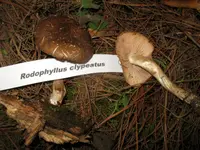
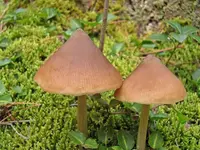
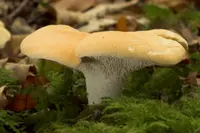
Shield pinkgill, Entoloma clypeatum, is a spring-fruiting mushroom rather than a leafy plant. It typically forms sturdy, pale to grayish caps with pinkish gills and a central stalk.
This fungus grows on soil in gardens, orchards, and hedgerows, often near rosaceous shrubs and trees such as hawthorn or fruit trees. It has a firm texture and a distinctive shield-like cap shape that helps with field identification.
Entoloma species can be difficult to distinguish, and some close relatives are poisonous, which makes this species challenging and risky to collect. For those studying how to care for Shield Pinkgill in cultivation, it is important to understand its mycorrhizal relationships and preference for undisturbed, humus-rich soil.

Care Difficulty
Hard Care

Light Preference
Partial Shade

Water Requirements
Keep Soil Moist

Temperature Preference
Cool Climate

Hardiness Zone
Unknown

Soil Texture
Loamy, Organic-rich

Soil pH
Slightly acidic (6.5–7.0)

Soil Drainage
Moist but well-drained

Fertilization
Minimal (feed rarely)
Scan your plant to receive care tips personalized for your specific plant
Available on iOS and Android
This mycorrhizal mushroom prefers light patterns typical of open woodlands and orchard edges rather than full exposed sun.
This fungus depends on consistently moist, not saturated, soil and litter around its host trees or shrubs.
This spring-fruiting woodland fungus prefers cool to mild temperatures typical of temperate climates.
This fungus is not suited to typical home humidity and requires persistently moist, outdoor conditions to fruit.
Entoloma clypeatum grows in soil rich in organic debris rather than in conventional potting substrates.
This species is generally unsuitable for container growing and is best cultivated in the ground under host trees or shrubs.
Entoloma clypeatum is a wild mycorrhizal mushroom that normally does not need fertilization when growing in natural soil with suitable host trees.
Pruning is not applicable to Entoloma clypeatum, because it is a short-lived mushroom fruiting body rather than a woody or leafy plant.
Transplanting this fungus is rarely successful, as it depends on a stable soil ecosystem and specific tree partners rather than container culture.
Propagation of Entoloma clypeatum is difficult, since it relies on complex mycorrhizal relationships with host trees and specific soil biology.
No special winter care is needed for this cold-hardy woodland fungus, as the main organism lives as mycelium in the soil year-round.

Plant Health Check
Not sure what's wrong with your plant? Check your plant's health inside the app.
This species typically fruits in late spring to early summer, often in old orchards, hedgerows, and gardens where it forms mycorrhizal-like associations with Rosaceae shrubs and trees such as hawthorn, pear, and apple.
Its gills start whitish but become distinctly pink as the spores mature, a feature that helps distinguish it from some poisonous lookalikes that retain pale or bluish gills.
Although considered edible in parts of Europe, it closely resembles several toxic Entoloma species, which has led many modern field guides to recommend that only highly experienced mycologists collect it for consumption.

Historical records from central and northern Europe describe this mushroom as a traditional spring food collected from village orchards, which is why it is still widely known by vernacular names referring to orchards and May-time fruiting in several European languages.
This mushroom is considered edible by some sources but is risky to use, as it can be confused with highly toxic pinkgill species. For safety, it should not be foraged or eaten unless identified by an expert mycologist.
Keep your plants happy and healthy with plant identification, disease detection, and easy care guidance.