Little Cone Bell Care (Entoloma holoconiotum)

Little Cone Bell

About Little Cone Bell

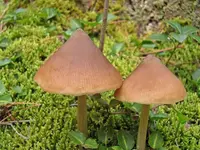
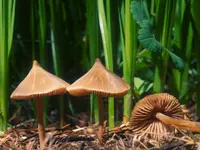
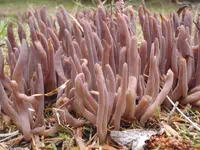
Little cone bell, Entoloma holoconiotum, is a small saprotrophic fungus rather than a typical houseplant. It forms delicate, conical caps with pale to grayish-brown tones on thin stems. The fruiting bodies usually appear on soil rich in leaf litter, often in forested or woodland habitats.

This species relies on specific natural substrates and humidity levels, which makes it challenging to cultivate in home conditions. Gardeners who wish to learn how to care for Little Cone Bell should understand that it behaves more like a wild mushroom than an ornamental plant.

It generally prefers cool, shaded sites with consistently moist, organic-rich soil and undisturbed conditions that mimic its native woodland environment.

Main Plant Requirements

Care Difficulty

Hard Care

Light Preference

Partial Shade

Water Requirements

Keep Soil Moist

Temperature Preference

Cool Climate

Hardiness Zone

Unknown

Soil Texture

Loamy, Organic-rich, Peaty

Soil pH

Acidic (5.5–6.5), Slightly acidic (6.5–7.0)

Soil Drainage

Moist but well-drained

Fertilization

Minimal (feed rarely)

Get Personalized Care Plan

Scan your plant to receive care tips personalized for your specific plant

Available on iOS and Android

How to Care for the Little Cone Bell

This woodland fungus prefers cool, shaded conditions that mimic a moist forest floor.

  • Provide dappled or filtered light under shrubs or trees, avoiding direct midday sun; brief early morning sun is acceptable in cooler regions.
  • Aim for shade providing the equivalent of less than 2 hours of weak direct sun or 6–8 hours of bright, open shade each day.
  • Protect Little Cone Bell from strong summer sun, which dries the substrate and suppresses fruiting; in winter, light levels matter less than consistent moisture.

This fungus depends on consistently moist, but not waterlogged, soil to form fruiting bodies.

  • Maintain evenly moist leaf litter or topsoil, letting only the top 1–2 cm start to dry before re-wetting in dry weather.
  • Use loose, well-drained soil rich in organic matter so water drains within a few minutes but the surface stays slightly damp to the touch.
  • Reduce supplemental watering during cool, wet seasons and increase during hot, windy spells; pale, shriveling caps suggest drought, while slimy, rotting bases indicate excess moisture.

This species favors cool to mild conditions typical of temperate woodlands.

  • Optimal fruiting usually occurs around 50–65°F (10–18°C), with vegetative growth possible from roughly 45–70°F (7–21°C).
  • Short drops to about 32°F (0°C) may be tolerated in the soil, but hard frost above the surface can damage or prevent fruiting bodies.
  • Sustained heat above 77–82°F (25–28°C) dries the substrate and suppresses Entoloma holoconiotum; in hot regions, rely on deep shade and thick organic mulch to buffer temperature swings.

Humidity is not a practical care factor, as this is a wild woodland fungus that is not realistically maintained in typical home culture.

This woodland mushroom relies on natural forest soil conditions rather than prepared potting mixes.

  • Fruiting typically appears in loose, well-aerated leaf litter over mineral soil, often in mixed or coniferous woodland.
  • Substrate stays evenly moist but not waterlogged, as prolonged saturation reduces oxygen and suppresses fungal activity.
  • Slightly acidic to neutral conditions around pH 5.5–7 favor most associated forest communities for Entoloma holoconiotum.
  • Avoid compacted, heavily tilled, or chemically treated soils, which disrupt the fine fungal hyphae that develop with tree roots.

This species is not suitable for container growing and is best regarded as a wild, habitat-dependent woodland fungus rather than a cultivated container organism.

This wild woodland fungus does not require fertilization and usually performs best in undisturbed, nutrient-balanced soil.

Entoloma holoconiotum does not need pruning in the horticultural sense, but fruiting bodies can be tidied if necessary.

  • Remove only obviously decayed or insect-riddled mushrooms using clean scissors or a knife at the base.
  • Avoid disturbing leaf litter and underlying mycelium, which is the living fungal network in the soil.
  • Do not cut healthy caps just for appearance, as this can reduce spore release and population stability.

This species is not suited to container culture, so management focuses on minimal disturbance rather than active transplanting.

  • Avoid moving soil or leaf litter where the fungus is established, as its mycelium is sensitive to disruption.
  • If habitat must be altered, shift small intact soil blocks rather than bare fragments to reduce mycelial stress.
  • Time any unavoidable ground disturbance for late fall after fruiting, when the active mushroom bodies have declined.
  • After disturbance, keep the site evenly moist and shaded to support recovery of the underground network.

Cultivating or multiplying this wild gilled fungus is technically complex and not practical for typical home growers.

This woodland fungus is naturally cold hardy in its native range and does not need targeted winter care in gardens or landscapes.

Care Tips

Substrate pre-conditioning

Before inoculation, moisten and pasteurize leaf litter or wood-rich forest duff at 60–70°C for 30–60 minutes to reduce competitor fungi while keeping a diverse microbial background that this species tolerates well.

Edge-dominant inoculation

When establishing a colony, place colonized substrate in several small patches around the edges of a shaded bed rather than one large central mass, which encourages faster lateral spread and more fruiting points.

Canopy moisture management

Install a low, open shade structure or use tall companion plants to create a stable, filtered canopy that slows evaporation and drip-irrigation splash, helping fruiting bodies develop without cracking or bacterial spotting.

Disturbance-free fruiting zone

Once mycelium is established, avoid raking, digging, or compacting the top 3–5 cm of the bed so that primordia (young mushrooms) are not mechanically damaged and can complete their development.

Seasonal debris layering

Each autumn, top-dress the colony area with a thin 1–2 cm layer of clean, partially decomposed hardwood leaves rather than fresh mulch, which gradually renews the habitat and supports long-term stability when growing Little Cone Bell.

Common Pests and Diseases

Fungal mycophagy

This pest pressure comes from small fungus-feeding insects such as springtails and fungus gnats that consume developing fruiting bodies. Symptoms include surface pitting, small chew marks, and rapid collapse of caps, especially in humid, organic-rich substrates.

Solution

Reduce excess organic debris and overly wet conditions that attract fungus-feeding insects, and use fine mesh or physical covers over known Entoloma holoconiotum fruiting sites during peak emergence. Where damage is persistent, apply targeted biological controls such as Bacillus thuringiensis israelensis (Bti) in the substrate to lower fungus gnat larvae populations without harming surrounding plants.

Slug and snail grazing

These animals are often attracted to the moist, tender tissue of the caps and stems and may rapidly consume whole fruiting bodies. Symptoms include irregular holes, slime trails, and missing mushrooms overnight.

Solution

Hand-remove slugs and snails at dusk or dawn and use physical barriers such as copper tape or coarse grit around key fruiting areas. In high-pressure sites, place simple pitfall traps or iron phosphate slug baits nearby to reduce grazing while avoiding direct contamination of the mushrooms.

Interesting Facts

Pink-spored gill fungus

This species produces pink to salmon-colored spores, a key diagnostic feature within the genus Entoloma, and its gills often show this pink tint as the spores mature.

Distinct conical cap

The fruiting body typically has a small, sharply conical to bell-shaped cap with a somewhat fibrous or finely scaly surface, helping distinguish it from more common, smooth-capped Entoloma species.

Specialized woodland habitat

Entoloma holoconiotum is usually recorded from temperate woodland or forest sites on soil rich in leaf litter, indicating a preference for undisturbed, humus-rich microhabitats.

FAQs about Little Cone Bell

This fungus is not considered edible and may be harmful if consumed. Many Entoloma species contain gastrointestinal toxins, and identification is difficult. Avoid eating it and discourage children or pets from handling unknown mushrooms.

Grow Healthy Plants with Botan Care

Keep your plants happy and healthy with plant identification, disease detection, and easy care guidance.

Botan plant care app — identify plants on mobile

Explore More Plants