

Use trusted substrate
Prepare a low-nutrient, well-drained substrate using a mix of leaf litter, fine bark, and sandy mineral soil sourced from healthy, pesticide-free woodland rather than commercial potting mix.

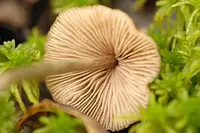
Star pinkgill (Entoloma conferendum) is a small, delicate mushroom rather than a leafy plant. It typically shows a pale pink to brown cap with pinkish gills and a slender, fragile stem. This fungus appears in grasslands, lawns, and open woodland edges across parts of Europe and North America. It often fruits in groups during damp, cool periods. As a wild mushroom, it is not suited to typical home cultivation and is considered difficult to grow with any reliability. It usually needs undisturbed soil, steady moisture, and natural grassland conditions, so attempts to care for star pinkgill indoors or in pots are rarely successful.

Care Difficulty
Moderate Care

Light Preference
Partial Shade

Water Requirements
Regular Water

Temperature Preference
Cool Climate

Hardiness Zone
Unknown

Soil Texture
Loamy, Silty, Organic-rich

Soil pH
Acidic (5.5–6.5)

Soil Drainage
Moist but well-drained

Fertilization
Minimal (feed rarely)
Scan your plant to receive care tips personalized for your specific plant
Available on iOS and Android
This woodland fungus prefers cool, shaded conditions with only brief indirect sunlight exposure.
This mushroom relies on consistently moist, but not waterlogged, woodland soil to form fruiting bodies.
This species fruits best in cool to mild conditions typical of temperate woodlands.
This fungus needs consistently moist, cool air rather than typical indoor humidity control.
This woodland fungus relies on naturally structured, undisturbed soil rather than a constructed potting mix.
This species is not suitable for container growing, as it depends on complex soil and ecological relationships in the ground.
Entoloma conferendum is a wild saprophytic fungus that obtains nutrients from decaying organic matter and generally does not need added fertilizer in cultivation.
Entoloma conferendum does not develop woody stems or long-lived foliage, so no structured pruning is needed.
When grown experimentally in containers or controlled beds, this fungus needs only minimal disturbance rather than routine repotting or transplanting.
Cultivation of Entoloma conferendum is specialized and not commonly attempted by home growers, so practical propagation methods are limited.
In climates where it is native, star pinkgill usually overwinters in soil and leaf litter without special care.

Plant Health Check
Not sure what's wrong with your plant? Check your plant's health inside the app.
This species is most often found in nutrient-poor grasslands, lawns, and pastures, where it fruits among short grasses and mosses, indicating relatively unimproved, low-fertilizer soils.
Its spores are angular and pink in spore print, a diagnostic feature used by mycologists to separate it from many similar small brown mushrooms with white, cream, or brown spore prints.
The species name conferendum refers to it being one of the more commonly encountered small Entoloma species in suitable grassland habitats across Europe and parts of North America.
This mushroom is considered inedible and is not recommended for consumption. Several Entoloma species contain harmful toxins that can cause gastrointestinal upset. For safety, treat it as poisonous and avoid tasting or using it as food.
Keep your plants happy and healthy with plant identification, disease detection, and easy care guidance.

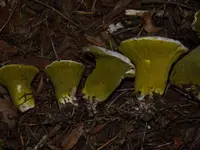
Yellow-green Russula Mold
Hypomyces luteovirens
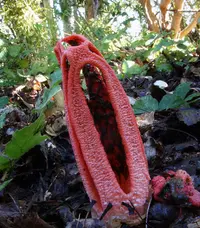
column stinkhorn
Clathrus columnatus
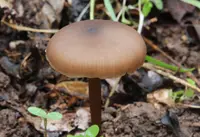
pimple pinkgill
Entoloma hebes
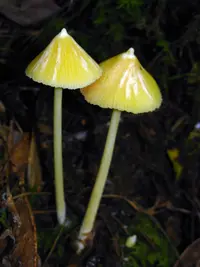
Yellow Unicorn Entoloma
Entoloma murrayi
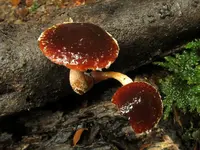
Hypholoma brunneum
Hypholoma brunneum
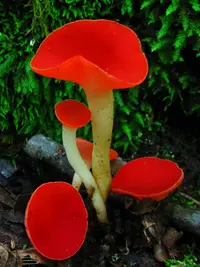
stalked scarlet cup
Sarcoscypha occidentalis
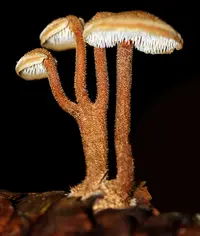
Earpick Fungus
Auriscalpium vulgare
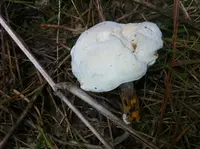
Hypomyces microspermus
Hypomyces microspermus