Yellow Unicorn Entoloma Care (Entoloma murrayi)

Also known as: unicorn pinkgill
Yellow Unicorn Entoloma

About Yellow Unicorn Entoloma

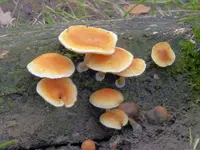
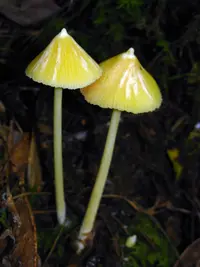
Yellow unicorn entoloma (Entoloma murrayi) is a small, wild mushroom rather than a typical houseplant. It is known for its bright yellow to orange conical cap and slender, often slightly curved stem, which give it a distinctive, delicate look in the forest floor litter. This fungus naturally occurs in eastern North America and parts of Central and South America, usually in moist, mixed or deciduous woodlands. It is not commonly cultivated, and attempts to care for Yellow Unicorn Entoloma at home are rarely successful because it relies on complex relationships with soil fungi and decaying organic matter. In nature it favors cool, consistently moist conditions and rich, undisturbed forest soils.

Main Plant Requirements

Care Difficulty

Hard Care

Light Preference

Partial Shade

Water Requirements

Keep Soil Moist

Temperature Preference

Warm Climate

Hardiness Zone

Unknown

Soil Texture

Loamy, Silty, Organic-rich

Soil pH

Acidic (5.5–6.5)

Soil Drainage

Moist but well-drained

Fertilization

Minimal (feed rarely)

Get Personalized Care Plan

Scan your plant to receive care tips personalized for your specific plant

Available on iOS and Android

How to Care for the Yellow Unicorn Entoloma

This forest-dwelling fungus prefers gentle, filtered light rather than full exposure.

  • Site Yellow Unicorn Entoloma in dappled woodland shade with 1–3 hours of weak morning sun only, avoiding direct midday or afternoon sun.
  • Aim for bright, indirect light under deciduous trees so fruiting bodies receive speckled light while the substrate stays cool and moist.
  • In summer, protect from strong sun that dries the leaf litter; in early spring and fall, slightly more scattered light is tolerated without damage.

Moist, well-drained forest soil is essential for stable Entoloma murrayi colonies.

  • Maintain consistently damp but not waterlogged leaf litter; the upper 2–3 cm should feel moist and springy, never soupy or cracked dry.
  • Improve drainage with loose organic material; standing puddles or sour, rotten smells indicate overwatering and poor aeration of the fungal habitat.
  • During hot, dry spells, mist or lightly irrigate the forest floor when it feels dry to the touch, reducing added moisture during cool, rainy periods.

This species favors cool to mild woodland temperatures and reacts poorly to extremes.

  • Optimal fruiting usually occurs around 55–70°F (13–21°C), matching typical temperate forest conditions with cool nights and mild days.
  • Growth declines below about 40°F (4°C); hard frost and repeated freezes can damage fruiting bodies, though underground mycelium often survives.
  • Sustained heat above 80°F (27°C) with dry air shortens lifespan and dries substrates, so deep shade and mulched leaf litter help buffer summer temperature swings.

This fungus prefers consistently moist, humid forest-like air to fruit well.

  • Aim for 70–90% humidity around fruiting sites, mimicking the damp woodland environments where Yellow Unicorn Entoloma appears.
  • Expect slowed or aborted fruiting, pale caps, and cracking on caps or stems when air stays below ~60% humidity.
  • Increase humidity by misting the substrate surface, using a humidity tent or plastic dome with air gaps, and placing trays of water near the growing area.

This species fruits best in loose, organic-rich, consistently moist substrate rather than standard potting soil.

  • Use a mix of well-decayed leaf litter, fine wood debris, and a small portion of mineral soil to mimic natural forest duff.
  • Keep the substrate loose and crumbly so air can move through it, preventing anaerobic conditions that suppress fungal growth.
  • Ensure the mix drains freely yet holds moisture, avoiding dense clay, compacted ground, or any medium that stays waterlogged for long periods.
  • Maintain slightly acidic conditions, roughly pH 5.0–6.0, which matches typical forest soils where Entoloma murrayi is found.

This species is generally unsuitable for long-term container growing because it depends on complex woodland soil and microbe networks.

Entoloma murrayi is a forest-dwelling fungus that does not benefit from direct fertilization in cultivation.

Pruning is not applicable to Entoloma murrayi, as it is a mushroom-forming fungus rather than a leafy or woody plant.

Transplanting focuses on maintaining suitable woodland-like habitat rather than moving individual Yellow Unicorn Entoloma fruiting bodies.

  • Avoid disturbing established fungal mycelium; only adjust habitat if the site is severely compacted, contaminated, or persistently flooded.
  • If moving habitat, transplant intact blocks of leaf litter and underlying soil in early spring or fall, keeping them oriented the same way.
  • Minimize root and soil disturbance around nearby trees, since the fungus often depends on stable forest floor conditions.
  • After any move, keep the substrate evenly moist and shaded to reduce stress and allow mycelium recovery.

Propagation of Entoloma murrayi is specialized and rarely attempted by home growers.

Winter care needs are minimal because this woodland fungus survives naturally through cold seasons in suitable climates.

  • In outdoor settings, leave a natural layer of leaf litter to insulate the soil surface and fungal mycelium.
  • Avoid deep digging, raking, or tilling in winter so the underground network remains intact.
  • Container cultivation is not recommended; if attempted, keep the inoculated substrate in a cool, shaded, frost-free but unheated area.

Care Tips

Use local collections

Whenever possible, source your initial mycelium or spore material from a healthy, locally collected Yellow Unicorn Entoloma to match the exact climate, soil microorganisms, and seasonal patterns of your growing site.

Retain forest litter

Leave a continuous layer of native leaf litter, small twigs, and fine roots on the soil surface, since this maintains the microhabitat, moisture, and decomposing organic matter that support the fungus.

Minimize soil disturbance

Avoid raking, digging, or tilling within the colonized area, because intact soil structure and undisturbed fungal threads (mycelium) are critical for reliable fruiting over multiple seasons.

Maintain host plants

Identify and protect the natural understory plants and tree species associated with the fungus at your site, as consistent plant partners help stabilize the soil chemistry and organic inputs needed for Entoloma murrayi care.

Monitor seasonal patterns

Keep a simple log of rainfall, temperature, and fruiting times each year, then adjust irrigation timing and mulching only slightly from season to season to support more predictable results when growing Yellow Unicorn Entoloma.

Common Pests and Diseases

Fungivorous springtails

These insects feed on fungal tissue, gills, and developing fruiting bodies, especially in very moist substrates. Symptoms include pitted, scarred caps and deformed or aborted mushrooms in cultivation trays.

Solution

Reduce constant surface wetness by improving drainage and air movement, and let the substrate surface dry slightly between misting while keeping internal moisture stable. Remove heavily damaged fruiting bodies and, in enclosed setups, use fine mesh barriers and sticky traps around the grow area rather than spraying chemicals directly on the fungus.

Fungus gnat larvae

These insects inhabit damp substrates and feed on fine fungal mycelium and young primordia, leading to weak, misshapen, or collapsing fruiting bodies. Symptoms include tiny entry holes, water‑soaked spots on stems, and small black adult gnats flying near the culture.

Solution

Allow the upper substrate layer to become slightly less wet, increase air circulation, and promptly remove spent or decaying fungal material. Use yellow sticky traps to capture adults and cover substrate with a thin, clean, inert top layer (such as pasteurized sand or vermiculite) to limit egg‑laying in cultivation settings.

Green Trichoderma mold

This disease is caused by Trichoderma species that aggressively colonize the substrate and outcompete the target fungus. Symptoms include bright white, then dense green powdery growth that overgrows mycelium and stops normal mushroom development.

Solution

Immediately remove and discard heavily contaminated substrate and nearby infected fruiting bodies, as recovery is rarely practical. For future culture work, sterilize or thoroughly pasteurize substrates, use clean tools, and ensure good ventilation with moderate humidity to reduce persistent wet patches that favor Trichoderma over Entoloma murrayi.

Bacterial blotch

This disease develops on caps and stems in overly wet, stagnant air, causing greasy, water‑soaked spots that may turn yellow‑brown. Symptoms include slimy patches on the cap surface and premature collapse of affected mushrooms.

Solution

Lower surface moisture by reducing direct misting on caps, improve air exchange, and avoid water droplets sitting on fruiting bodies for long periods. Remove and discard blotched specimens promptly and clean nearby surfaces with a mild disinfectant to limit bacterial spread in repeated cultivation cycles.

Interesting Facts

Distinctive unicorn yellow

The cap is a clear, bright yellow to orange-yellow with a contrasting darker, often reddish to brownish stem, a color combination that makes it stand out from many other Entoloma species with duller tones.

Pink spore prints

Although the gills start pale, they turn pinkish as the spores mature and are released, producing a pink spore print that is a classic diagnostic feature for this species and its genus.

Mycorrhizal forest partner

This fungus forms mycorrhizal-like associations with roots of hardwoods in moist, mixed forests, especially with beech and other deciduous trees, and is most often found on the forest floor among leaf litter in late summer to autumn.

Botan icon

Did you know?

The species was first described by American mycologist Charles Horton Peck in the 19th century, and its vivid coloration and slender form later inspired the common name Yellow unicorn mushroom, which is now widely used by field mycologists and mushroom enthusiasts in North America.

FAQs about Yellow Unicorn Entoloma

This fungus is considered inedible and potentially poisonous. It should never be eaten, even in small amounts. Identification errors with look-alike species are common, so foraging or tasting is strongly discouraged.

Grow Healthy Plants with Botan Care

Keep your plants happy and healthy with plant identification, disease detection, and easy care guidance.

Botan plant care app — identify plants on mobile

Explore More Plants