

Mycelium protection
Avoid disturbing the soil and leaf litter around established fruiting spots, since the underground mycelium network is sensitive to compaction and digging and may stop producing fruiting bodies if damaged.

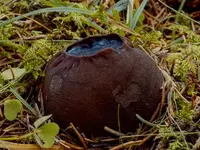
Sarcosoma globosum, commonly called witches cauldron, is an unusual cup fungus rather than a leafy plant. It forms dark brown, gelatinous, globe-shaped fruiting bodies that resemble small, sunken bowls in the forest floor. Each structure holds a thick, jelly-like interior that slowly dries with age.
This species typically appears in cool, moist coniferous forests, especially in undisturbed, mossy soil and litter. It is considered rare and quite demanding outside its natural habitat, so attempts to care for Witches Cauldron at home are generally experimental and challenging.
In nature it favors stable moisture, cool temperatures, and humus-rich, shaded forest soil with minimal disturbance.

Care Difficulty
Hard Care

Light Preference
Partial Shade

Water Requirements
Keep Soil Moist

Temperature Preference
Cool Climate

Hardiness Zone
Unknown

Soil Texture
Loamy, Organic-rich, Peaty

Soil pH
Acidic (5.5–6.5)

Soil Drainage
Moist but well-drained

Fertilization
Minimal (feed rarely)
Scan your plant to receive care tips personalized for your specific plant
Available on iOS and Android
This forest fungus prefers cool, shaded conditions with only brief, gentle sun exposure.
Moist, cool, and aerated forest soil is essential for this fungus to form healthy fruiting bodies.
This species favors cool climates and is sensitive to both hard frost at the surface and prolonged heat.
This fungus requires consistently moist, cool air similar to a shaded forest floor.
This species depends on a cool, moist, organic-rich forest substrate rather than standard garden soil.
This fungus is generally unsuitable for container growing because it relies on complex forest soil conditions and microclimate.
Sarcosoma globosum is a forest fungus that relies on natural soil nutrients and typically should not be fertilized in cultivation.
Sarcosoma globosum does not require pruning, since each fruiting body is short-lived and the organism lives mostly hidden in the soil.
This fungus is not suited to conventional repotting; it is best left undisturbed in its natural soil habitat.
Practical home propagation of this fungus is highly challenging and rarely attempted outside research or conservation contexts.
Natural populations are cold hardy and usually need no special winter care beyond preserving their forest habitat.

Plant Health Check
Not sure what's wrong with your plant? Check your plant's health inside the app.
The fruiting bodies appear in early spring as dark, gelatinous spheres and typically persist only a short time before collapsing and drying into wrinkled, leathery remnants.
This fungus usually grows in moist, shady coniferous forests, often in association with spruce, where it develops on soil rich in decaying organic matter.
Populations are scattered and declining in parts of Europe, and in several countries it is considered rare and appears on regional red lists of threatened fungi.

The mature fruiting body can hold a large amount of jelly-like fluid, and when it ages and dries, this interior mass shrinks dramatically, causing the once globose structure to collapse into a dark, cup-like or disc-like form that looks completely different from its early stage.
This fungus is not considered edible and should not be collected for food. It has a gelatinous texture, offers no culinary value, and may accumulate environmental contaminants from forest soils, making consumption a health risk.
Keep your plants happy and healthy with plant identification, disease detection, and easy care guidance.

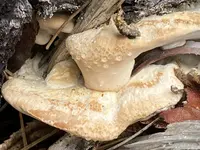
Calcipostia
Calcipostia guttulata
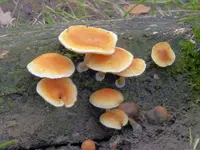
Common Rustgill
Gymnopilus penetrans
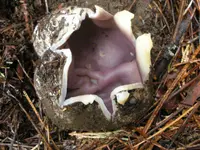
pink crown
Sarcosphaera coronaria
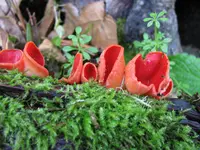
Scarlet Cup
Sarcoscypha coccinea
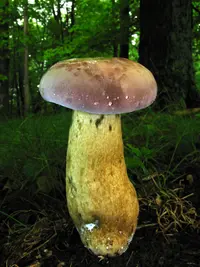
Reddish brown bitter bolete
Tylopilus rubrobrunneus
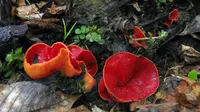
Scarlet Elfcup
Sarcoscypha austriaca
Acanthophysium oakesii
Acanthophysium oakesii
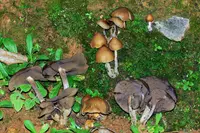
Psilocybe zapotecorum
Psilocybe zapotecorum