

Mimic forest litter
Top-dress the colony with a thin layer of moist, partially decomposed hardwood leaf litter each autumn to simulate its natural forest floor habitat and maintain a stable microclimate around the cups.

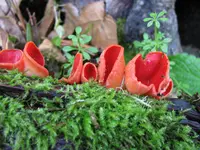
Scarlet cup (Sarcoscypha coccinea) is a cup-shaped fungus, not a typical leafy houseplant. It forms bright red, saucer-like fruiting bodies on short stalks. These often appear on damp, decaying wood in cool, moist forests, especially in late winter and early spring across parts of North America and Europe. The vivid color makes it easy to spot on fallen branches and forest litter.
It is generally considered difficult to cultivate indoors, since it relies on rotting wood, stable moisture, and cool conditions. Most people enjoy it as a seasonal woodland species rather than trying to care for Scarlet Cup in pots or beds.

Care Difficulty
Hard Care

Light Preference
Shade

Water Requirements
Keep Soil Moist

Temperature Preference
Cold Hardy

Hardiness Zone
4–9

Soil Texture
Loamy, Silty, Organic-rich

Soil pH
Strongly acidic (4.5–5.5), Acidic (5.5–6.5)

Soil Drainage
Moist but well-drained

Fertilization
Minimal (feed rarely)
Scan your plant to receive care tips personalized for your specific plant
Available on iOS and Android
This fungus thrives in cool, shaded woodland settings with dappled light.
This species prefers consistently moist, but not waterlogged, woodland substrates.
This fungus is adapted to cool, temperate conditions and fruits mainly in late winter to early spring.
This fungus prefers consistently moist, humid conditions rather than dry air.
Sarcoscypha coccinea thrives on moist, organic-rich substrates that mimic decaying woodland debris.
This species is difficult to grow long-term in containers and is generally not recommended for typical home setups.
Sarcoscypha coccinea is a woodland fungus that generally needs no deliberate fertilizing in gardens or containers.
Sarcoscypha coccinea does not benefit from shaping cuts, so pruning is minimal and purely hygienic.
Transplanting Scarlet Cup is rarely needed and often unsuccessful, since it relies on an established fungal network in soil or decaying wood.
Sarcoscypha coccinea is not typically propagated in home settings, as it spreads naturally through spores and underground mycelium.
This species is naturally cold hardy in temperate climates and usually needs no special winter care.

Plant Health Check
Not sure what's wrong with your plant? Check your plant's health inside the app.
This species is one of the first fleshy fungi to appear each year, often fruiting through melting snow in late winter to early spring in temperate forests.
The bright scarlet inner surface of the cup is thought to attract small invertebrates that help spread its spores, while the paler outer surface provides camouflage against the forest floor.
It typically fruits from well-decayed, often buried hardwood sticks and branches, so the cups may appear to grow from soil even though the fungus is feeding on hidden wood.

Historical records from parts of Europe describe the vivid cups of this species being collected to decorate Easter tables and spring festivals, reflecting its strong association with the end of winter.
The cups are considered edible when young and clean, but they are not very flavorful and can be confused with other fungi. Only eat after expert identification and cook thoroughly to reduce any potential digestive upset.
Keep your plants happy and healthy with plant identification, disease detection, and easy care guidance.

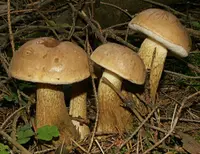
Bitter Bolete
Tylopilus felleus
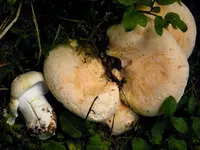
fused polypore
Albatrellopsis confluens
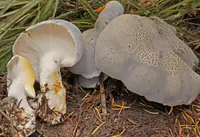
blue knight
Albatrellopsis flettii
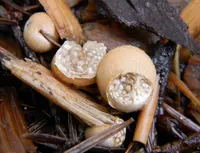
amorphous bird's nest fungus
Nidularia deformis
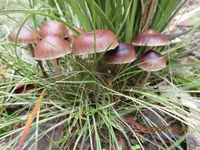
Psilocybe tasmaniana
Psilocybe tasmaniana
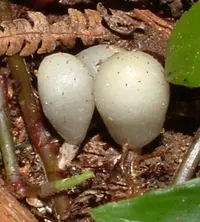
Psilocybe weraroa
Psilocybe weraroa
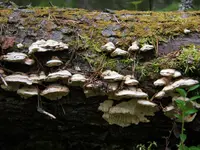
Antrodia heteromorpha
Antrodia heteromorpha
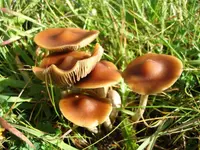
Psilocybe subaeruginosa
Psilocybe subaeruginosa