Hypholoma brunneum Care

Hypholoma brunneum

About Hypholoma brunneum

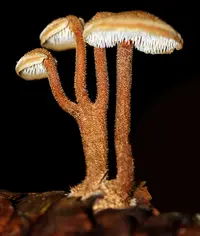
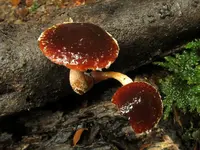
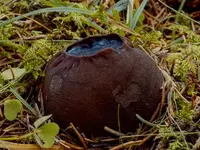
Hypholoma brunneum is a saprotrophic fungus, not a typical houseplant. It grows on decaying wood, helping break down dead organic material in forests. The fruiting bodies usually appear as clusters of small to medium brown caps with slender stems. They are often found on rotting logs, stumps, or buried wood. This species occurs mainly in temperate regions, especially in mixed and coniferous woodlands. It is not commonly cultivated, and conditions in gardens or indoors are hard to match to its natural habitat. For those studying how to care for Hypholoma brunneum, it is generally better observed in the wild rather than grown at home.

Main Plant Requirements

Care Difficulty

Hard Care

Light Preference

Shade

Water Requirements

Keep Soil Moist

Temperature Preference

Cool Climate

Hardiness Zone

Unknown

Soil Texture

Loamy, Silty, Organic-rich

Soil pH

Acidic (5.5–6.5), Slightly acidic (6.5–7.0)

Soil Drainage

Moist but well-drained

Fertilization

Minimal (feed rarely)

Get Personalized Care Plan

Scan your plant to receive care tips personalized for your specific plant

Available on iOS and Android

How to Care for the Hypholoma brunneum

This wood-decaying fungus prefers cool, shaded forest-like light conditions rather than direct sun.

  • Provide dappled or filtered light under trees, shrubs, or leaf litter, aiming for 1–3 hours of weak morning sun and no harsh afternoon sun.
  • Hypholoma brunneum fruits best in bright shade or north/east-facing woodland edges where direct sun is blocked for most of the day.
  • Avoid strong midday sun, which dries the substrate and mycelium; prolonged exposure can halt fruiting, especially in summer, so increase shade then.

This fungus needs consistently moist, but not waterlogged, wood or organic debris to sustain its mycelium and fruiting.

  • Maintain evenly moist substrate by checking that the top 2–3 cm of surrounding soil or mulch feels damp but not soggy before adding water nearby.
  • Improve drainage with loose leaf litter or coarse organic matter so water percolates through rather than pooling, which encourages rot and competing molds.
  • In warm, dry weather, monitor for shrinking caps or brittle, cracking wood as signs of drying; ease off if the substrate smells sour or stays saturated for days.

This species prefers cool to mild conditions typical of shaded woodland habitats.

  • Optimal fruiting usually occurs around 50–65°F (10–18°C), with steady moisture and shade supporting stable mycelial activity.
  • The fungus generally tolerates about 40–75°F (4–24°C); growth slows outside this band, and prolonged heat above 80°F (27°C) can suppress fruiting.
  • Protect colonized wood from repeated hard frosts below 25°F (-4°C) and from exposed, sun-baked sites, since extreme freeze–thaw or heat can damage the mycelium.

This wood-inhabiting fungus prefers consistently moist air when fruiting but tolerates brief drier periods at the mycelium level.

  • Aim for 70–90% humidity around developing clusters by using a humidity tent or closed, ventilated box system.
  • Dry air leads to cracked caps, pale, stunted fruiting bodies, and prematurely drying gills.
  • Increase humidity with frequent fine misting of the air (not soaking the substrate), damp perlite nearby, or a small humidifier in a contained grow space for caring for Hypholoma brunneum.

Hypholoma brunneum is a wood-decaying fungus that grows on woody substrates rather than true mineral soil, so the focus is on structure and moisture balance.

  • Use a loose, fibrous mix based on hardwood chips, sawdust, or well-soaked straw, optionally blended with 10–20% composted organic matter for nutrients.
  • Ensure very free drainage so water does not pool; the substrate should feel moist and springy, never muddy or compacted.
  • Maintain a slightly acidic environment around pH 5.5–6.5 by using hardwood-based materials and avoiding lime or alkaline amendments.
  • Improve aeration by mixing in coarse wood chips or chopped straw layers, which create air gaps and reduce the risk of anaerobic, foul-smelling pockets.

This species can be grown in containers filled with suitable woody substrate, mainly for experimental or small-scale cultivation.

  • Use tall, rigid containers or buckets that allow a deep substrate layer so the mycelium can colonize vertically and retain stable moisture zones.
  • Drill multiple side and base holes to improve gas exchange and allow limited drainage without completely drying the substrate.
  • Choose opaque containers to reduce light on the colonizing substrate, which helps maintain more even internal humidity and temperature.

This wood-decaying fungus usually obtains enough nutrients from its substrate, so additional fertilization is rarely necessary for Hypholoma brunneum.

Pruning is not relevant for this fungus, as its fruiting bodies naturally emerge, mature, and decay without structural training.

Management focuses on moving colonized substrate rather than traditional repotting, since this species is not a typical container plant.

  • Transplant only when the mycelium has fully colonized wood or substrate and you need to relocate it for culture or study.
  • Choose cool, moist weather to shift logs or trays so the mycelium experiences less drying and temperature stress.
  • Move the entire colonized piece intact, disturbing the mycelial network as little as possible to maintain vigor.
  • After moving, keep the new site evenly moist and shaded to help the mycelium re-establish and continue growing.

Propagation of this fungus is usually done by spore or mycelium culture rather than casual home methods, so it is not recommended for beginners.

Outdoor colonies are generally hardy where they occur naturally and need no special winter care beyond stable, moist habitat conditions.

Care Tips

Use fresh spawn

Prepare small batches of grain or sawdust spawn and use them within a few weeks, as older spawn loses vigor and can lead to weak, patchy colonization.

Sterile handling zone

Set up a simple clean area (still air box or draft-free corner wiped with 70% isopropyl alcohol) when inoculating substrate to reduce contamination by mold and bacteria.

Substrate depth control

Keep outdoor bed substrate 5–10 cm deep so the mycelium colonizes quickly and fruiting bodies remain well supported but not buried too deeply to emerge.

Edge moisture management

In outdoor beds, mulch or shade only the perimeter with damp straw or cardboard to keep the mycelium zone humid while avoiding waterlogging over the main fruiting area.

Timed harvest cuts

Harvest clusters as the caps begin to flatten by cutting cleanly at the base with a sharp knife, which limits damage to the mycelium and encourages subsequent flushes when growing Hypholoma brunneum.

Common Pests and Diseases

Fungus gnat larvae

This pest feeds on moist fungal substrates and can damage dense spawn or young fruiting bodies. Symptoms include slowed colony expansion and small larvae visible in or on the substrate surface.

Solution

Reduce excess surface moisture, improve ventilation, and cover colonizing substrate with fine mesh to block adult gnats. Use yellow sticky traps to catch adults and, if needed, apply a biological control such as Bacillus thuringiensis israelensis (Bti) drench according to label directions on non-fruiting substrate zones only.

Mite infestation

This pest includes various mycophagous mites that graze on mycelium and developing primordia, causing patchy or stunted growth. Symptoms include small moving dots on the substrate and irregular, poorly formed clusters.

Solution

Lower humidity slightly, increase fresh air exchange, and remove heavily infested blocks from the main grow area. Clean shelves and equipment thoroughly, use fine mesh filters on air inlets, and, for persistent problems, introduce predatory mites sourced for mushroom production systems.

Green mold (Trichoderma)

This disease appears as fast-spreading white mycelium that turns bright to dark green as spores develop. Symptoms include halted Hypholoma growth, patchy colonization, and a powdery green surface on the substrate.

Solution

Promptly remove and discard any substrate showing green sporulation to prevent spread. Review sterilization or pasteurization steps, improve site cleanliness, and reduce condensation; avoid reusing contaminated tools or containers without thorough disinfection when growing Hypholoma brunneum.

Bacterial blotch

This disease causes small, greasy-looking yellow to brown spots on caps and can make fruiting bodies appear water-soaked. Symptoms include slimy lesions that often develop under conditions of constant surface moisture and poor air movement.

Solution

Increase fresh air exchange, avoid direct misting on caps, and aim for a surface that dries slightly between humidity cycles. Remove and discard affected mushrooms, then disinfect tools and adjust watering to rely more on ambient humidity rather than heavy spraying.

Interesting Facts

Australasian wood decomposer

This saprotrophic fungus is recorded mainly from Australia and New Zealand, where it colonizes dead wood and woody debris, contributing to the breakdown of lignin- and cellulose-rich tissues in native forests and plantations.

Clustered fruiting habit

It typically produces dense clusters of small to medium-sized brownish caps on stumps, buried wood, or woodchip-rich soil, rather than solitary mushrooms, which helps distinguish it from several similar woodland species.

Taxonomic clarification history

The species was described relatively recently compared with some other wood-inhabiting agarics, and its modern concept is based on detailed microscopic characters such as spore size and cystidia shape that separate it from closely related Hypholoma taxa.

FAQs about Hypholoma brunneum

This mushroom is not considered edible and should be treated as inedible. It belongs to a group that contains several toxic species, and identification is difficult, so for safety it must not be collected for food.

Grow Healthy Plants with Botan Care

Keep your plants happy and healthy with plant identification, disease detection, and easy care guidance.

Botan plant care app — identify plants on mobile

Explore More Plants