Use living mulch
Establish a low, non-invasive groundcover layer of mosses or small woodland plants to help keep the substrate evenly cool and moist, which supports the mycelium network when growing Entoloma cyaneum outdoors.

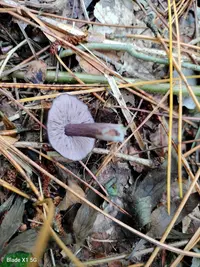
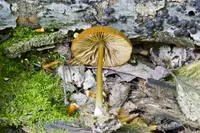
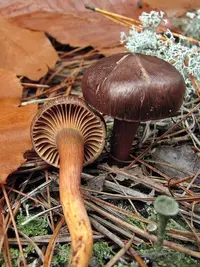
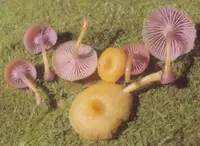
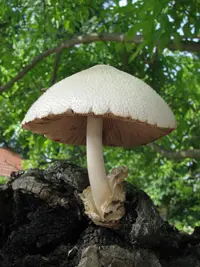
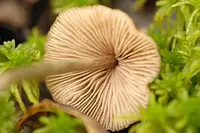
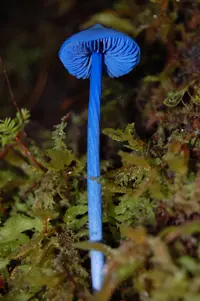
Entoloma cyaneum is not a plant but a small, blue-gray mushroom species belonging to the genus Entoloma. It typically forms low clusters or scattered caps on soil or moss. The caps are often conical to bell-shaped when young, becoming more flattened with age, with gills underneath that are initially pale and later pinkish as spores mature.
This fungus is usually found in temperate woodland or grassland habitats, often in nutrient-poor, mossy, or grassy areas. It is not a practical choice for home cultivation, and how to care for Entoloma cyaneum is not well established, as it depends on complex relationships with soil and other organisms that are difficult to reproduce indoors or in gardens.

Care Difficulty
Hard Care

Light Preference
Partial Shade

Water Requirements
Keep Soil Moist

Temperature Preference
Cool Climate

Hardiness Zone
Unknown

Soil Texture
Loamy, Silty, Organic-rich

Soil pH
Acidic (5.5–6.5)

Soil Drainage
Moist but well-drained

Fertilization
Minimal (feed rarely)
Scan your plant to receive care tips personalized for your specific plant
Available on iOS and Android
This woodland fungus prefers cool, low-intensity light similar to a shaded forest floor.
This species needs consistently moist, not waterlogged, ground to develop healthy fruiting bodies.
This fungus thrives in cool, mild conditions typical of shaded woodland environments.
Humidity is not a primary controllable factor for Entoloma cyaneum under typical cultivation attempts, as this fungi is highly specialized to natural woodland microclimates.
This woodland fungus requires very specific undisturbed forest soil conditions and is generally not suited to standard garden or potting mixes.
This species is not suitable for container growing, as its survival depends on complex interactions with undisturbed woodland soil and host plants that cannot be replicated in pots.
This wild, mycorrhizal mushroom does not need fertilization and performs best in low-input, undisturbed soil.
Pruning is not applicable to Entoloma cyaneum, as it is a fungus producing temporary fruiting bodies rather than persistent stems or foliage.
Transplanting focuses on preserving the natural soil community rather than moving individual fruiting bodies of Entoloma cyaneum.
Propagation of this ectomycorrhizal fungus is specialized and rarely attempted by home growers.
Specific winter care is not required, as the fungal mycelium persists in soil and fruiting bodies are seasonal.

Plant Health Check
Not sure what's wrong with your plant? Check your plant's health inside the app.
The cap and gills show a striking bluish coloration caused by pigment compounds that are still poorly characterized chemically, which fade to more grayish tones as the fruiting body ages or dries.
This species is considered poisonous and is notorious among foragers because it can grow near edible blue-staining mushrooms, increasing the risk of dangerous misidentification.
It typically fruits in unimproved grasslands, lawns, and pastures in temperate Europe, often in small groups or scattered, indicating relatively low-nutrient, less intensively managed soils.

Some regional mycological surveys list this mushroom as declining or locally rare, largely because traditional low-intensity grasslands and pastures where it thrives are being reduced or converted through modern agriculture and land development.
This mushroom is considered poisonous and should never be eaten. It can cause gastrointestinal and potentially neurological symptoms. Because identification is difficult, all similar blue Entoloma species are best treated as inedible and left untouched.
Keep your plants happy and healthy with plant identification, disease detection, and easy care guidance.