Sterilize Substrate
Before inoculation, pasteurize or steam the growth substrate at 160–170°F for 1–2 hours to reduce competing fungi and bacteria and give the mycelium a clean start.

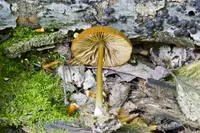
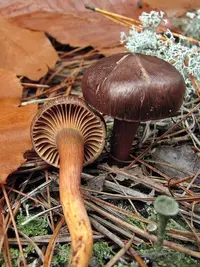
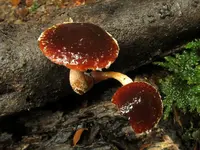
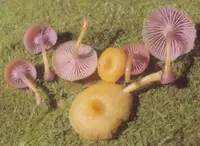
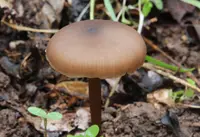
Pretty Pinkgill, Entoloma formosum, is a small to medium mushroom rather than a leafy houseplant. It produces pale to bright pink gills under a usually grayish to brown cap and a slender stem. The pink spore print and often slightly conical cap give it a delicate, ornamental look in the wild.
This fungus typically appears in grasslands, pastures, and light woodland in temperate regions, often in undisturbed, moist soils. It is not a suitable species for beginners to cultivate, as its growth depends on complex soil relationships that are hard to reproduce at home. For anyone trying to care for Pretty Pinkgill, the main challenge is providing stable, naturalistic outdoor conditions rather than controlled indoor culture.

Care Difficulty
Hard Care

Light Preference
Partial Shade

Water Requirements
Keep Soil Moist

Temperature Preference
Cool Climate

Hardiness Zone
Unknown

Soil Texture
Loamy, Silty, Organic-rich

Soil pH
Acidic (5.5–6.5)

Soil Drainage
Moist but well-drained

Fertilization
Minimal (feed rarely)
Scan your plant to receive care tips personalized for your specific plant
Available on iOS and Android
This woodland fungus prefers soft, filtered light similar to a lightly shaded forest floor.
This mycorrhizal fungus depends on consistently moist, well‑drained soil rather than direct watering of the fruiting bodies.
This species fruits best in cool to mild conditions typical of temperate woodlands.
This woodland fungus prefers consistently moist air but adapts to moderate humidity if the substrate stays damp.
This species grows best in loose, organic-rich substrate that mimics decomposing forest litter.
This fungus is not naturally suited to ornamental container culture, but specialized growers sometimes use shallow trays to observe it.
This native woodland fungus does not need fertilization and usually performs best in undisturbed, nutrient-balanced soil.
Pruning is not applicable for Entoloma formosum, as it is a wild mushroom that completes its life cycle naturally without structural maintenance.
This species is not suited to routine repotting because it depends on specific soil fungi and habitat conditions rather than container culture.
Deliberate propagation of this wild fungus is difficult and generally unreliable for home growers.
This woodland fungus is naturally cold hardy in its range and needs no special winter care beyond preserving its habitat conditions.

Plant Health Check
Not sure what's wrong with your plant? Check your plant's health inside the app.
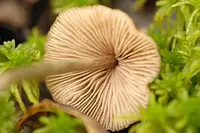
The mushroom has greyish to lilac-pink gills that become more pink as the spores mature, a key field character within the large and variable Entoloma genus.
Its spores are distinctly angular (polygonal) and pink in spore print, a diagnostic microscopic feature that helps separate it from many superficially similar grey-brown agarics.
This species forms ectomycorrhizal partnerships with trees, exchanging mineral nutrients from the soil for sugars from the host roots, and thereby contributing to forest nutrient cycling.
This mushroom is considered inedible and potentially poisonous. Identification within the Entoloma group is difficult, and some related species can cause serious gastrointestinal upset. It is safest to treat it as non-edible and never consume it.
Keep your plants happy and healthy with plant identification, disease detection, and easy care guidance.