Use local strains
Collect spore prints only from healthy fruiting bodies in the same region where you plan to cultivate, since local strains are better adapted to native soil microbes and climate.

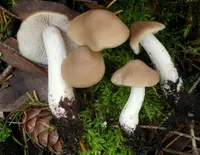
Entoloma lividoalbum is a gilled fungus, not a true plant, known for its pale to greyish cap and white to faintly tinted gills. It typically appears in grasslands, lawns, and sometimes light woodlands in parts of Europe and other temperate regions. This species often grows in small groups on soil rich in organic matter, emerging during moist, mild periods. Identification is difficult, as it can resemble both harmless and dangerously toxic mushrooms. Because of this confusion risk, it is not suitable for casual foraging or home cultivation, and information on how to care for Entoloma lividoalbum as a cultured species is very limited.

Care Difficulty
Moderate Care

Light Preference
Partial Shade

Water Requirements
Keep Soil Moist

Temperature Preference
Cool Climate

Hardiness Zone
Unknown

Soil Texture
Loamy, Organic-rich

Soil pH
Slightly acidic (6.5–7.0)

Soil Drainage
Moist but well-drained

Fertilization
Minimal (feed rarely)
Scan your plant to receive care tips personalized for your specific plant
Available on iOS and Android
This woodland fungus prefers cool, shaded conditions rather than direct sun exposure.
This species needs a consistently moist, not waterlogged, forest-floor substrate to fruit well.
This fungus is adapted to mild, temperate conditions with cool to moderate air and soil temperatures.
This fungus is not suited to typical household culture but requires consistently damp, cool air near 70–90% humidity in its natural habitat.
In nature, Entoloma lividoalbum develops on moist, organically enriched ground rather than in a conventional potting substrate.
This species is not realistically suited to long-term container growing outside specialized mycological setups, but experimental fruiting in controlled trays is possible.
This wild fungus relies on natural soil nutrients and generally should not be fertilized in cultivation.
Pruning is not applicable, as Entoloma lividoalbum is a woodland fungus, not a traditional garden plant.
Transplanting this fungus is rarely successful and usually not recommended outside scientific or conservation contexts.
Propagation of this species is complex and not typically attempted by home growers.
No specific winter care is needed, as this fungus survives naturally through cold seasons in the soil.

Plant Health Check
Not sure what's wrong with your plant? Check your plant's health inside the app.
Cases of poisoning historically linked to the mushroom known as Entoloma lividum in older literature are now understood, through modern taxonomy, to often involve Entoloma lividoalbum instead, highlighting how difficult accurate identification can be in this group.
Some mycologists treat this fungus as a distinct species, while others consider it a pale form or variety within a larger species complex, reflecting ongoing debate driven by subtle morphological differences and evolving DNA data.
This species closely resembles several other pale, fleshy entolomas and even some harmless mushrooms in the field, which is one reason expert identification and region-specific keys are recommended before any edibility assessment.
This species is considered poisonous and must not be eaten. It can cause serious gastrointestinal symptoms and may be confused with edible mushrooms. Avoid collecting, cooking, or consuming it, and teach children and beginners to do the same.
Keep your plants happy and healthy with plant identification, disease detection, and easy care guidance.