

Use Decaying Wood
Establish the fungus on well-rotted hardwood pieces partially buried in leaf litter, as the mycelium colonizes stable, decayed wood more reliably than fresh logs or pure soil.

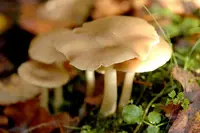
Wood pinkgill, Entoloma rhodopolium, is a woodland mushroom rather than a leafy houseplant. It produces pale gray to brown caps with pinkish gills and a slender, often fragile stem.
This fungus typically appears in temperate forests, often under broadleaf trees, growing directly from soil rich in leaf litter. Its lookalikes and variable features make it difficult for beginners to identify confidently.
Because it is a wild mushroom with toxic reputation, it is not suited to casual home cultivation. Most growers focus on recognition and avoidance rather than learning how to care for Wood Pinkgill.

Care Difficulty
Hard Care

Light Preference
Partial Shade

Water Requirements
Keep Soil Moist

Temperature Preference
Cool Climate

Hardiness Zone
Unknown

Soil Texture
Loamy, Organic-rich

Soil pH
Acidic (5.5–6.5)

Soil Drainage
Moist but well-drained

Fertilization
Minimal (feed rarely)
Scan your plant to receive care tips personalized for your specific plant
Available on iOS and Android
This woodland fungus prefers low to moderate light levels that mimic a shaded forest floor.
Moist, well-drained forest soil is essential for stable fruiting conditions.
This species favors cool to mild conditions similar to a temperate woodland floor.
Humidity in natural forest settings matters for this fungus, but recreating it indoors is rarely practical or recommended.
Entoloma rhodopolium fruits in specific outdoor woodland substrates rather than standard horticultural soil mixes.
This woodland fungus is not suitable for growing in containers.
This wild, mycorrhizal fungus does not require fertilization in garden or woodland settings.
Pruning is not part of normal management for Entoloma rhodopolium, since it is a ground-dwelling fungus rather than a leafy plant.
Transplanting is rarely successful, since this fungus depends on fine root partnerships with nearby trees.
Propagation of Entoloma rhodopolium is specialist work and not recommended for home growers.
No special winter care is required, as this woodland fungus persists in the soil and fruiting bodies are naturally short-lived.

Plant Health Check
Not sure what's wrong with your plant? Check your plant's health inside the app.
This species is one of the classic dangerous look-alikes for edible grayish mushrooms in Europe and East Asia, causing serious poisonings when confused with species such as Tricholoma or Clitocybe. Its toxicity is well documented in Japanese and European clinical case reports.
Poisoning from this mushroom often produces not only gastrointestinal symptoms but also neurological and respiratory problems such as dizziness, weakness, and difficulty breathing. These effects are linked to complex toxin mixtures rather than a single well-characterized compound.
The cap color is notably variable, ranging from gray-brown to yellow-brown or even almost whitish as it ages and dries. This variability contributes to frequent misidentification in the field, even by experienced foragers.

Molecular studies using DNA sequencing have revealed that material historically identified as this species actually represents several closely related taxa, so modern mycologists restrict the name Entoloma rhodopolium mainly to European collections while similar Asian mushrooms are being reassessed under different names.
This fungus is considered poisonous and not edible. It contains toxins that may cause serious gastrointestinal and neurological symptoms. Identification is often difficult, so it should never be collected or eaten as a wild mushroom.
Keep your plants happy and healthy with plant identification, disease detection, and easy care guidance.

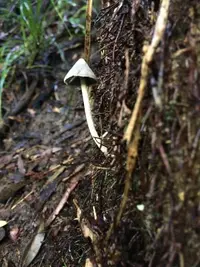
Entoloma canoconicum
Entoloma canoconicum
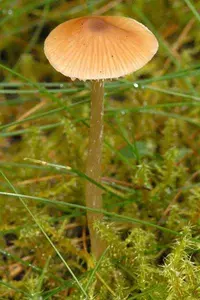
honey pinkgill
Entoloma cetratum
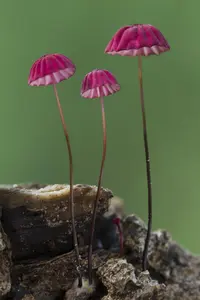
purple pinwheel
Marasmius haematocephalus
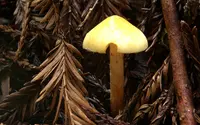
Lavender Baeospora
Baeospora myriadophylla
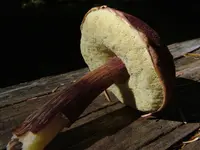
admirable bolete
Aureoboletus mirabilis
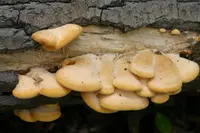
Stinking Orange Oyster
Phyllotopsis nidulans
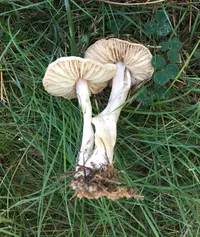
Marasmius nigrodiscus
Marasmius nigrodiscus
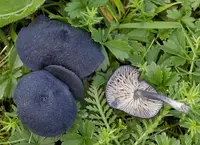
Blue Edge Pinkgill
Entoloma serrulatum