Use Containment Barriers
Install a rhizome barrier or use a large, heavy container set into the ground to prevent underground stems from spreading into nearby beds or lawns when growing smooth horsetail outdoors.

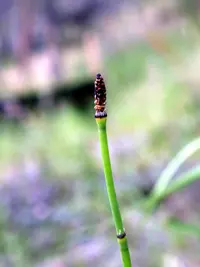
Smooth horsetail, Equisetum laevigatum, is a perennial, reed-like plant from the horsetail family, related to ancient fern allies. It forms upright, jointed, hollow stems with a smooth surface and few or no branches, creating a very architectural, linear clump.
This species is typically found along streams, wetlands, and seasonally moist sites across parts of North America. It spreads by creeping rhizomes and can become persistent where conditions suit it, which influences how to care for smooth horsetail in gardens.
Smooth horsetail prefers consistent moisture, poor or sandy soils, and full sun to light shade. Its toughness and spreading habit make it easy to grow but sometimes challenging to contain.

Care Difficulty
Moderate Care

Light Preference
Full Sun

Water Requirements
Aquatic

Temperature Preference
Cold Hardy

Hardiness Zone
3–9

Soil Texture
Loamy, Clay, Silty

Soil pH
Acidic (5.5–6.5), Slightly acidic (6.5–7.0)

Soil Drainage
Waterlogged tolerant

Fertilization
Minimal (feed rarely)
Scan your plant to receive care tips personalized for your specific plant
Available on iOS and Android
This species thrives in bright, open sites with consistent moisture and strong light.
This plant prefers constantly moist to wet conditions and does not tolerate drying out.
This hardy rush-like species tolerates a wide temperature range but grows fastest in mild conditions.
This species prefers consistently moist air but adapts to a wide range of outdoor humidity.
This horsetail thrives in saturated, poorly drained substrates that mimic wetland margins.
This species is suitable for containers, especially when controlled spreading is desired.
This nutrient-efficient wetland species usually needs minimal feeding, especially in rich or natural soils.
Pruning Equisetum laevigatum focuses on tidiness and controlling spread rather than shaping.
This spreading rhizomatous plant is more often transplanted or contained than frequently repotted.
Propagation of Equisetum laevigatum is most practical through division of its creeping rhizomes rather than by spores.
This species is generally cold hardy in temperate climates and needs little specialized winter care once established.

Plant Health Check
Not sure what's wrong with your plant? Check your plant's health inside the app.
This species is native mainly to North America, where it prefers open, often sandy or gravelly sites such as prairies, stream banks, and disturbed roadsides, unlike many other horsetails that favor wetter forest edges.
Its green, jointed stems are notably smoother and less ridged to the touch than those of most related horsetail species, which is the feature that led to the common name smooth horsetail.
The stems accumulate significant silica in their outer tissues, forming a tough, abrasive surface that helps support the upright, reed-like growth even in wind-exposed habitats.
This species spreads vigorously through underground rhizomes. In open soil it can form dense colonies and may become difficult to remove. Use root barriers or containers if you need to limit its spread in gardens or near ponds.
Keep your plants happy and healthy with plant identification, disease detection, and easy care guidance.