Contain Rhizome Spread
Install a 30–40 cm deep root barrier or grow the plant in a sunken, bottomless container to keep the creeping rhizomes from overtaking nearby planting areas while still allowing good drainage.

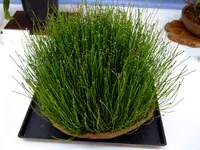
Variegated horsetail, Equisetum variegatum, is a small, clumping horsetail species with jointed, reed-like stems marked by subtle pale banding. It is an ancient, spore-producing plant rather than a typical flowering species. In nature it often grows along stream edges, wetlands, and damp, gravelly soils across cooler regions of the Northern Hemisphere. The plant forms low, spreading colonies and can slowly creep if conditions stay moist. It is generally hardy and long-lived when kept evenly damp and given plenty of light. Understanding how to care for variegated horsetail starts with providing constant moisture, cool to moderate temperatures, and soil that never fully dries out.

Care Difficulty
Moderate Care

Light Preference
Partial Sun

Water Requirements
Aquatic

Temperature Preference
Cold Hardy

Hardiness Zone
2–9

Soil Texture
Loamy, Silty, Organic-rich

Soil pH
Acidic (5.5–6.5), Slightly acidic (6.5–7.0)

Soil Drainage
Waterlogged tolerant

Fertilization
Minimal (feed rarely)
Scan your plant to receive care tips personalized for your specific plant
Available on iOS and Android
This temperate wetland species prefers bright, cool light conditions with access to direct sun in many climates.
This rhizomatous plant is adapted to wet, even boggy conditions and does best with consistently moist soil.
This hardy species tolerates a wide temperature range but grows best in cool to mild conditions.
Humidity plays a minor role for Equisetum variegatum, which adapts well to typical outdoor conditions.
Soil for Equisetum variegatum should stay consistently moist while still allowing air to reach the roots.
This species is suitable for container growing, especially for controlling its spreading habit near water features.
This plant needs only modest feeding, as Equisetum variegatum naturally thrives in low-nutrient, wet soils.
Pruning Equisetum variegatum is mainly for tidiness and to control spread rather than plant health.
This species is more often transplanted in the ground than kept long term in pots, where it can become crowded.
Most propagation of Equisetum variegatum is done by division, since spores are slow and less predictable for home growers.
This is a hardy species that usually requires minimal winter care in most temperate climates.

Plant Health Check
Not sure what's wrong with your plant? Check your plant's health inside the app.
This species naturally occurs in cold, open habitats across northern Europe, Asia, and North America, and is particularly characteristic of arctic and alpine riverbanks and lake shores with seasonally fluctuating water levels.
It shows a marked preference for calcareous substrates, often growing in gravel, sand, or silt rich in calcium carbonate, such as limestone-influenced river gravels and marl flats.
Its slender, mostly unbranched stems have pale longitudinal bands and dark nodes, giving a subtly variegated, segmented appearance that distinguishes it from many other horsetail species.

This species is considered an important indicator plant for conservationists in some regions, because its presence often signals relatively undisturbed, cold, base-rich wetland or river-gravel habitats that support other specialized arctic–alpine flora.
This species spreads by underground rhizomes and can become aggressive in moist, open soil. Use root barriers, heavy containers, or pond baskets to confine the rhizomes and inspect regularly to remove unwanted shoots at the edges.
Keep your plants happy and healthy with plant identification, disease detection, and easy care guidance.