Satin Spoonfig Care (Erepsia inclaudens)

Satin Spoonfig

About Satin Spoonfig

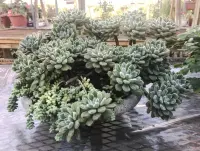
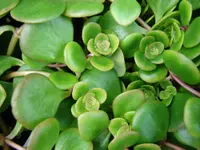
Satin spoonfig, Erepsia inclaudens, is a compact succulent from South Africa, valued for its glossy, spoon-shaped leaves and bright daisy-like flowers. It typically forms a low, spreading mat, making it suitable for containers, rocky gardens, or a sunny indoor windowsill.

This species naturally occurs in dry, coastal habitats with sandy, well-drained soils, so it dislikes prolonged moisture around the roots. Its drought tolerance and relatively slow growth make it easier to manage than many leafy houseplants, as long as excess watering is avoided. For those learning how to care for Satin Spoonfig, the main needs are strong light, very free-draining soil, and careful watering habits.

Main Plant Requirements

Care Difficulty

Moderate Care

Light Preference

Full Sun

Water Requirements

Low Water

Temperature Preference

Warm Climate

Hardiness Zone

10–11

Soil Texture

Sandy, Loamy, Rocky

Soil pH

Slightly acidic (6.5–7.0), Neutral (7.0)

Soil Drainage

Well-drained

Fertilization

Minimal (feed rarely)

Get Personalized Care Plan

Scan your plant to receive care tips personalized for your specific plant

Available on iOS and Android

How to Care for the Satin Spoonfig

This South African succulent thrives in strong light and needs plenty of direct sun to flower well.

  • Provide 6–8 hours of direct sun daily; full sun is best, though light afternoon shade helps in very hot, dry climates.
  • Young or recently transplanted Satin Spoonfig benefits from a week of bright, filtered light before moving to full sun to prevent scorch.
  • If stems stretch, leaf color fades, or flowering is poor, the plant is not getting enough sun; move it to a brighter, south- or west-facing position.

This drought-tolerant succulent prefers deep, infrequent watering and fast-drying soil.

  • Water only when the top 3–5 cm of soil are completely dry, then soak thoroughly and let excess drain away.
  • During active growth in spring and summer, expect to water more often; in fall and winter, reduce watering sharply and keep soil almost dry.
  • Use sharply draining, sandy or gritty soil to prevent root rot; soft, yellowing leaves and a sour smell indicate overwatering, while shriveling, wrinkled leaves indicate underwatering.

This species prefers warm, dry conditions and does not tolerate strong frost.

  • Aim for 65–80°F (18–27°C) for best growth, with good air movement to keep foliage dry.
  • Erepsia inclaudens can survive brief drops to about 30–32°F (-1–0°C) if soil is dry, but repeated or hard frosts will damage foliage and stems.
  • In hot spells above 90°F (32°C), provide afternoon shade and avoid overhead watering during peak heat to limit stress and sunscald.

This succulent prefers fairly dry air and usually does well in typical indoor humidity around 30–50%.

  • Tolerates low humidity better than prolonged high humidity, which can promote fungal spots on leaves and stems.
  • Early humidity stress shows as soft, swollen, or splitting leaves rather than crisp browning edges in Satin Spoonfig.
  • Increase air movement with a small fan and avoid clustering many plants tightly, rather than using humidifiers or pebble trays.

Erepsia inclaudens needs a very fast-draining, mineral-heavy substrate that dries quickly between waterings.

  • Use a gritty mix such as 50–60% coarse sand or fine gravel with 40–50% cactus/succulent mix to keep roots aerated.
  • Aim for slightly acidic to neutral pH, around 6.0–7.0, to support nutrient uptake without encouraging rot.
  • Improve drainage by adding extra pumice or perlite and avoiding moisture-retentive components like peat-heavy mixes or fine compost.
  • Avoid compacted, clayey, or waterlogged soils, which quickly cause root and stem rot in this small-rooted species.

This species is well suited to container growing due to its compact, shallow root system.

  • Choose a wide, shallow pot so the spreading mat of foliage can fill the surface without excessive unused depth that keeps soil wet.
  • Use unglazed terracotta if possible, as its porous walls help excess moisture evaporate quickly from the root zone.
  • Elevate the pot on feet or mesh so drainage holes remain clear and water can escape freely after each watering, especially outdoors.

This South African succulent needs only light feeding, so focus on modest, well-timed nutrition rather than heavy fertilization.

  • Use a diluted balanced liquid fertilizer (such as 10-10-10 at 1/4–1/2 strength) or a low-dose succulent fertilizer during active spring–summer growth.
  • Feed every 4–6 weeks in the growing season if growth is in a container; in the ground, feeding is usually unnecessary.
  • Avoid organic compost-heavy mixes, which can stay too wet for Erepsia inclaudens and increase rot risk.
  • Stop feeding in fall and winter to respect its semi-dormant phase and maintain compact Satin Spoonfig growth.

Pruning Erepsia inclaudens is mainly light and corrective, aimed at keeping the plant compact and flowering well.

  • Best time for pruning is late winter to early spring, just before strong new growth starts.
  • Use clean, sharp scissors or small pruning shears to remove dead, damaged, or weak stems at the base.
  • Thin congested stems to improve air flow and light penetration, which supports healthier foliage and more flowers.
  • Pinch or lightly shorten leggy shoots after flowering to maintain a low, bushy shape.

This succulent is usually grown in shallow, well-drained containers and only needs infrequent repotting or transplanting.

  • Check for roots circling the pot base, reduced flowering, or slow growth as signs Erepsia inclaudens needs more space.
  • Plan repotting or transplanting in late winter to early spring, before vigorous new growth and flowering begin.
  • Expect to move the plant to a slightly wider pot only every 2–3 years, using a gritty cactus or succulent mix.
  • Water lightly after repotting, keep in bright but indirect light for 5–7 days, and avoid heavy feeding to limit root stress.

Propagation of Erepsia inclaudens is commonly done from stem cuttings or seeds under bright, dry, and warm conditions.

  • Take non-flowering stem cuttings in late spring–summer, allow cut surfaces to callus for 1–2 days, then place in gritty, barely moist mix.
  • Provide strong light, 70–80°F warmth, and low to moderate humidity to encourage rapid rooting of cuttings.
  • Sow seeds in late winter–spring on the surface of a fast-draining medium and barely cover with sand or fine grit.
  • Keep seed trays lightly moist, never wet, with good air movement to reduce damping-off and support even germination.

This succulent is not reliably frost hardy and benefits from simple winter protection in cooler climates.

  • Aim to keep temperatures above 40–45°F; prolonged freezes can damage or kill Erepsia inclaudens.
  • In mild, frost-free regions, use a thin gravel mulch around the crown to keep the root zone free-draining in winter rains.
  • Move container plants under cover or indoors to a bright, cool, dry spot before the first hard frost.
  • Reduce watering sharply in winter, allowing the soil to dry almost completely between light waterings to prevent rot.

Care Tips

Encourage Compact Form

Pinch back soft shoot tips after flowering to keep plants low, dense, and better able to support their own succulent stems in windy or exposed sites.

Protect From Winter Wet

In regions with cold, wet winters, grow Erepsia inclaudens in a terracotta pot that can be moved under a bright, roofed shelter to keep the root zone dry and prevent rot.

Use Mineral Mulch

Apply a 1–2 cm top-dressing of coarse grit or small gravel around the crown to keep foliage off wet soil, improve drainage at the surface, and reduce rot around the stem base.

Rotate For Even Growth

Turn container plants 90° every 1–2 weeks during active growth so all sides receive similar light, which reduces leaning and produces a more symmetrical mound.

Flowering Cycle Support

After the main flush of blooms, remove spent flowers and lightly thin crowded stems to direct energy into new flowering shoots and support more continuous blooming when growing Satin Spoonfig.

Common Pests and Diseases

Aphids

These insects cluster on tender new growth and flower stems, sucking sap and causing distortion, sticky honeydew, and reduced flowering. This pest is often attracted during active spring and summer growth of Erepsia inclaudens.

Solution

Rinse colonies off with a firm stream of water and pinch back heavily infested soft tips. For persistent infestations, apply an insecticidal soap or a light horticultural oil, repeating every 7–10 days while monitoring new growth for returning insects.

Mealybugs

These insects appear as white, cottony patches in leaf axils and along stems, weakening plants by feeding on sap and excreting honeydew that can lead to sooty mold. This pest is more common on container-grown plants kept in warm, sheltered spots.

Solution

Isolate affected plants, then dab visible mealybugs with cotton swabs dipped in 70% isopropyl alcohol and remove heavily infested stems. Follow up with an insecticidal soap or neem oil spray, making sure to reach crevices and repeating treatments until no new insects appear.

Leaf spot

This disease causes small, water-soaked or brown lesions on the succulent leaves that may enlarge and coalesce under humid, poorly ventilated conditions. Symptoms include premature leaf drop and a general decline in plant appearance.

Solution

Remove and discard affected leaves and avoid wetting foliage when watering, especially in cool weather. Improve air movement around the plant and, in prolonged wet conditions, use a sulfur or copper-based fungicide labeled for succulents according to Erepsia inclaudens care instructions.

Stem rot

This disease starts as soft, darkened areas at the stem base or along joints, often following overwatering or prolonged cool, wet soil. Symptoms include collapse of individual shoots and a foul odor from decaying tissue.

Solution

Cut away all softened, discolored tissue with a sterile blade and allow remaining healthy stems to dry well before replanting in a sharply draining, gritty mix. Reduce watering, keep the crown above wet soil, and maintain good light and airflow to prevent recurrence.

Interesting Facts

Succulent coastal specialist

This species is a compact, mat-forming succulent native to winter-rainfall coastal areas of the Western Cape in South Africa, where it is adapted to shallow, sandy, fast-draining soils and high light exposure.

Showy magenta blooms

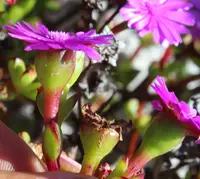
It produces relatively large, vivid magenta to purple daisy-like flowers with many narrow petals, which open fully in bright sun and help attract a range of small pollinating insects in its native habitat.

Carbon-conserving photosynthesis

Like many Aizoaceae, it uses CAM (crassulacean acid metabolism) photosynthesis, opening stomata mainly at night to reduce water loss while still maintaining efficient carbon uptake in its arid environment.

FAQs about Satin Spoonfig

Flowering usually declines when light is too low, the plant is overwatered, or fertilizer is too high in nitrogen. Provide strong light, a very free-draining mix, modest feeding, and a short dry rest between waterings to restore blooms.

Grow Healthy Plants with Botan Care

Keep your plants happy and healthy with plant identification, disease detection, and easy care guidance.

Botan plant care app — identify plants on mobile

Explore More Plants