St. Catherine's lace Care (Eriogonum giganteum)

St. Catherine's lace

About St. Catherine's lace

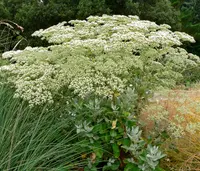
St. Catherine's lace, Eriogonum giganteum, is a large, evergreen shrub native to the Channel Islands off the coast of California. It belongs to the buckwheat family and is widely used in dry, coastal gardens.

The plant forms an open, branching structure with gray-green, felted leaves and broad, flat flower heads that age from white to rust-colored tones. These blooms attract many pollinators, especially bees and butterflies.

This species is adapted to low-rainfall, windy sites and performs well in well-drained, poor soils. It suits gardeners looking to care for St. Catherine's lace with minimal watering and low-maintenance care, as long as it receives plenty of sun and sharp drainage.

Main Plant Requirements

Care Difficulty

Easy Care

Light Preference

Full Sun

Water Requirements

Low Water

Temperature Preference

Warm Climate

Hardiness Zone

8–10

Soil Texture

Sandy, Loamy, Rocky

Soil pH

Slightly acidic (6.5–7.0), Slightly alkaline (7.0–7.5)

Soil Drainage

Well-drained

Fertilization

Minimal (feed rarely)

Get Personalized Care Plan

Scan your plant to receive care tips personalized for your specific plant

Available on iOS and Android

How to Care for the St. Catherine's lace

This large California native shrub thrives in strong sun and performs best in open, exposed sites.

  • Provide 6–8 hours of direct sun daily; full sun all day is ideal for sturdy growth and dense flowering of St. Catherine's lace.
  • Accepts light afternoon shade in hotter inland areas, but too much shade leads to lanky, weak stems and fewer flower clusters.
  • Site on a south- or west-facing slope or open bed; avoid locations shaded by trees or buildings, especially during winter’s shorter days.

This species is highly drought tolerant and needs much less water than typical garden shrubs once established.

  • Water newly planted Eriogonum giganteum only when the top 5–8 cm of soil are completely dry, then soak deeply to encourage deep rooting.
  • In established plants, rely mostly on natural rainfall; in very dry summers, give an occasional deep soak if foliage wilts or flower stalks flop.
  • Use sharply drained, gritty soil and avoid water sitting around the crown; yellowing, mushy lower leaves often indicate overwatering and poor drainage.

This drought-adapted shrub prefers warm, dry conditions and is best suited to mild-winter climates.

  • Ideal growing temperatures are 65–85°F (18–29°C), matching Mediterranean-type conditions with warm days and low humidity.
  • Mature plants tolerate brief lows around 20–25°F (-6 to -4°C), but young plants benefit from protection during hard or extended freezes.
  • Handles dry heat up to 100°F (38°C) if soil is fast-draining; avoid humid heat and frost pockets, which increase stress and disease risk.

Humidity is rarely limiting for this drought-adapted shrub, so typical indoor or outdoor air levels are acceptable.

This shrub needs very fast-draining, mostly mineral soil that mimics its native dry slopes.

  • Use a gritty mix such as 50–70% coarse sand or small gravel with the rest a lean, sandy loam or cactus mix.
  • Keep organic matter low; excess compost or peat increases water retention and promotes root rot in Eriogonum giganteum.
  • Aim for slightly alkaline to neutral pH around 7.0–8.0, avoiding strongly acidic mixes that can limit nutrient availability.
  • Avoid dense clay, waterlogged spots, or any soil that stays wet longer than 24 hours after irrigation.

This species can grow in containers but stays healthier in large, very sharply drained outdoor pots.

  • Choose a wide, heavy container to stabilize the tall branching canopy against wind and prevent tipping.
  • Fill the pot with a rocky cactus or succulent mix amended with extra pumice or gravel to keep the root zone dry.
  • Elevate the container on feet or bricks so drainage holes stay clear and water cannot pool under the base.

Eriogonum giganteum is adapted to nutrient-poor soils and usually needs little to no fertilizer once established.

  • If growth is very weak in poor soil, apply a light top-dressing of compost in spring, keeping it away from the crown.
  • In containers, use a low-dose, slow-release balanced NPK fertilizer at 1/2 strength at the start of the growing season.
  • Avoid feeding in late fall and winter, as added nutrients can push tender growth that may be damaged and shorten plant lifespan.

Pruning Eriogonum giganteum is mainly done to maintain structure and remove aging growth.

  • Cut back spent flower stalks in late winter or early spring before new growth starts to keep the shrub tidy.
  • Remove dead, damaged, or crossing branches with clean bypass pruners, cutting back to a healthy side shoot or branch junction.
  • Thin crowded interior stems lightly to improve air flow and light penetration without cutting into old, leafless wood.
  • Shape only the outer tips to preserve the plant’s natural form and sustain good flowering on younger shoots.

St. Catherine's lace is usually grown in the ground, so focus on careful transplanting rather than frequent repotting.

  • Transplant in late fall or very early spring so roots can establish in cooler, moist conditions.
  • Look for signs such as stunted growth or roots circling a nursery pot to decide when a container plant needs more space.
  • Move up only 1 pot size, using very well-drained, gritty soil, and keep the root ball as intact as possible.
  • Water deeply once after transplanting, then allow soil to dry between waterings to limit root stress and prevent rot.

Eriogonum giganteum is most often propagated from seed, with some growers also using semi-ripe cuttings.

  • Collect seed heads in late summer to early fall once they dry on the plant, then store seeds cool and dry until sowing.
  • Sow seeds in late fall or early spring in a sharply drained, sandy mix, barely covering them and keeping lightly moist, not wet.
  • Provide bright light and cool to mild temperatures, around 55–70°F, which support germination and sturdy seedling growth.
  • For cuttings, take semi-ripe stems in late spring, treat bases with rooting hormone, and root in a very free-draining mix.

This species is cold hardy in mild-winter climates and usually needs minimal winter care in the landscape.

  • Tolerates light frost but can be damaged by prolonged freezes below about 20°F, especially in poorly drained soil.
  • In colder areas, apply a thin gravel or coarse mulch layer around, not against, the crown to improve drainage and insulate roots.
  • Grow container plants in very free-draining soil and move them under cover or indoors during hard freezes to prevent root damage.

Care Tips

Encourage Deep Roots

In the first growing season, water less often but more deeply to encourage a deep root system that will anchor the shrub against wind and improve long-term drought tolerance.

Shape With Selective Thinning

After main flowering has finished, remove a few of the oldest stems at the base instead of shearing the whole plant, which keeps the natural form open, reduces fungal risk, and maintains good air flow through the canopy.

Support Pollinators Safely

Avoid using systemic insecticides and instead rely on spot-treating severe infestations with insecticidal soap in the evening, so pollinators can continue to use the abundant flowers without exposure to harmful residues.

Manage Self-Sowing

If you want to limit seedlings, cut back a portion of the spent flower heads before seeds mature and leave only a few to ripen for wildlife or intentional collection.

Plan For Mature Size

Allow ample horizontal space when planting, at least 1.5–2 m from paths and smaller shrubs, so the mature plant can spread naturally without frequent, stress-inducing hard pruning when caring for St. Catherine's lace.

Common Pests and Diseases

Spider mites

This pest attacks stressed plants in hot, dry conditions and feeds on leaf sap, causing stippling and fine webbing on leaves and stems. Symptoms include dull, gray-green foliage and reduced vigor, especially on younger growth.

Solution

Rinse foliage thoroughly with a strong stream of water to knock mites off, focusing on leaf undersides, and repeat weekly until under control. Improve plant vigor with appropriate watering, reduce dust by occasional hosing, and if needed apply insecticidal soap or horticultural oil labeled for mites during cooler parts of the day to avoid leaf burn.

Aphids

These insects cluster on tender stems, new flower stalks, and leaf undersides, sucking sap and excreting sticky honeydew. Symptoms include curling or distorted new growth and increased presence of ants tending the colonies.

Solution

Squash small colonies by hand or spray with a firm jet of water to dislodge them, repeating every few days. For persistent infestations, use insecticidal soap or a light horticultural oil, applied in the early morning, and reduce excess nitrogen fertilization that promotes soft, aphid-prone growth.

Leaf spots

This disease is favored by prolonged leaf wetness and poor air circulation, leading to small tan, brown, or dark spots on older leaves. Symptoms include scattered blemishes that may coalesce, with some premature leaf drop on lower, shaded portions of the plant.

Solution

Remove and discard heavily spotted leaves to reduce inoculum and avoid overhead watering that keeps foliage wet for long periods. Improve air movement by thinning overcrowded stems if necessary, and in severe or recurring cases consider a low-toxicity fungicide labeled for ornamental shrubs, applied according to local guidelines and only when conditions clearly favor disease.

Powdery mildew

This disease appears as a white or grayish powdery film on leaves and stems, usually in late spring or fall when days are warm and nights are cool. Symptoms include distorted young leaves and a general decline in aesthetic quality, though plants often survive with mild infection.

Solution

Increase sun exposure if possible, avoid overhead watering in the evening, and remove heavily infected leaves to slow spread. In gardens where powdery mildew is persistent, apply a preventive treatment such as horticultural oil, neem oil, or a potassium bicarbonate product at the first sign of disease, following label directions to avoid phytotoxicity on drought-adapted foliage.

Interesting Facts

Island-endemic shrub

This buckwheat species is naturally restricted to the Channel Islands of southern California, where it grows on dry, rocky slopes and coastal bluffs exposed to wind and salt spray.

Keystone pollinator resource

Its large, long-blooming umbels of tiny white flowers support a wide range of native insects, including many specialist bees that rely heavily on California buckwheats for nectar and pollen.

Long-lasting seed heads

After flowering, the dried seed heads persist as a structural feature in coastal scrub communities, providing both shelter and small-seed food for insects and birds through the dry season.

Botan icon

Did you know?

This species is commonly used in habitat restoration on the Channel Islands and nearby mainland coastal sites because its dense root system stabilizes eroding slopes while simultaneously rebuilding native pollinator networks that have been disrupted by past land use.

FAQs about St. Catherine's lace

This species is highly attractive to native bees, honeybees, butterflies, and many beneficial insects. Large, flat flower clusters provide abundant nectar and pollen over a long season, making it valuable in wildlife gardens and habitat plantings.

Grow Healthy Plants with Botan Care

Keep your plants happy and healthy with plant identification, disease detection, and easy care guidance.

Botan plant care app — identify plants on mobile

Explore More Plants