Mounted culture setup
Attach the plant to a small slab of hardwood bark or cork with sphagnum moss around the roots, then secure it with soft ties so air reaches the roots and water drains quickly.

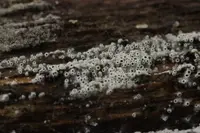
Eriopezia caesia is a small, often inconspicuous fungus rather than a traditional leafy houseplant. It typically forms delicate, cushion-like or patchy growth on decaying plant material or wood. In nature, it is found in cool, moist forest habitats where organic debris is abundant.
This species plays a role in breaking down dead plant matter, so it thrives in consistently damp, shaded conditions with good air movement. It is not commonly grown in home collections, and replicating its cool, humid, and substrate-specific habitat can be challenging for most hobbyists. Because of this, detailed guidance on how to care for Eriopezia caesia in cultivation is limited.

Care Difficulty
Moderate Care

Light Preference
Partial Shade

Water Requirements
Moderate Water

Temperature Preference
Warm Climate

Hardiness Zone
Unknown

Soil Texture
Loamy

Soil pH
Slightly acidic (6.5–7.0)

Soil Drainage
Well-drained

Fertilization
Minimal (feed rarely)
Scan your plant to receive care tips personalized for your specific plant
Available on iOS and Android
This species prefers cool, shaded forest-like light rather than direct, open sun.
Moist but not waterlogged conditions suit this species best, with careful attention to drainage.
Stable, cool to mild temperatures support healthy growth and reduce stress for this species.
This species prefers moderate, stable humidity and reacts poorly to very dry indoor air.
Eriopezia caesia grows best in a loose, airy, sharply drained mix that never stays waterlogged.
This species can be grown in containers if the pot supports its shallow, sensitive root system.
This species is usually adapted to low-nutrient habitats and needs only light feeding in cultivation.
Pruning is only needed to remove problem growth and maintain a natural form.
This plant is better suited to in-ground planting, with container culture kept on the drier, tighter side.
Propagation is possible but tends to be slow and best suited to patient growers.
This species is generally cold tolerant in suitable climates and needs only modest winter attention.

Plant Health Check
Not sure what's wrong with your plant? Check your plant's health inside the app.
Eriopezia caesia is a discomycete fungus that typically fruits on the bark of Fagus species, especially European beech, indicating a strong ecological association with this tree genus rather than a broad host range.
The fruiting bodies often show a distinctive bluish or greyish pruinose coating, caused by fine surface crystals or spores, which helps separate it from many visually similar bark-dwelling fungi.
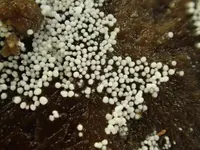
Its cup-like apothecia are only a few millimeters across but occur in dense groups on smooth bark, making colonies visible as small, pale patches even though individual structures are minute.
Growth is generally slow to moderate. In suitable conditions it extends only a few centimeters per year, forming small, compact patches rather than large clumps. Stable moisture, cool temperatures, and consistent humidity help maintain steady growth.
Keep your plants happy and healthy with plant identification, disease detection, and easy care guidance.