golden-yarrow Care (Eriophyllum confertiflorum)

Also known as: yellow-yarrow
golden-yarrow

About golden-yarrow

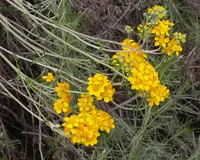
Golden-yarrow, Eriophyllum confertiflorum, is a small, bushy perennial native to dry slopes and chaparral habitats in western North America. It is often found in California hillsides and open, rocky areas.

Plants form low, branching mounds with finely divided, sometimes woolly foliage and many small, bright yellow flower clusters. The blooms attract native bees, butterflies, and other pollinators.

This species is adapted to sun, lean or rocky soil, and seasonal drought, which makes it relatively easy to grow in low-water gardens. Understanding how to care for golden-yarrow starts with providing good drainage and avoiding overly rich or wet conditions.

Main Plant Requirements

Care Difficulty

Easy Care

Light Preference

Full Sun

Water Requirements

Low Water

Temperature Preference

Warm Climate

Hardiness Zone

6–10

Soil Texture

Sandy, Loamy, Rocky

Soil pH

Slightly acidic (6.5–7.0), Neutral (7.0)

Soil Drainage

Well-drained

Fertilization

Minimal (feed rarely)

Get Personalized Care Plan

Scan your plant to receive care tips personalized for your specific plant

Available on iOS and Android

How to Care for the golden-yarrow

This drought-tolerant California native thrives in open, sunny sites with strong light.

  • Provide 6–8 hours of direct sun daily; full sun promotes dense growth and abundant blooms in golden-yarrow.
  • Accepts light afternoon shade in very hot climates, but too much shade causes lanky stems, fewer flowers, and reduced vigor.
  • In winter, low sun is usually sufficient outdoors; avoid planting where nearby trees or buildings will shade the plant more each year.

This species prefers dry, well-drained conditions and is sensitive to excess moisture.

  • Allow soil to dry out thoroughly between waterings; in the ground, wait until the top 5–8 cm is completely dry and the foliage looks slightly less turgid before watering.
  • Use sharply drained, sandy or rocky soil so water runs through quickly; standing water or heavy clay greatly increases root rot risk for Eriophyllum confertiflorum.
  • In cool or rainy seasons, irrigation is rarely needed; in prolonged summer drought, give a deep soak, then let the soil dry hard again before the next watering.

This plant is adapted to warm, dry climates with mild winters and hot summers.

  • Optimal growth occurs around 65–85°F (18–29°C); plants tolerate short spikes to 95°F (35°C) if soil drains freely and air movement is good.
  • Mature plants usually handle light frosts down to about 20–25°F (-6 to -4°C), but repeated hard freezes or cold, wet soil can kill roots.
  • In colder regions, plant on slopes or raised beds for better winter drainage and shelter from freezing winds, which helps crowns survive low temperatures.

This species thrives in dry air and rarely needs humidity adjustment indoors or outdoors.

  • Target 30–50% relative humidity, similar to typical indoor and arid outdoor conditions.
  • Plants tolerate prolonged low humidity if soil moisture is appropriate and roots are not waterlogged.
  • If foliage browns from the base upward while soil stays wet, reduce ambient humidity and increase air movement rather than adding moisture.

This drought-adapted shrub prefers lean, fast-draining soil that mimics rocky slopes.

  • Use a sandy or gravelly mix, such as 50–60% cactus mix combined with coarse sand or small grit for structure.
  • Aim for slightly acidic to neutral pH around 6.0–7.5, avoiding strongly alkaline or highly amended garden soils.
  • Limit rich compost to a thin portion of the mix (10–20%) to prevent lush, weak growth and root rot risk in Eriophyllum confertiflorum.
  • Improve aeration and drainage in heavy soils by incorporating pumice, coarse perlite, or crushed lava rock rather than fine organic material.

This species can adapt well to container growing when drainage and root conditions are managed carefully.

  • Choose a wide, shallow pot to accommodate its fibrous, spreading root system and reduce tipping in windy sites.
  • Select unglazed terracotta or a similarly porous material to allow faster evaporation and prevent chronically damp substrate.
  • Elevate the pot on feet or bricks so water clears drainage holes quickly, especially when placed on solid patios or balconies.

This drought-tolerant native shrub needs only light feeding, so focus on maintaining lean, well-drained soil for healthy golden-yarrow growth.

  • Use a thin layer of compost or a low-rate, balanced slow-release fertilizer (around 10-10-10) in early spring if growth seems weak.
  • Apply at half the label strength to avoid excess vigor and floppy stems in this naturally compact plant.
  • Skip additional feeding during late fall and winter, when growth is minimal or dormant.
  • Avoid frequent or heavy fertilization, especially in nutrient-rich soils, to preserve dense foliage and abundant flowering.

Eriophyllum confertiflorum responds well to light, timely pruning that maintains a compact, floriferous mound.

  • Prune in late winter or very early spring before new growth elongates, using clean, sharp hand pruners.
  • Remove dead, diseased, or winter-damaged stems first, cutting back to healthy tissue.
  • Thin crowded, leggy shoots and lightly shorten stems to improve airflow and keep a rounded, tidy shape.
  • Shear lightly after the main bloom flush to encourage additional flowering and prevent seedling spread if undesired.

This species is most often grown in the ground, so focus on careful outdoor transplanting rather than frequent container repotting.

  • Transplant young plants in early spring or fall, when temperatures are mild and soil moisture is stable.
  • Choose a sunny site with sharply drained soil; amend heavy clay with grit or coarse sand to limit root stress.
  • Move only when necessary; look for stunted growth or poor flowering in unsuitable soil rather than root binding.
  • Water thoroughly after planting, then taper to deep, infrequent watering so roots anchor and adapt to drier conditions.

New Eriophyllum confertiflorum plants are most often produced from seeds, with cuttings as a secondary option.

  • Sow fresh seed in late fall or early spring, in a gritty, well-drained mix kept lightly moist, not wet.
  • Provide bright light and cool to mild temperatures (55–68°F) to support steady germination and compact seedlings.
  • Take 5–8 cm semi-ripe cuttings in late spring or early summer, trimming below a leaf node.
  • Insert cuttings into a sandy mix, maintain high light and good air movement, and water sparingly to avoid rot.

This plant is generally cold hardy in its native range and needs minimal winter care in well-drained soil.

  • Tolerates light frost; sustained hard freezes below typical USDA zone limits may still damage tender tips.
  • In colder or wetter climates, add a thin, coarse mulch around but not against the crown to improve drainage.
  • For container plants in colder areas, move pots to a sheltered, unheated but frost-sheltered spot with good light.

Care Tips

Encourage Compact Form

Pinch back soft stem tips in late winter or very early spring to keep plants dense, reduce legginess, and promote a heavier flush of flowers.

Poor-Soil Advantage

Avoid improving the planting hole with rich compost or manure, since this species flowers and holds structure better in lean, rocky soil with minimal organic matter.

Summer Longevity Boost

In hot, dry regions, leave a thin layer of small gravel or coarse sand around the root zone to reduce soil temperature, limit rot, and extend blooming on established plants.

Prevent Woody Centers

Every 2–3 years, replace oldest plants from self-sown seedlings or cuttings taken from vigorous outer stems to avoid a bare, woody center and keep the planting looking fresh.

Wildlife-Friendly Placement

Site plants in open, sunny edges or along paths where pollinators can easily reach the flowers, since consistent insect activity often leads to better self-seeding and a more natural colony when growing golden-yarrow.

Common Pests and Diseases

Aphids

These insects cluster on young stems and flower stalks, sucking sap and causing distortion of new growth and sticky honeydew on foliage. This pest is most common on lush, irrigated golden-yarrow in garden settings.

Solution

Spray colonies off with a firm stream of water in the morning, then repeat every few days until numbers drop. For persistent infestations, use an insecticidal soap or neem oil, coating stems and the undersides of leaves, and reduce excess nitrogen fertilizer that encourages soft new growth.

Leafhoppers

These insects feed by piercing and sucking, leading to pale stippling, curling, or a bleached look on the fine foliage, and can also transmit plant pathogens. This pest is more frequent in hot, dry, open sites where golden-yarrow is commonly grown.

Solution

Reduce nearby weedy hosts, then use a strong water spray to dislodge nymphs from stems and flower stalks. If damage continues, apply a low-impact treatment such as insecticidal soap or pyrethrin in the evening, ensuring good coverage but avoiding open flowers to protect pollinators.

Powdery mildew

This disease appears as a white to gray powdery film on leaves and stems, sometimes causing leaf curling or yellowing on stressed or crowded plants. Symptoms include more severe coverage in late season or in sites with poor air circulation.

Solution

Improve airflow by thinning neighboring plants and avoid overhead watering, especially late in the day. Remove and discard heavily infected stems, then apply a sulfur or potassium bicarbonate fungicide labeled for ornamentals if the plant is still actively growing and flowering.

Botrytis blight

This disease causes brown, water-soaked spots on flower heads and fine foliage, often followed by gray fuzzy mold in cool, damp conditions. Symptoms include collapse of individual flower clusters, especially after prolonged rain or overhead irrigation.

Solution

Remove and discard affected flower stalks and any plant debris around the base to reduce spores. Improve drainage and spacing, water at soil level, and in repeatedly wet climates consider a preventative fungicide labeled for gray mold at the start of extended rainy periods.

Interesting Facts

Woolly foliage adaptation

The leaves and stems are densely covered with white hairs that reflect sunlight and reduce water loss, an adaptation to hot, dry chaparral and coastal scrub habitats in California and Baja California.

Early-season nectar source

Its small, clustered yellow flower heads open in spring and early summer and provide nectar and pollen for native bees, flies, and butterflies at a time when many other chaparral plants have already finished blooming.

Fire-adapted life strategy

This short-lived subshrub often behaves as a pioneer species after wildfire, quickly colonizing disturbed, nutrient-flushed soils and helping stabilize slopes while longer-lived shrubs reestablish.

Botan icon

Did you know?

Genetic and morphological variation across its range has led botanists to recognize several subspecies within this single species, each adapted to specific local conditions such as coastal bluffs, inland foothills, or high-elevation slopes.

FAQs about golden-yarrow

This species spreads by short rhizomes and self-seeding but is usually not aggressive in well-managed gardens. In lean, dry soils it forms contained clumps. Deadheading spent flowers reduces reseeding and helps keep patches within bounds.

Grow Healthy Plants with Botan Care

Keep your plants happy and healthy with plant identification, disease detection, and easy care guidance.

Botan plant care app — identify plants on mobile

Explore More Plants