Succession Sowing
Sow small batches every 2–3 weeks in early spring to stagger flowering and keep the planting looking full and productive for a longer season when growing white meadowfoam.

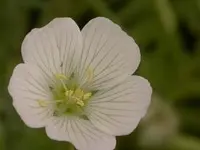
White meadowfoam, Limnanthes alba, is a low, spreading annual wildflower native to moist meadows and seasonal wetlands in western North America. It forms a dense mat of finely divided foliage topped with cup-shaped white flowers, often with a soft yellow center. In bloom, the plant creates a foam-like carpet effect, which explains its common name. It grows quickly from seed and usually completes its life cycle in one cool season, which makes it suitable for short-term displays or naturalistic plantings. White meadowfoam prefers full sun, consistent moisture, and well-drained, moderately fertile soil, and these traits make it relatively easy to care for white meadowfoam in suitable climates.

Care Difficulty
Easy Care

Light Preference
Full Sun

Water Requirements
Regular Water

Temperature Preference
Cool Climate

Hardiness Zone
5–9

Soil Texture
Sandy, Loamy, Organic-rich

Soil pH
Acidic (5.5–6.5), Slightly acidic (6.5–7.0)

Soil Drainage
Moist but well-drained

Fertilization
Minimal (feed rarely)
Scan your plant to receive care tips personalized for your specific plant
Available on iOS and Android
This cool-season annual prefers bright outdoor conditions with mild sun exposure for best flowering.
This species prefers consistently moist but not waterlogged soil throughout its main growing season.
This cool-season annual grows best in mild conditions and struggles with both hard frost and intense heat.
Humidity is not critical for Limnanthes alba, which thrives in typical outdoor conditions.
Limnanthes alba prefers moist, well-aerated soil that never stays waterlogged.
This species grows reliably in containers when moisture and drainage are carefully balanced.
This annual wildflower prefers lean soil, so white meadowfoam usually needs minimal fertilization.
Pruning Limnanthes alba is simple and mainly supports prolonged flowering and a tidy appearance.
This species is most often grown as a direct-sown annual, so transplanting is minimal and container culture is uncommon.
Limnanthes alba is most commonly propagated from seed, which makes renewal straightforward each year.
As a cool-season annual, this plant usually completes its life cycle before hard winter, so ongoing winter care is limited.

Plant Health Check
Not sure what's wrong with your plant? Check your plant's health inside the app.
This species is naturally restricted to parts of California and Oregon, where it grows in moist meadows and seasonal wet areas that can be waterlogged in winter and dry out by summer.
The seeds contain unusual long-chain fatty acids that have made the plant important as an industrial oilseed crop used in products such as lubricants, cosmetics, and surface coatings.
Its white, bowl-shaped flowers with slightly overlapping petals create a continuous, foamy-looking carpet when mass-planted, which inspired the common name white meadowfoam.

White meadowfoam was first domesticated as an oilseed crop only in the 20th century, making it one of the relatively recent additions to commercially cultivated temperate oilseed plants.
Sparse or absent flowers usually result from too much shade, dry soil, or excess nitrogen fertilizer. Provide full sun, consistent moisture, and avoid rich, high‑nitrogen feeds. Deadhead spent blooms to slightly extend the flowering period.
Keep your plants happy and healthy with plant identification, disease detection, and easy care guidance.