


Use flow barriers
Place the plant in submerged containers or behind rocks or hardscape to shield stems from strong currents, which helps reduce breakage and uncontrolled spread in aquaria and ponds.

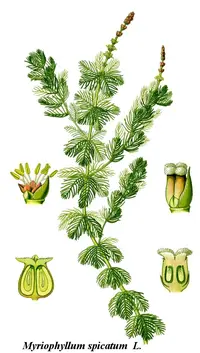
Eurasian watermilfoil (Myriophyllum spicatum) is a submerged aquatic plant commonly found in lakes, ponds, and slow-moving rivers. It forms dense, feathery underwater stands that can reach the water surface. The plant has finely divided, whorled leaves that give it a soft, plume-like appearance and provide shelter for fish and aquatic invertebrates. It spreads quickly by stem fragments, which makes it invasive in many North American waterways and harder to control. Its fast growth habit can be an advantage in controlled aquariums or managed ponds but requires regular pruning. In general, it prefers full sun, still or gently moving water, and nutrient-rich conditions, which helps when learning how to care for Eurasian watermilfoil.

Care Difficulty
Moderate Care

Light Preference
Full Sun

Water Requirements
Aquatic

Temperature Preference
Cold Hardy

Hardiness Zone
4–10

Soil Texture
Sandy, Loamy, Silty

Soil pH
Slightly acidic (6.5–7.0), Neutral (7.0)

Soil Drainage
Waterlogged tolerant

Fertilization
Minimal (feed rarely)
Scan your plant to receive care tips personalized for your specific plant
Available on iOS and Android
This submerged aquatic plant depends on strong underwater light but not harsh, exposed sun at the surface.
This species grows rooted in saturated sediment under standing or slow-moving freshwater, not in intermittently dry soil.
This hardy aquatic plant tolerates a wide range of water temperatures but has a clear growth optimum.
This submerged aquatic species relies on water humidity at 100% and does not depend on room air humidity at all.
This aquatic plant anchors in underwater sediment rather than conventional potting soil.
This species can be grown in containers placed within ponds or water features.
Myriophyllum spicatum in ponds or aquaria needs only modest supplementation when water is low in nutrients.
Pruning Myriophyllum spicatum manages density, light penetration, and plant health in ponds and aquaria.
This aquatic species is usually anchored in substrates or baskets, so focus on careful transplanting rather than frequent repotting.
Myriophyllum spicatum is commonly propagated vegetatively, which allows rapid establishment in controlled aquatic systems.
Established Myriophyllum spicatum in outdoor ponds is generally cold hardy in temperate climates and needs minimal winter care.

Plant Health Check
Not sure what's wrong with your plant? Check your plant's health inside the app.
This submerged aquatic plant often forms dense surface mats that shade out native vegetation and can alter entire lake ecosystems when it becomes invasive outside its native range in Eurasia and North Africa.
It propagates very effectively through stem fragments, so even a small piece broken off by boats, fishing gear, or waterfowl can start a new colony downstream or in a new water body.
In North America it is known to hybridize with the native northern watermilfoil (Myriophyllum sibiricum), creating hybrids that can be even more vigorous and harder to manage than the parent species.

This species can photosynthesize and continue slow growth under ice cover in cold climates, which allows it to gain a competitive advantage by starting spring growth earlier than many native aquatic plants once the ice melts.
Yellowing often results from low nutrients, especially nitrogen or iron, poor water quality, or sudden changes in temperature or hardness. Check fertilizer levels, test water parameters, and correct imbalances gradually to stabilize growth and color.
Keep your plants happy and healthy with plant identification, disease detection, and easy care guidance.

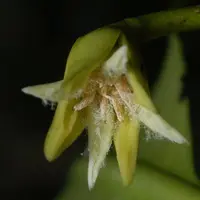
red mangrove
Rhizophora mangle
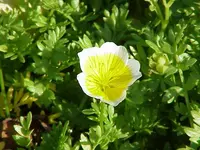
Douglas' meadowfoam
Limnanthes douglasii
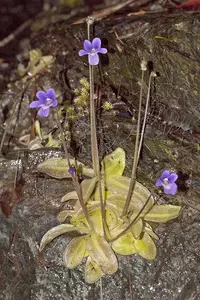
California butterwort
Pinguicula macroceras
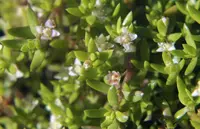
swamp stonecrop
Crassula helmsii
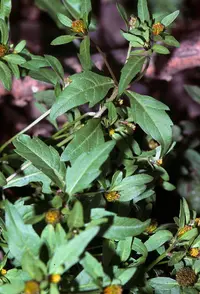
purplestem beggarticks
Bidens connata
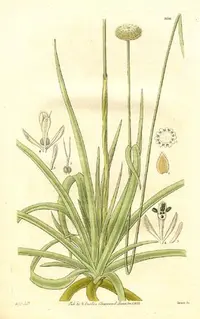
tenangle pipewort
Eriocaulon decangulare
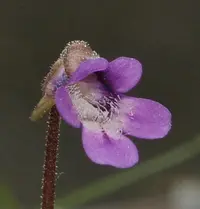
Common butterwort
Pinguicula vulgaris
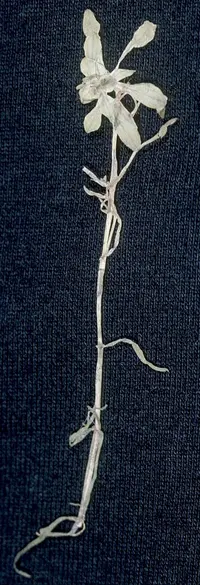
twoheaded water-starwort
Callitriche heterophylla