Shear After Bloom
Lightly shear spent flower stems back by 5–8 cm after the main flush of bloom to encourage a denser mound and a second, lighter wave of flowering.

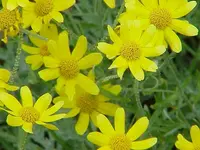
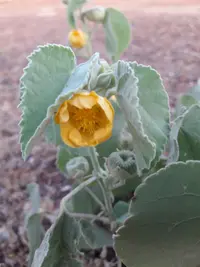
Common woolly sunflower, Eriophyllum lanatum, is a small, drought-tolerant perennial from western North America, often found in dry meadows, rocky slopes, and open woodlands. It forms low, mounding clumps of gray-green, softly hairy foliage.
Bright yellow, daisy-like flowers rise above the woolly leaves in late spring and summer, attracting bees, butterflies, and other pollinators. The dense leaf hairs help the plant conserve water and tolerate sun and wind.
This species suits low-maintenance, water-wise gardens and naturalistic plantings. It prefers full sun, well-drained, lean soil, and does best with minimal summer watering, which makes it relatively easy to care for common woolly sunflower once established.

Care Difficulty
Easy Care

Light Preference
Full Sun

Water Requirements
Low Water

Temperature Preference
Cold Hardy

Hardiness Zone
5–9

Soil Texture
Sandy, Loamy, Rocky

Soil pH
Slightly acidic (6.5–7.0), Neutral (7.0)

Soil Drainage
Well-drained

Fertilization
Minimal (feed rarely)
Scan your plant to receive care tips personalized for your specific plant
Available on iOS and Android
This sun-loving perennial thrives in open, bright conditions similar to dry meadows and slopes.
This drought-tolerant perennial prefers dry, fast-draining conditions once established.
This species is adapted to dry, temperate climates with cool winters and warm, not extreme, summers.
This species handles a wide humidity range and rarely needs special humidity management outdoors.
This drought-adapted perennial prefers lean, fast-draining soil that mimics a dry, rocky habitat.
This species can grow in containers when drainage is excellent and the mix stays on the dry side.
This drought-tolerant native needs minimal feeding, so use light, infrequent fertilizer on common woolly sunflower in poor soils only.
Pruning Eriophyllum lanatum is simple and helps maintain a compact, floriferous mound.
This species is usually grown in the ground, with transplanting more relevant than container repotting.
Eriophyllum lanatum is commonly propagated by seed and, less often, by division of established clumps.
This plant is generally cold hardy in much of its range and needs little winter care in the ground.

Plant Health Check
Not sure what's wrong with your plant? Check your plant's health inside the app.
The leaves are densely covered with fine, white hairs that trap air and reflect sunlight, helping the plant tolerate intense sun, wind, and drought in its native western North American habitats.
Its bright yellow flower heads often bloom from late spring into summer on open slopes and roadsides, providing an important nectar and pollen source for native bees, butterflies, and other early-season pollinators.
Populations naturally occur from lowland prairies up into subalpine meadows and rocky ridges, where the species withstands strong temperature swings, thin soils, and high UV exposure.

This species exhibits notable regional variation, with multiple recognized varieties adapted to different local climates and elevations across western North America, making it a textbook example for studying microevolution and local adaptation in native wildflowers.
Lack of blooms usually comes from too much shade, overly rich or wet soil, or excessive nitrogen fertilizer. This species flowers best in lean, well-drained ground with full sun and minimal supplemental feeding.
Keep your plants happy and healthy with plant identification, disease detection, and easy care guidance.