Erythricium aurantiacum Care

Erythricium aurantiacum

About Erythricium aurantiacum

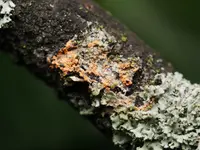
Erythricium aurantiacum is a wood-decaying fungus, not a typical leafy houseplant. It forms thin, orange to reddish crust-like patches on bark or exposed wood. The growth is usually flat and spreading rather than upright, often appearing on conifer logs or stumps in cool, moist forests. It occurs mainly in temperate regions of the Northern Hemisphere, where it plays a role in breaking down dead wood. Because it is a specialized fungus with specific host and moisture needs, it is not commonly cultivated. For anyone who wants to care for Erythricium aurantiacum, consistent humidity, shaded conditions, and decaying wood substrates are generally important.

Main Plant Requirements

Care Difficulty

Moderate Care

Light Preference

Partial Shade

Water Requirements

Moderate Water

Temperature Preference

Warm Climate

Hardiness Zone

Unknown

Soil Texture

Loamy

Soil pH

Slightly acidic (6.5–7.0)

Soil Drainage

Well-drained

Fertilization

Minimal (feed rarely)

Get Personalized Care Plan

Scan your plant to receive care tips personalized for your specific plant

Available on iOS and Android

How to Care for the Erythricium aurantiacum

This fungus prefers shaded, humid forest conditions with only brief, gentle sun exposure.

  • Provide dappled or filtered light, such as under a tree canopy, with no more than 1–2 hours of weak morning sun per day to avoid drying the substrate.
  • Avoid direct midday or afternoon sun, which can overheat bark or wood, causing the host surface to crack and the fruiting bodies to desiccate.
  • In summer, increase shade protection if surrounding vegetation is thinned; in winter, reduced day length is acceptable as long as the habitat remains moist and sheltered.

Moist, not waterlogged, conditions are essential for this wood-inhabiting fungus to persist and fruit.

  • Keep the substrate (bark, fallen logs, or woody debris) evenly moist; allow only the surface to dry slightly before rewetting, avoiding standing water or saturated puddles.
  • Ensure excellent drainage around host wood so water can drain within a few hours; prolonged soggy conditions promote anaerobic rot and loss of suitable habitat.
  • During hot, dry periods, increase misting or gentle watering frequency while watching for moldy, foul-smelling areas, which signal excessive moisture and poor air movement.

Stable, cool to mild conditions favor growth and fruiting on host wood.

  • Aim for 50–70°F (10–21°C) as an optimal range, where enzymatic activity in the fungus and decomposition of wood are balanced and steady.
  • Tolerate short drops to about 32°F (0°C), but protect from repeated hard frost below 28°F (-2°C), which can damage exposed fruiting crusts.
  • In hot spells above 80°F (27°C), maintain shade and high ambient humidity; rapid drying and heat stress can halt fruiting and cause tissue cracking.

Humidity plays a minor role for Erythricium aurantiacum, which typically grows in outdoor, well-ventilated conditions rather than controlled indoor climates.

This fungus develops best on host material in conditions that mimic moist, organic-rich forest litter rather than conventional potting soil.

  • Favor a loose, humus-rich, slightly acidic to neutral substrate (pH 5.5–7.0) with decaying wood or bark present, as this provides both structure and nutrients.
  • Ensure the substrate remains evenly moist but not waterlogged; excess standing water reduces oxygen around the fungal tissue and can limit growth.
  • Improve aeration and drainage by mixing in coarse bark chips, leaf mold, and a small portion of sharp sand so water drains while the organic fraction stays damp.
  • Avoid compacted, clay-heavy mineral soils or sterile, peat-only mixes that lack woody debris, since these do not support typical host interactions.

This species is not well suited to conventional container culture, as it is a wood-decay fungus that relies on natural substrates rather than isolated pots.

This wood-decaying fungus is adapted to low-nutrient environments and does not need intentional fertilization in garden or landscape settings.

Erythricium aurantiacum is not managed with pruning in typical cultivation, since it behaves as a wood-rotting fungus rather than a shaped ornamental plant.

This species is not suited to container culture, so management focuses on whether to remove or leave colonized wood in place.

  • Transplanting is generally not performed, as the fungus is closely associated with its host wood and mycelium network.
  • If removal is desired, cut and dispose of heavily colonized branches or wood rather than attempting to move the organism.
  • For observation or study, introduce small colonized wood pieces to fresh, similar wood instead of disturbing established sites.
  • Minimize disturbance to surrounding soil and roots of living trees when handling infected wood.

Intentional propagation of this wood-decay fungus is uncommon outside research or specialized cultivation, and most gardeners avoid spreading it.

This fungus is naturally cold hardy and typically requires no special winter care in outdoor conditions.

Care Tips

Early host isolation

As soon as affected conifer or broadleaf hosts show the characteristic orange crust, mark and isolate those plants from healthy stock to prevent accidental spread on tools, clothing, or nursery carts.

Strict tool hygiene

Disinfect pruning tools, stakes, and propagation equipment between plants with a proven fungicidal disinfectant (such as 70% alcohol or a quaternary ammonium product) to reduce the risk of transferring the fungus to new hosts.

Quarantine new stock

Hold newly arrived or rescued landscape plants in a separate quarantine area for at least 3–4 weeks, monitoring bark, lower stems, and branch crotches for orange felt-like growth before integrating them into production or display areas.

Moisture management strategy

Improve air movement around susceptible plants with spacing and directional airflow and avoid overhead irrigation late in the day, since prolonged bark wetness favors establishment and spread when caring for Erythricium aurantiacum.

Careful debris handling

Remove and bag any prunings or bark pieces with suspected orange crust and dispose of them off-site or in closed waste streams, rather than composting on-site, to limit survival and reinfection sources.

Common Pests and Diseases

Orange needle blight

This disease causes bright orange, powdery to crusty encrustations on conifer needles, often leading to browning and premature needle drop. Symptoms include patchy discoloration and thinning foliage on affected branches.

Solution

Prune out and destroy heavily infected twigs and branches, disinfecting tools between cuts, and avoid overhead irrigation to keep needles as dry as possible. Improve spacing and airflow around trees, and in forestry or orchard settings follow local fungicide recommendations that target needle blights, timed to new needle growth.

Stem canker

This disease produces sunken, discolored lesions on small branches or stems near infected foliage, which can girdle twigs and cause dieback. Symptoms include localized orange to brown crusts or mats on bark surfaces close to previous needle infections.

Solution

Cut back affected branches into healthy wood, disposing of all prunings away from host plants, and sanitize cutting tools with alcohol or a 10% bleach solution after each cut. Reduce plant stress by avoiding drought or waterlogging and maintain good airflow; in production settings, follow regional guidance on protective fungicide sprays where stem cankers from this fungus are common.

Interesting Facts

Corticioid basidiomycete

This species is a corticioid fungus, forming thin, crust-like fruiting bodies rather than typical mushroom caps, and belongs to the basidiomycetes, the same major group as gilled mushrooms and bracket fungi.

Orange effused basidiocarp

It produces a bright orange, spreading crust on the surface of its substrate, with a smooth to slightly granular texture that can merge into larger patches as it matures.

Wood-inhabiting lifestyle

This fungus colonizes dead or decaying woody material, contributing to wood decomposition and nutrient cycling in forest ecosystems by breaking down structural plant polymers.

FAQs about Erythricium aurantiacum

Current literature describes this species primarily as a plant pathogen rather than a common ornamental. There is limited toxicity data, so treat it as potentially harmful. Avoid ingestion, wear gloves when handling, and prevent contact with pets and children.

Grow Healthy Plants with Botan Care

Keep your plants happy and healthy with plant identification, disease detection, and easy care guidance.

Botan plant care app — identify plants on mobile

Explore More Plants