Coral Bean Care (Erythrina herbacea)

Also known as: redcardinal, Cherokee Bean
Coral Bean

About Coral Bean

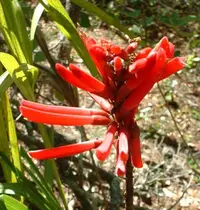
Coral bean (Erythrina herbacea) is a deciduous shrub or small, thorny tree known for its bright red tubular flowers and striking seed pods with glossy red seeds. It typically has open, airy branching and divided leaves, giving it a light, somewhat sparse appearance.

This species is native to the southeastern United States and parts of Mexico, where it grows in sandy woodlands, coastal areas, and open scrub. It is drought-tolerant once established, prefers well-drained soil, and needs plenty of sun, so care for Coral Bean is generally easier in warm, dry climates.

Its showy flowers attract hummingbirds and other pollinators, but its seeds are highly poisonous, which is an important consideration in family gardens and pet-friendly spaces.

Main Plant Requirements

Care Difficulty

Moderate Care

Light Preference

Full Sun

Water Requirements

Low Water

Temperature Preference

Warm Climate

Hardiness Zone

7–11

Soil Texture

Sandy, Loamy

Soil pH

Acidic (5.5–6.5), Slightly acidic (6.5–7.0)

Soil Drainage

Well-drained

Fertilization

Minimal (feed rarely)

Get Personalized Care Plan

Scan your plant to receive care tips personalized for your specific plant

Available on iOS and Android

How to Care for the Coral Bean

This sun-loving shrub performs best with strong, direct light in most climates.

  • Provide 6–8 hours of direct sun daily; full sun promotes dense growth and abundant blooms on Coral Bean.
  • Tolerates light afternoon shade in hot regions; choose morning sun with filtered or dappled light after 2–3 pm to limit leaf scorch.
  • In partial shade (under 4–5 hours of direct sun), flowering declines; prune nearby shading plants or reposition young plants for better exposure.

This drought-tolerant species prefers deep, infrequent watering once established.

  • Allow the top 5–7 cm of soil to dry before watering; in sandy soil this may mean thorough soaking every 7–14 days during active growth.
  • Use fast-draining soil; water until the root zone is moist, then let excess drain away to reduce root rot risk in Erythrina herbacea.
  • In winter or dormancy, water only when the soil is completely dry and stems look slightly shriveled; pale, mushy roots or sour smell indicate overwatering.

This plant favors warm conditions and copes better with heat than with cold.

  • Optimal growing temperatures are 70–90°F (21–32°C); growth slows noticeably below 60°F (16°C).
  • Hardy to about 20–25°F (-6 to -4°C) once established, but young plants are damaged sooner and benefit from mulch over the root zone in winter.
  • Handles short heat spikes up to 100°F (38°C) if soil is not waterlogged; frost blackens top growth, which often resprouts from protected roots in spring.

This species tolerates a wide humidity range and rarely needs special humidity management.

  • Performs well at 30–60% humidity, similar to typical indoor air in heated or cooled homes.
  • Tolerates dry air without issue as long as watering is appropriate and roots are not stressed.
  • Only in very hot, arid conditions might Coral Bean show marginal leaf browning, which is better managed by shading and proper watering than by misting.

This species prefers light, fast-draining soil that stays airy around the roots.

  • Use a sandy or sandy-loam mix with coarse particles that prevent compaction and allow water to pass quickly.
  • Aim for slightly acidic to neutral pH, around 6.0–7.0, which supports nutrient uptake and healthy root growth.
  • Combine roughly 50% coarse sand, 25% perlite or fine gravel, and 25% compost or pine bark fines for structure and moderate fertility.
  • Avoid heavy clay, peat-heavy, or water-retentive mixes that stay wet more than 1–2 days, as these promote root rot in Erythrina herbacea.

This species can be grown in containers if the pot is chosen and managed for its deep, woody root system.

  • Select a deep, heavy container that resists tipping as stems elongate and become top-heavy in windy conditions.
  • Choose a mineral-based, gritty mix that drains so quickly you may need to water more often, which helps prevent root rot in confined roots.
  • Use a pot material such as unglazed clay if extra evaporation is needed to offset occasional summer downpours and avoid prolonged saturation.

Erythrina herbacea is a light feeder and usually needs only modest nutrition in the ground.

  • Use a balanced, slow-release fertilizer (around 10-10-10) or a thin layer of compost once in early spring to support growing Coral Bean.
  • Apply at half the label rate, keeping granules or compost away from the stem to prevent rot.
  • Avoid summer overfeeding; skip or very lightly feed during fall, and do not fertilize during winter dormancy.

Erythrina herbacea responds well to thoughtful pruning that maintains a sturdy, flowering framework.

  • Carry out main pruning in late winter to early spring, before new growth starts.
  • Remove dead, damaged, crossing, or weak stems first, using clean, sharp bypass pruners or loppers.
  • Shorten or thin crowded shoots to open the center, improving air flow and light penetration.
  • Cut older, woody stems near the base to stimulate vigorous new flowering shoots.

This species is most often grown in the ground and resents frequent disturbance of its deep root system.

  • Transplant in late winter or very early spring, just before active growth, to reduce shock.
  • Look for signs such as roots tightly circling a pot, water running off quickly, or declining vigor before moving a container plant.
  • Shift to a container only 1–2 in wider, using a free-draining mix and handling the taproot gently.
  • Water thoroughly after transplanting, then keep soil slightly moist, shaded, and sheltered from strong wind for 1–2 weeks.

Erythrina herbacea is commonly propagated from seeds and semi-hardwood cuttings.

  • Collect ripe seeds in late summer to fall, then sow in spring after scarifying the seed coat and soaking 12–24 hours.
  • Use a warm medium at 70–80°F in bright, indirect light; keep evenly moist but not waterlogged for germination.
  • Take semi-hardwood cuttings in late spring to summer, apply rooting hormone, and place in a fast-draining mix.
  • Maintain high humidity around cuttings with a vented cover and provide bottom warmth for stronger rooting.

This plant is moderately cold hardy but benefits from simple winter protection in cooler climates.

  • Tolerates brief light freezes but may die back to the ground in colder winters, regrowing from the root crown.
  • Apply a 5–8 cm layer of dry mulch over the root zone in late fall, keeping it slightly away from stems.
  • In containers, move plants to a bright, frost-free area and reduce watering while they are dormant.

Care Tips

Root sucker control

Inspect the surrounding soil in late spring and remove unwanted root suckers with a sharp spade to prevent the plant from forming an overly dense thicket that is hard to manage.

Winter dieback management

In USDA zones where top growth is killed by frost, cut back dead stems to just above the crown in late winter and clear away debris to reduce hiding places for pests and encourage strong new shoots.

Staking young stems

Provide a sturdy stake for young, fast-growing stems in windy sites, tying them loosely with soft ties so the plant can establish a stable framework before the wood fully hardens.

Seed pod handling

Wear gloves and collect mature seed pods before they split, keeping them away from children and pets, since the bright red seeds are toxic if eaten.

Pollinator support zone

Leave a small mulch-free ring around the base so native bees and other pollinators can access bare soil, which indirectly supports flowering and seed set when growing Coral Bean.

Common Pests and Diseases

Erythrina gall wasp

This pest causes swollen, knotty galls on young stems and shoots, which can stunt growth and distort new foliage.

Solution

Prune out and destroy all galled stems before adults emerge, focusing on soft, newly affected growth, and disinfect pruners between cuts. Where infestation is persistent outdoors, encourage natural predators by maintaining plant diversity nearby and avoid broad-spectrum insecticides that disrupt beneficial wasps and beetles.

Erythrina twig borer

This pest tunnels into young stems, causing wilting, tip dieback, and hollow, frass-filled shoots that break easily.

Solution

Cut back and discard infested twigs several inches below visible damage to remove larvae inside the stems. Keep the plant vigorous through proper watering and fertilization, and remove pruned material from the area so adults cannot re-emerge and reinfest the plant.

Leaf spot

This disease causes small tan to dark-brown lesions on leaves that may merge into larger irregular patches, sometimes with a yellow halo.

Solution

Remove and discard heavily spotted leaves and any fallen foliage to reduce fungal spore levels, and water at the base of the plant so leaves dry quickly. In humid regions, increase spacing and airflow around plants; if leaf spot recurs, a copper-based fungicide labeled for ornamental shrubs can be applied according to directions as part of broader Erythrina herbacea care.

Interesting Facts

Specialized hummingbird nectar

The bright tubular flowers produce nectar with a high sucrose content that closely matches the energy needs of migrating hummingbirds in the southeastern United States, which act as its main pollinators.

Nitrogen-fixing shrub legume

As a legume, this species forms nodules on its roots that host nitrogen-fixing bacteria, allowing it to enrich poor, sandy soils and improve local soil fertility over time.

Toxic but bird-dispersed seeds

The glossy red seeds are highly toxic to humans and many mammals, yet some bird species can consume the fleshy pod tissues and help disperse the seeds without being harmed.

Botan icon

Did you know?

This species often resprouts vigorously from a woody, underground root crown after fire or cutting, making it a characteristic component of fire-adapted pine savannas and coastal scrub habitats in its native range.

FAQs about Coral Bean

Lack of flowers often comes from insufficient sun, heavy nitrogen fertilization, or the plant being too young. Frost-damaged wood may also reduce blooms; prune lightly in late winter to remove dead stems and encourage flowering wood.

Grow Healthy Plants with Botan Care

Keep your plants happy and healthy with plant identification, disease detection, and easy care guidance.

Botan plant care app — identify plants on mobile

Explore More Plants