Mark Dormant Clumps
After flowering, place small, discreet markers where each clump grows so you avoid disturbing the bulbs during summer dormancy, cultivation, or replanting other shade plants nearby.

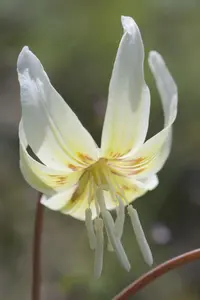
California fawnlily, Erythronium californicum, is a small spring-flowering bulb from woodland habitats in northern California and southwestern Oregon. It is a deciduous perennial, dying back after flowering and reappearing each spring from an underground bulb.
The plant forms low rosettes of mottled green and brown leaves, with slender stems carrying nodding, star-shaped white to creamy flowers often flushed with yellow. It naturally occurs in open woods, forest edges, and rocky slopes.
Gardeners value it for delicate early-season color and a naturalistic look, but it can be slow to establish and dislikes disturbance. Light, humus-rich soil and steady moisture during growth are key to how to care for California fawnlily.

Care Difficulty
Moderate Care

Light Preference
Partial Shade

Water Requirements
Moderate Water

Temperature Preference
Cold Hardy

Hardiness Zone
5–8

Soil Texture
Loamy, Sandy, Organic-rich

Soil pH
Acidic (5.5–6.5), Slightly acidic (6.5–7.0)

Soil Drainage
Moist but well-drained

Fertilization
Minimal (feed rarely)
Scan your plant to receive care tips personalized for your specific plant
Available on iOS and Android
This woodland bulb prefers cool, filtered light that mimics dappled forest conditions.
This species needs steadily moist but not waterlogged soil during its active spring growth.
This woodland perennial thrives in cool to mild conditions with marked seasonal change.
This woodland bulb prefers moderately moist air but usually adapts to typical household humidity.
Soil for Erythronium californicum should mimic loose, humus-rich woodland ground that drains freely yet holds consistent moisture.
This species can be grown in containers if the pot setup respects its deep, cool, woodland-rooting habit.
This woodland bulb needs minimal feeding, especially in fertile, humus-rich soil, but light nutrition can support flowering in lean sites.
Pruning needs for Erythronium californicum are minimal and focus on cleanup rather than shaping.
This species is usually grown in the ground; transplant Erythronium californicum only when necessary to avoid disturbing its bulbs.
Propagation is most reliable by bulb division, with seed used mainly for patient growers and conservation projects.
This California fawnlily is generally hardy in suitable climates and usually needs little special winter care in the ground.

Plant Health Check
Not sure what's wrong with your plant? Check your plant's health inside the app.
This species forms low rosettes of mottled, marbled leaves that often persist through mild Californian winters, unlike some related Erythronium species that die back completely after flowering.
It is native to a relatively narrow range in California, mainly in the Coast Ranges and Sierra Nevada foothills, where it favors open woodland and light shade in moist, well-drained soils.
Its white, nodding, reflexed-petal flowers with yellow centers are adapted to early-season pollinators such as native bees, which visit before the tree canopy fully leafs out.

California fawnlily often hybridizes in the wild with other local Erythronium species, which has led to naturally occurring intermediate forms and has contributed to taxonomic debate about how many distinct species and varieties occur in its native Californian range.
Lack of flowers often comes from bulbs being too young, planted too deep, or stressed by heat or dryness after spring growth. Avoid disturbing bulbs, allow foliage to die back naturally, and expect best flowering after several settled seasons.
Keep your plants happy and healthy with plant identification, disease detection, and easy care guidance.