Mark Dormant Clumps
Label planting spots with discreet stakes after foliage dies back so you avoid accidentally digging up bulbs during summer or autumn bed work.

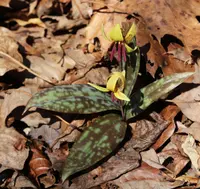
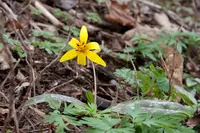
Erythronium umbilicatum, commonly called dimpled troutlily, is a small spring-flowering woodland perennial that grows from a bulb-like corm. It forms low clumps of mottled, trout-like leaves and graceful, nodding yellow flowers that appear early in the season before trees fully leaf out.
This species is native to the southeastern United States, where it carpets moist, open forests and slopes. It can be slow to establish and resents disturbance, so gardeners should care for dimpled troutlily by choosing its planting site carefully.
It prefers light shade, evenly moist but well-drained, humus-rich soil, and a relatively consistent seasonal pattern, which can make it more challenging in highly altered or very dry gardens.

Care Difficulty
Moderate Care

Light Preference
Partial Shade

Water Requirements
Moderate Water

Temperature Preference
Cold Hardy

Hardiness Zone
5–8

Soil Texture
Loamy, Silty, Organic-rich

Soil pH
Acidic (5.5–6.5)

Soil Drainage
Moist but well-drained

Fertilization
Minimal (feed rarely)
Scan your plant to receive care tips personalized for your specific plant
Available on iOS and Android
This woodland bulb prefers cool, filtered light that mimics a deciduous forest floor.
This species needs steadily moist but not waterlogged soil during its active spring growth.
This spring ephemeral performs best in cool to mild conditions typical of woodland climates.
Humidity plays a minor role for Erythronium umbilicatum, which is adapted to woodland ground conditions.
This species prefers cool, moist, humus-rich woodland soil with sharp drainage.
This species can be grown in containers, but performance is usually better in the ground.
This woodland bulb needs only light feeding, as dimpled troutlily is adapted to nutrient-poor forest soils.
Pruning needs for Erythronium umbilicatum are minimal and focus on cleanliness, not shaping.
This species is usually grown in the ground, so attention centers on careful transplanting of dormant bulbs rather than frequent repotting.
Propagation of Erythronium umbilicatum is typically done by bulb division, with seed used for long-term colony building.
This woodland bulb is cold hardy in much of its range and usually needs little targeted winter care in the ground.

Plant Health Check
Not sure what's wrong with your plant? Check your plant's health inside the app.
This species flowers very early in late winter to early spring in the southeastern United States, often before tree canopies fully leaf out, which allows it to exploit high light levels on the forest floor.
Its seeds bear an oily appendage called an elaiosome that attracts ants, which carry the seeds back to their nests, aiding in seed dispersal in a process known as myrmecochory.
The common name dimpled troutlily refers to the characteristic mottled pattern on its leaves, which resemble the speckled sides of a trout and may help camouflage the plant among leaf litter.

This species is a regional endemic of the southeastern United States, with natural populations concentrated in states such as Georgia, Alabama, and the Carolinas, where it forms dense spring carpets in rich, deciduous woodlands.
This species spreads slowly by seed and by dividing its small bulbs, forming loose colonies over many years. It is not considered aggressive and rarely becomes a problem in managed garden beds or woodland plantings.
Keep your plants happy and healthy with plant identification, disease detection, and easy care guidance.