burningbush Care (Euonymus atropurpureus)

Also known as: wahoo, Eastern Burning Bush
burningbush

About burningbush

Burningbush, Euonymus atropurpureus, is a deciduous shrub or small tree native to eastern and central North America. It is valued for bright red fall foliage and winged stems. The plant forms a dense, multi-stemmed shape and often grows at woodland edges, stream banks, and fencerows in nature. Its small flowers and fruits are less showy but support wildlife. This species adapts to a range of soils and urban conditions, which makes it relatively easy to establish in many landscapes. It generally prefers sun to light shade and evenly moist, well-drained soil. Basic knowledge of how to care for burningbush helps maintain its shape, vigor, and seasonal color.

Main Plant Requirements

Care Difficulty

Easy Care

Light Preference

Full Sun

Water Requirements

Moderate Water

Temperature Preference

Cold Hardy

Hardiness Zone

3–7

Soil Texture

Sandy, Loamy, Clay

Soil pH

Acidic (5.5–6.5), Slightly acidic (6.5–7.0)

Soil Drainage

Well-drained

Fertilization

Minimal (feed rarely)

Get Personalized Care Plan

Scan your plant to receive care tips personalized for your specific plant

Available on iOS and Android

How to Care for the burningbush

This deciduous shrub prefers full sun for strongest growth and fall color.

  • Provide 6–8 hours of direct sun daily; 4–6 hours plus bright open shade still supports healthy growth but with slightly softer color.
  • Site burningbush where it receives morning sun and early afternoon sun; in hot southern areas, give light afternoon shade to reduce leaf scorch.
  • Too little light leads to sparse growth and dull fall color; choose a location not heavily shaded by trees or buildings, especially from spring to autumn.

This shrub prefers evenly moist, well-drained soil and tolerates short dry spells once established.

  • Before watering, let the top 5–7 cm of soil dry; in typical garden beds, this often means deep watering every 7–14 days during dry weather.
  • During the first 1–2 growing seasons, monitor soil after hot, windy days; drooping new leaves and dry, crumbly soil signal the need for a slow, thorough soak.
  • Ensure good drainage with loose, amended soil; pale yellowing leaves, soft stems, or persistent soggy soil indicate overwatering or poor drainage problems in Euonymus atropurpureus.

This hardy shrub tolerates a wide temperature range but grows best in moderate conditions.

  • Active growth is strongest around 60–80°F (16–27°C); spring and early summer warmth encourages new shoots and denser branching.
  • Mature plants tolerate winter cold near −20°F (−29°C) in many temperate regions, but sudden late frosts after bud break can nip young leaves and tips.
  • In hot summers above 90°F (32°C), provide soil mulch and adequate moisture; prolonged heat with drought stress can cause leaf scorch and early leaf drop.

This species tolerates a wide humidity range and rarely needs special humidity management outdoors.

Euonymus atropurpureus grows best in moderately fertile, well-structured mineral soil with steady drainage.

  • Aim for a loamy or sandy-loam texture that holds moisture but does not stay waterlogged after rain.
  • Maintain slightly acidic to neutral pH around 6.0–7.0 for consistent nutrient availability.
  • In planting beds, mix in 20–30% compost to improve structure, water retention, and root penetration.
  • Avoid heavy, compacted clay or sites where water pools, and use coarse sand or fine gravel to enhance drainage where necessary.

This species can be grown in containers, though long-term performance is better in the ground.

  • Choose a tall, heavy container to counterbalance upright, woody growth and reduce tipping in wind.
  • Use a coarse, bark-based potting mix that drains quickly yet has enough weight to anchor the root system.
  • Place the container where runoff can escape freely so the lower drainage layer never sits in standing water.

Euonymus atropurpureus is a tough native shrub that benefits from light feeding but does not require heavy fertilization.

  • Apply a balanced slow-release fertilizer (for example 10-10-10) once in early spring to support steady growth.
  • Use compost or leaf mold as a thin top-dressing over the root zone, avoiding direct contact with stems.
  • During the main growing season, avoid additional high-strength feeding; excess nutrients can cause weak, lanky shoots.
  • Skip or greatly reduce fertilization in fall and winter, and if using liquids, dilute to half strength.

Pruning helps maintain a healthy, well-shaped Euonymus atropurpureus and encourages strong new growth.

  • Carry out main pruning in late winter to very early spring, before buds swell.
  • Remove dead, damaged, crossing, or inward-growing stems first, cutting back to healthy wood.
  • Thin crowded interior branches to improve light and air flow, which can reduce disease problems.
  • Use clean, sharp bypass pruners or loppers, making angled cuts just above outward-facing buds to guide shape.

Burningbush is most often grown in the ground, so care usually focuses on transplanting rather than frequent repotting.

  • Transplant in early spring or fall when temperatures are mild and soil is workable, minimizing stress.
  • Look for signs such as circling roots in containers, slow growth, or plants drying out quickly as indicators it needs more space.
  • Move to a hole 2–3 times wider than the root ball, planting at the same depth and backfilling with native soil.
  • Water thoroughly after transplanting, then keep soil evenly moist and apply mulch to reduce root stress and promote establishment.

Euonymus atropurpureus is commonly propagated from seeds or semi-hardwood cuttings under suitable conditions.

  • Collect ripe berries in fall, clean the seeds, and use cold stratification at 34–41°F for several months to improve germination.
  • Sow stratified seeds in a well-drained, moist medium and keep in bright, indirect light until seedlings establish.
  • Take semi-hardwood cuttings in mid to late summer, 10–15 cm long, from healthy non-flowering shoots.
  • Remove lower leaves, dip in rooting hormone, and root in a sterile, well-aerated mix under high humidity and stable warmth.

This species is cold hardy across much of its native range and generally needs only minimal winter care outdoors.

  • Established in-ground plants tolerate typical winter frost in USDA zones 3–7 without special protection.
  • Apply 5–8 cm of mulch around the root zone in late fall to moderate soil temperature and conserve moisture.
  • For container plants in colder climates, move pots into an unheated garage or sheltered area to reduce root freezing risk.

Care Tips

Root sucker management

Inspect the base of the plant each spring and cut unwanted root suckers flush with the soil line to keep the shrub from forming a wide thicket and to direct energy into the main framework stems.

Wildlife browsing control

In areas with heavy deer or rabbit pressure, install a low wire mesh or rigid plastic trunk guards around young plants for the first 2–3 years to prevent bark stripping and shoot browsing that can permanently distort the shrub.

Airflow through thicket

Every 2–3 years, selectively remove a few of the oldest stems at ground level in late winter to open the center for light and air, which reduces foliar disease and keeps color more uniform across the plant.

Seed and spread control

To reduce unwanted seeding and volunteer seedlings, deadhead or lightly shear spent fruit clusters in late fall before they drop, especially when growing burningbush near natural areas or property edges.

Winter stem protection

In windy, exposed sites, apply a 5–8 cm layer of mulch out to the drip line and avoid late-fall fertilizing so new shoots harden properly and stems are less prone to winter dieback and frost cracks.

Common Pests and Diseases

Euonymus scale

This pest forms white to gray, crusty patches on stems and leaves, often causing yellowing, thinning foliage, and branch dieback. Heavy infestations can seriously weaken shrubs and reduce fall color.

Solution

Prune out and dispose of heavily infested stems, then scrub remaining stems gently with a soft brush to remove scales where practical. Follow with targeted applications of horticultural oil during crawler stages in late spring–early summer, and keep plants well watered and unstressed to improve resilience.

Aphids

These insects cluster on young shoots and leaf undersides, sucking sap and causing distorted growth and sticky honeydew deposits. Sooty mold may develop on the honeydew, dulling foliage and reducing photosynthesis.

Solution

Dislodge colonies with a strong stream of water and prune out heavily infested shoot tips. If needed, use insecticidal soap or light horticultural oil, applying in the early morning or evening and repeating as label-directed until populations drop.

Crown gall

This disease causes rough, corky galls or swellings on stems near the soil line and sometimes on roots, which can disrupt water movement and stunt growth. Infected plants may decline slowly over several seasons.

Solution

Remove and destroy infected plants, including as much of the root system as possible, and avoid replanting Euonymus or other susceptible shrubs in the same spot for several years. Prevent wounding of stems and roots during planting and maintenance, since the bacterium enters through fresh injuries.

Anthracnose

This disease produces tan to dark brown leaf spots with irregular margins, sometimes leading to premature defoliation in wet seasons. Symptoms include scattered dead patches on leaves and small cankers on young stems.

Solution

Collect and discard fallen leaves, and thin crowded branches to improve light penetration and airflow. During extended wet periods or when the problem recurs yearly, protect new growth with a labeled fungicide and avoid overhead watering that keeps foliage wet for long periods.

Twig blight

This disease causes browning and dieback starting at shoot tips, with small cankers that girdle young stems. Symptoms include scattered dead twigs in the canopy, often following environmental stress such as drought or winter injury.

Solution

Prune out affected twigs several inches below visible symptoms and disinfect pruning tools between cuts. Improve plant vigor through proper watering and mulching, and increase air circulation around the shrub; in landscapes with persistent issues, follow labeled fungicide programs targeting new growth in spring as part of broader Euonymus atropurpureus care instructions.

Interesting Facts

Distinct four-lobed fruits

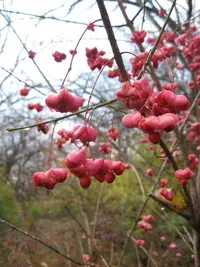
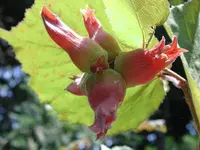
This species produces pink to reddish capsules that split open into four lobes, revealing dangling orange seeds that are highly visible to birds in autumn.

Specialized bird dispersal

The fleshy orange aril around the seeds attracts birds such as thrushes and cardinals, which eat the arils and disperse the seeds through their droppings across forest edges and hedgerows.

Native woodland shrub

This spindle tree is native to central and eastern North America, where it naturally occurs in moist woodlands, stream banks, and thickets, forming part of the understory shrub layer.

Botan icon

Did you know?

The common name burning bush for this species refers to its bright red to red-purple autumn foliage, which can create a striking, almost glowing thicket effect in native woodlands and along fence rows when many shrubs color up at the same time.

FAQs about burningbush

Yes. In several US regions, especially parts of the Midwest and Northeast, this shrub is listed as invasive. It spreads by bird-dispersed seeds into woodlands, displacing native understory plants. Always check local regulations before planting.

Grow Healthy Plants with Botan Care

Keep your plants happy and healthy with plant identification, disease detection, and easy care guidance.

Botan plant care app — identify plants on mobile

Explore More Plants