Encourage Groundcover Spread
Pin lightly rooted stems into contact with soil using small, U-shaped wires so they form additional roots and create a denser, more erosion-resistant groundcover over time.

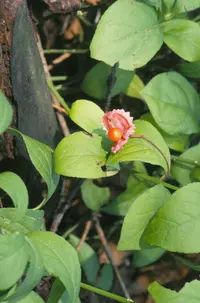
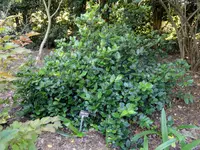
Running strawberry bush, Euonymus obovatus, is a low-growing, deciduous woodland groundcover native to eastern North America. It spreads slowly by slender stems that root as they creep along the soil.
The plant has small, glossy green leaves and inconspicuous flowers, followed by showy red fruit capsules that open to reveal orange seeds. Its dense mat-forming habit helps suppress weeds and stabilize soil in shaded areas.
Running strawberry bush prefers partial to full shade and evenly moist, humus-rich soil. It is generally durable once established, so those who learn how to care for running strawberry bush usually find it reliable in woodland or shade gardens.

Care Difficulty
Easy Care

Light Preference
Partial Shade

Water Requirements
Moderate Water

Temperature Preference
Cold Hardy

Hardiness Zone
3–9

Soil Texture
Loamy, Silty, Organic-rich

Soil pH
Acidic (5.5–6.5), Slightly acidic (6.5–7.0)

Soil Drainage
Moist but well-drained

Fertilization
Minimal (feed rarely)
Scan your plant to receive care tips personalized for your specific plant
Available on iOS and Android
Euonymus obovatus thrives in dappled woodland-style light rather than intense open sun.
This woodland groundcover prefers consistently moist, well-drained soil without staying soggy.
This species is a cold-hardy woodland plant adapted to temperate climates.
Humidity is rarely critical for Euonymus obovatus, which adapts well to typical outdoor conditions across most regions.
Euonymus obovatus prefers loose, moist but well-drained soil that mimics a woodland floor.
This species can grow in containers if the pot supports its creeping, spreading habit.
Euonymus obovatus benefits from light feeding in lean or very sandy soils but often manages with minimal input in rich woodland beds.
Pruning Euonymus obovatus is mainly corrective, helping maintain a low, healthy groundcover mat.
Running strawberry bush is usually grown in the ground, so care focuses on transplanting small nursery plants or divisions.
New plants of Euonymus obovatus are most often produced from stem cuttings or simple layering rather than seed.
This species is generally cold hardy in its native range and needs minimal winter care once established in the ground.

Plant Health Check
Not sure what's wrong with your plant? Check your plant's health inside the app.
This species naturally forms low, spreading colonies on rich, moist forest floors in the eastern United States, often weaving between tree roots and rocks rather than climbing high like some other euonymus species.
The leaves are adapted to low light, with relatively thin blades and a high chlorophyll content that allow efficient photosynthesis under dense deciduous canopies in spring and summer.
Its small reddish fruits, though not showy, provide food for birds and small mammals, which helps disperse the seeds across the forest understory.

This plant is often used in woodland restoration projects within its native range because its slow-spreading, mat-forming habit stabilizes soil, suppresses invasive seedlings, and helps re-create a native forest understory structure over time.
This species spreads slowly to moderately by shallow, running stems. It usually forms low colonies over time rather than taking over a site. In small gardens, simple edging or occasional trimming keeps growth within bounds.
Keep your plants happy and healthy with plant identification, disease detection, and easy care guidance.