lateflowering thoroughwort Care (Eupatorium serotinum)

Also known as: late boneset, late-flowering boneset, late thoroughwort
lateflowering thoroughwort

About lateflowering thoroughwort

Lateflowering thoroughwort, Eupatorium serotinum, is a tall, clump-forming perennial native to eastern and central North America. It typically grows in meadows, stream banks, roadsides, and other moist, open habitats.

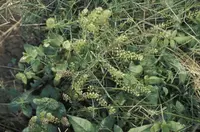
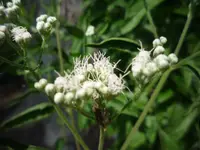
Plants carry branching stems with coarse, toothed leaves and loose clusters of small, white flower heads that appear from late summer into fall, attracting many pollinators. It spreads readily by seed and rhizomes, so it can naturalize quickly where conditions suit it.

This species is generally robust and low-maintenance in the right climate, but its vigorous growth can be too aggressive for small, formal beds. To care for lateflowering thoroughwort, provide sun to light shade, moderately moist soil, and space to spread.

Main Plant Requirements

Care Difficulty

Easy Care

Light Preference

Full Sun

Water Requirements

Regular Water

Temperature Preference

Cold Hardy

Hardiness Zone

4–9

Soil Texture

Loamy, Clay, Organic-rich

Soil pH

Acidic (5.5–6.5), Slightly acidic (6.5–7.0)

Soil Drainage

Moist but well-drained

Fertilization

Minimal (feed rarely)

Get Personalized Care Plan

Scan your plant to receive care tips personalized for your specific plant

Available on iOS and Android

How to Care for the lateflowering thoroughwort

Eupatorium serotinum prefers bright, open conditions that mimic its native meadow and woodland-edge habitats.

  • Provide full sun to light shade, aiming for 4–8 hours of direct sun daily; flowering is heaviest with at least 6 hours.
  • In hotter climates, give morning sun with light afternoon shade to reduce leaf scorch and water stress, especially in midsummer.
  • Plants tolerate bright partial shade, but too much shade causes lanky growth and fewer blooms, so avoid densely shaded north walls or deep woodland cover.

This species prefers consistently moist soil but does not thrive in waterlogged ground.

  • In typical garden soil, water when the top 3–5 cm feels dry, giving a deep soak rather than light splashes to encourage deeper roots.
  • During hot, dry periods, monitor foliage for wilting or dull, drooping leaves, which signal the need for more frequent irrigation, especially in the first 1–2 years.
  • Use soil rich in organic matter with good drainage; pale, yellowing lower leaves and soft stems may indicate overwatering or poor drainage for Eupatorium serotinum.

This hardy perennial tolerates a wide temperature range typical of temperate outdoor gardens.

  • Active growth is strongest around 65–80°F (18–27°C), with flowering triggered by late-summer to fall conditions and naturally shortening days.
  • Established plants tolerate winter lows near 0°F (−18°C) once dormant, with top growth dying back and sprouts returning from the crown in spring.
  • In hot spells above 90°F (32°C), growth may slow; maintain soil moisture and light afternoon shade to reduce heat stress and leaf scorch.

Humidity is rarely critical for Eupatorium serotinum, which adapts well to outdoor conditions in most climates.

Eupatorium serotinum prefers moist, well-drained soil that does not stay waterlogged.

  • Use a loamy or sandy-loam soil with moderate organic matter to support moisture retention without compaction.
  • Aim for slightly acidic to neutral pH, roughly 6.0–7.0, which suits most garden soils.
  • In heavier clay, mix in compost and coarse sand or fine gravel to improve aeration and drainage.
  • Avoid spots where water collects after rain, as prolonged saturation promotes root rot and weak growth.

This species can be grown in containers if the pot supports its tall, spreading habit.

  • Select a large, deep container to allow extensive roots and reduce tipping from tall stems and wind exposure.
  • Use a heavier material such as ceramic or thick-walled terracotta to add stability for the mature, top-heavy plant.
  • Elevate the pot slightly on feet or bricks to keep drainage holes clear and prevent water pooling under the container.

Eupatorium serotinum is a tough native perennial that needs only modest feeding in average garden soil.

  • Apply a light layer of compost or well-rotted manure around plants in early spring to support strong shoot and flower development.
  • Use a balanced, slow-release fertilizer (around 10-10-10) once in late spring if growth appears weak or soil is very poor.
  • Dilute liquid balanced fertilizer to 1/2 strength for container-grown plants every 4–6 weeks during active growth.
  • Avoid feeding in late fall and winter to let lateflowering thoroughwort harden off and remain compact.

Pruning Eupatorium serotinum helps control height, maintain structure, and encourage dense flowering stems.

  • Cut back dead or damaged stems in late winter or very early spring using clean, sharp hand pruners.
  • In late spring, trim taller shoots by 1/3 to reduce flopping and create a bushier, more compact form.
  • Remove crowded or crossing stems at the base to improve air circulation and reduce foliar disease risk.
  • Deadhead spent flower clusters if self-seeding is not desired, or leave some for wildlife value.

This species is usually grown in the ground, so focus on thoughtful transplanting rather than frequent repotting.

  • Transplant Eupatorium serotinum in early spring or early fall when temperatures are mild and soil moisture is steady.
  • Look for signs such as slow growth, crowded clumps, or reduced flowering as indicators that division and transplanting are needed.
  • Lift the clump with a spade, divide it into sections with healthy roots and shoots, and replant at the same soil depth.
  • Water deeply after transplanting and keep soil evenly moist for 2–3 weeks to limit root stress and encourage reestablishment.

This plant is commonly propagated by division, cuttings, and seeds, which suits both garden and restoration uses.

  • Divide established clumps of Eupatorium serotinum in early spring, replanting vigorous sections with several shoots and firm roots.
  • Take 8–10 cm softwood cuttings in late spring, then root them in a moist, free-draining mix under bright, indirect light.
  • Sow fresh seed in fall or provide 6–8 weeks of cold, moist stratification before spring sowing to improve germination.
  • Keep propagation media evenly moist, not waterlogged, and maintain good air movement to limit damping-off and stem rot.

This North American perennial is cold hardy in much of the US and generally needs minimal winter care in the ground.

  • After hard frost, cut stems back to 5–10 cm above soil level or leave standing for wildlife, then remove in late winter.
  • Apply a 5–8 cm layer of mulch around the root zone in colder climates to moderate soil temperature swings.
  • Move container-grown plants to a sheltered, unheated but frost-free spot or heel pots into the ground for added root insulation.

Care Tips

Sturdy staking

Install discreet stakes or a low wire grid early in the season to keep tall stems upright and reduce wind damage, especially in exposed or open sites.

Managed colony spread

Lift and remove outer runners or seedlings every 1–2 years to keep the clump within bounds, and replant only the strongest divisions where additional coverage is desired.

Targeted deadheading

If natural seeding is a problem, remove most spent flower heads before seed set but leave a few clusters for wildlife, balancing ornamental control with ecological value.

Autumn chop-and-drop

After hard frost, cut stems close to the ground and leave some shredded material as a surface mulch around the crown, but remove any diseased growth instead of recycling it in place.

Wildlife border planning

Site plants slightly away from formal beds or paths because late-season nectar will pull in many insects, and this spacing keeps pollinator activity from feeling crowded near high-traffic areas when growing lateflowering thoroughwort.

Common Pests and Diseases

Powdery mildew

This disease causes white, powdery fungal growth on upper leaf surfaces, often in late summer to fall, and can lead to leaf distortion or premature leaf drop.

Solution

Remove and discard heavily infected leaves, avoid overhead watering, and thin or space plants to improve air movement; in persistent cases, apply a sulfur or potassium bicarbonate fungicide according to label directions, especially when first symptoms appear.

Rust

This disease produces yellow to orange spots on upper leaf surfaces with corresponding rusty pustules underneath, and can weaken plants if severe.

Solution

Remove and destroy affected leaves, keep foliage as dry as possible, and improve spacing and airflow; for recurrent problems, use a labeled copper or chlorothalonil fungicide early in the season when first spots are seen.

Leaf spots

This disease complex, often caused by fungi such as Cercospora or Septoria, creates small brown to purplish spots that may coalesce and cause partial defoliation in humid weather.

Solution

Collect and dispose of fallen leaves, water at soil level rather than over foliage, and increase sun exposure and airflow where possible; in severe or repeated outbreaks, apply a broad-spectrum ornamental leaf-spot fungicide following label instructions.

Aphids

These insects cluster on young stems and leaf undersides, sucking sap and excreting sticky honeydew that can attract sooty mold and ants.

Solution

Spray colonies off with a firm stream of water, encourage natural predators such as lady beetles, and if populations remain high, treat new growth with insecticidal soap or a light horticultural oil, making sure to cover leaf undersides.

Leaf miners

This pest creates pale, winding tunnels inside leaves as larvae feed between leaf surfaces, sometimes causing leaves to yellow and reduce plant vigor.

Solution

Pinch off and discard mined leaves as soon as damage appears, encourage beneficial insects that parasitize miners, and, for heavy infestations, use a systemic insecticide labeled for ornamental leaf miners applied according to timing and safety directions.

Interesting Facts

Late-season pollinator magnet

This species flowers later in the season than many native composites, often from late summer into fall, providing nectar and pollen for bees, butterflies, and other insects when many other floral resources are declining.

Flexible habitat tolerance

It naturally occurs in disturbed sites, roadsides, woodland edges, and riparian areas across much of the eastern and central United States, showing a notable tolerance of both partial shade and full sun as well as a range of soil types.

Wind-dispersed seed strategy

Its small fruits (cypselae) bear a tuft of hairs called a pappus, which allows seeds to be carried by wind and facilitates rapid colonization of open or disturbed ground.

FAQs about lateflowering thoroughwort

This species spreads by both seed and short rhizomes, forming expanding clumps over time. In informal, meadow-style plantings it is usually acceptable, but in small beds it may need regular thinning or removal of unwanted seedlings to stay controlled.

Grow Healthy Plants with Botan Care

Keep your plants happy and healthy with plant identification, disease detection, and easy care guidance.

Botan plant care app — identify plants on mobile

Explore More Plants