Handle Sap Safely
When cutting or dividing plants, wear gloves and avoid touching eyes or mouth, as the milky latex sap is irritating; rinse tools and skin with plenty of water afterward.

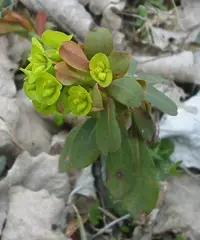
Wood spurge, Euphorbia amygdaloides, is an evergreen perennial often used as groundcover in shaded gardens. It forms low mounds of dark green leaves with lime-green flower bracts in spring.
This species is native to woodlands and hedgerows across Europe and parts of western Asia, where it naturally grows in partial shade. It spreads by short runners, creating dense clumps that suppress many weeds.
Wood spurge is generally robust and low-maintenance if planted in well-drained soil with moderate moisture. Gardeners who know how to care for Wood Spurge usually find it long-lived and reliable in suitable conditions.

Care Difficulty
Easy Care

Light Preference
Partial Shade

Water Requirements
Low Water

Temperature Preference
Cold Hardy

Hardiness Zone
5–9

Soil Texture
Sandy, Loamy, Organic-rich

Soil pH
Acidic (5.5–6.5), Slightly acidic (6.5–7.0)

Soil Drainage
Well-drained

Fertilization
Minimal (feed rarely)
Scan your plant to receive care tips personalized for your specific plant
Available on iOS and Android
This shade-tolerant perennial prefers gentle light but still needs daily sun to stay dense and floriferous.
This species prefers evenly moist, well-drained soil and tolerates short dry spells better than constant wetness.
This hardy perennial tolerates a wide temperature range but grows best in mild conditions.
Humidity is not a major factor for Euphorbia amygdaloides, which prefers relatively dry air.
Euphorbia amygdaloides prefers lean, well-drained soil that does not stay wet after rain or watering.
This species is suitable for container growing, especially in well-drained, outdoor pots.
Euphorbia amygdaloides is naturally adapted to low-nutrient soils and usually needs minimal feeding in gardens.
Pruning Euphorbia amygdaloides is mainly used to control spread and keep plants compact and flowering well.
This species is usually grown in the ground, so focus on careful transplanting rather than frequent repotting.
Euphorbia amygdaloides is commonly propagated by division, self-sown seed, or short stem cuttings.
This evergreen spurge is generally cold hardy in much of the US and needs only light winter care in the ground.

Plant Health Check
Not sure what's wrong with your plant? Check your plant's health inside the app.
This species is naturally an evergreen understory plant in European woodlands, thriving in partial shade under deciduous trees and forming long-lived colonies through short creeping rhizomes.
Its inflorescences show the typical euphorbia structure, but in this species the bright yellow-green floral bracts sit above an extra pair of leaflike bracts, giving a pronounced two-tiered look in spring.
The plant produces a white, milky latex in stems and leaves that deters many herbivores and can irritate human skin and eyes, a common chemical defense in the Euphorbia genus but well noted in this woodland species.

Some populations of Euphorbia amygdaloides, especially the subspecies robbiae, are valued in horticulture because they persist and flower reliably even in very dry shade, a niche where many other ornamental perennials struggle to survive.
This species spreads by short rhizomes and self-seeding, forming colonies over time. In suitable conditions it can edge toward aggressive, so use edging, prompt deadheading, and occasional division to keep clumps within bounds.
Keep your plants happy and healthy with plant identification, disease detection, and easy care guidance.