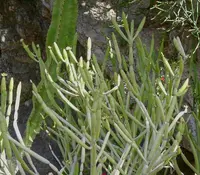
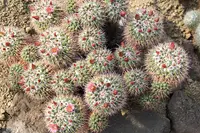
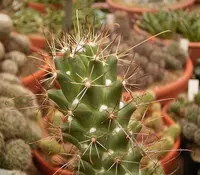
Latex-safe handling
Wear nitrile gloves and long sleeves when pruning or repotting, and keep absorbent paper towels and water nearby so you can immediately blot and rinse off any escaping milky sap from skin, tools, or surfaces.

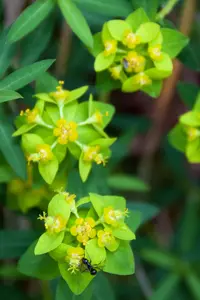
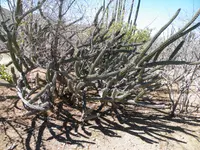
Euphorbia angulata is a small, shrubby succulent from the spurge family, typically forming upright, branching stems with angular, often slightly winged ridges. Its foliage is usually sparse, so the green, geometric stems provide most of the visual interest.
This species occurs naturally in arid, rocky habitats, where it has adapted to intense light and limited water. It is generally slow-growing but long lived when kept dry and well drained.
Because it is drought tolerant and not demanding about soil fertility, many growers find it moderately easy to manage once watering is controlled. Understanding how to care for Euphorbia angulata mainly involves avoiding overwatering and providing strong light.

Care Difficulty
Moderate Care

Light Preference
Full Sun

Water Requirements
Low Water

Temperature Preference
Warm Climate

Hardiness Zone
Unknown

Soil Texture
Sandy, Loamy, Rocky

Soil pH
Slightly acidic (6.5–7.0), Neutral (7.0)

Soil Drainage
Well-drained

Fertilization
Minimal (feed rarely)
Scan your plant to receive care tips personalized for your specific plant
Available on iOS and Android
This species prefers bright conditions similar to open, lightly shaded rocky slopes.
Watering should mimic a dry, well-drained habitat with clear wet–dry cycles.
This plant performs best in warm, dry conditions with protection from frost.
This species tolerates typical indoor humidity and rarely needs special adjustment.
This succulent prefers a very fast-draining, mineral-rich substrate that dries quickly between waterings.
This species adapts well to container cultivation when drainage and stability are managed carefully.
This drought-adapted species needs light feeding only to support steady growth in containers or poor soils.
Pruning is mainly used to maintain shape, remove damage, and keep Euphorbia angulata safe to handle and manage.
This species grows slowly and dislikes frequent disturbance, so repot or transplant only when clearly root-bound or poorly placed.
Propagation of Euphorbia angulata is usually done by cuttings or seeds, with attention to sap handling and warm, dry-rooting conditions.
This plant is moderately frost tolerant when established but benefits from simple measures to reduce winter moisture and freeze stress.

Plant Health Check
Not sure what's wrong with your plant? Check your plant's health inside the app.
This species is native to dry scrub and thicket habitats in parts of southern Africa, where it grows in open, sunny sites with well-drained, often rocky soils.
The plant is characterized by sharply angled, often winged stems, which increase surface area for photosynthesis while reducing broad leaf area that would lose more water.
Like many Euphorbia species, it produces a milky latex rich in diterpenoid compounds that deter herbivores and can irritate skin and eyes when the tissue is damaged.
This species has a milky sap that is irritating to skin, eyes, and mucous membranes. Ingestion can cause nausea and vomiting. Keep it away from children and pets, wear gloves when pruning, and avoid contact with broken skin.
Keep your plants happy and healthy with plant identification, disease detection, and easy care guidance.