

Handle Sap Safely
Wear gloves and avoid touching your face or eyes when pruning or repotting, since the milky latex sap is irritating and can cause skin and eye reactions.

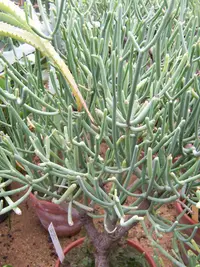
Euphorbia aphylla is a leafless succulent shrub from the Canary Islands, adapted to dry, rocky coastal habitats. It forms dense clumps of smooth, green, pencil-like stems with a strongly architectural look.
Growth is slow, and the plant stays compact, which suits container culture and small spaces. Its drought tolerance and minimal foliage mean it needs little watering but demands sharp drainage and plenty of light.
Because it is sensitive to excess moisture and root rot, it suits growers who can offer a bright, airy spot and controlled watering. Understanding how to care for Euphorbia aphylla mainly involves managing light and avoiding overwatering.

Care Difficulty
Moderate Care

Light Preference
Full Sun

Water Requirements
Low Water

Temperature Preference
Tropical / Frost Sensitive

Hardiness Zone
10–11

Soil Texture
Sandy, Rocky, Loamy

Soil pH
Slightly acidic (6.5–7.0), Neutral (7.0)

Soil Drainage
Well-drained

Fertilization
Minimal (feed rarely)
Scan your plant to receive care tips personalized for your specific plant
Available on iOS and Android
This leafless succulent shrub prefers bright, open exposure similar to coastal or desert conditions.
This drought-adapted species needs infrequent, careful watering to avoid root rot.
This species thrives in warm, arid climates and is sensitive to cold and frost.
This drought-adapted succulent is comfortable in typical indoor humidity and does not need special humidity management.
This species needs a very fast-draining, mineral, cactus-type substrate to prevent root and stem rot.
This succulent is well suited to container culture when the pot is chosen to support rapid drainage and root stability.
This drought-adapted succulent from the Canary Islands needs only light feeding in cultivation.
Pruning needs are minimal and mainly focus on health and safe handling of the plant’s toxic sap.
Container-grown plants benefit from infrequent repotting that preserves the compact root system.
Propagation is usually done from cuttings, as seed is less available and slower.
This species prefers mild, frost-free winters and needs protection in colder climates.

Plant Health Check
Not sure what's wrong with your plant? Check your plant's health inside the app.
This species has almost no true leaves; its smooth green stems take over the role of photosynthesis, an adaptation to intense sun and drought in its native Canary Islands habitat.
It is naturally restricted to dry, rocky coastal cliffs and slopes on a few Canary Islands, where it grows in crevices with extremely low organic matter and high salt-laden winds.
Like many Euphorbia species, it exudes a white latex sap that is toxic and can irritate skin and eyes, serving as a chemical defense against herbivores in its harsh native environment.

Euphorbia aphylla is considered a narrow Canary Islands endemic and is listed as vulnerable in the wild due to its small, fragmented populations and ongoing habitat disturbance along the islands’ coasts.
This species performs best outdoors in warm, frost-free, very sunny, and dry conditions that mimic its native habitat. Indoors it often becomes weak and etiolated, so Euphorbia aphylla indoor care is generally more challenging and less successful long term.
Keep your plants happy and healthy with plant identification, disease detection, and easy care guidance.

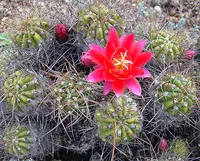
Lobivia maximiliana
Lobivia maximiliana
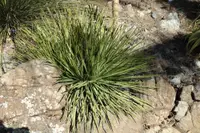
Mexican grass tree
Dasylirion longissimum
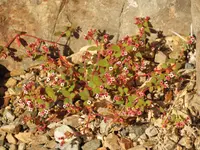
Arizona sandmat
Euphorbia arizonica
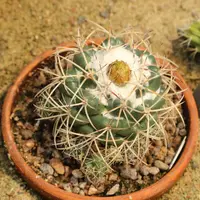
Coryphantha poselgeriana
Coryphantha poselgeriana
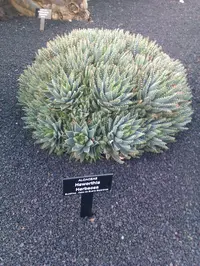
Leafy Haworthia
Haworthia herbacea
Lobivia arachnacantha
Lobivia arachnacantha
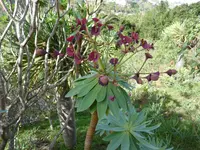
Euphorbia lamarckii
Euphorbia lamarckii
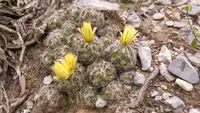
Coryphantha neglecta
Coryphantha neglecta