Root-zone containment
Grow this species in a shallow, wide clay pot or a bottomless container set into the ground to keep its shallow, spreading roots contained and make inspection for rot or pests much easier.

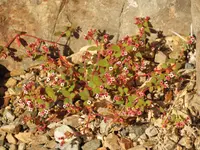
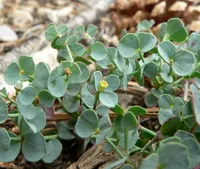
Arizona sandmat (Euphorbia arizonica) is a small, mat-forming succulent native to desert regions of Arizona and northern Mexico. It grows low to the ground, forming compact clumps with short, jointed stems and tiny leaves. In season it produces small, inconspicuous flowers typical of the Euphorbia genus.
This species is adapted to harsh, dry habitats with rocky or sandy soils and intense sun. Its slow growth and drought tolerance make it suitable for careful rock garden or container use, but it dislikes excess moisture and poor drainage. Those who want to learn how to care for Arizona sandmat benefit from understanding its desert origin and preference for bright light and fast-draining soil.

Care Difficulty
Moderate Care

Light Preference
Full Sun

Water Requirements
Low Water

Temperature Preference
Warm Climate

Hardiness Zone
9–11

Soil Texture
Sandy, Rocky, Loamy

Soil pH
Slightly acidic (6.5–7.0), Slightly alkaline (7.0–7.5)

Soil Drainage
Well-drained

Fertilization
Minimal (feed rarely)
Scan your plant to receive care tips personalized for your specific plant
Available on iOS and Android
This compact desert euphorbia prefers bright, intense light that mimics its native habitat.
This species is a true desert succulent and needs very infrequent, controlled watering.
This desert perennial thrives in warm, dry conditions and dislikes prolonged cold or excess humidity.
This compact desert euphorbia tolerates low humidity and rarely needs special humidity management indoors.
This desert succulent needs very fast-draining, mineral-heavy soil to prevent root and stem rot.
This species is well suited to container growing, especially in shallow, fast-draining pots.
This desert succulent needs only light feeding to stay healthy in cultivation.
Pruning needs for Euphorbia arizonica are minimal and mainly corrective.
This species prefers stable conditions and is moved only when clearly necessary.
Propagation of this compact Euphorbia is possible but slower than many common succulents.
This desert plant tolerates brief light frost but benefits from simple winter precautions in colder climates.

Plant Health Check
Not sure what's wrong with your plant? Check your plant's health inside the app.
This species is native to a very small area of the Sonoran Desert in Arizona and adjacent northern Mexico, where it grows on open, gravelly or rocky flats that experience intense sun and brief, sporadic rainfall.
The plant forms dense, low cushion-like clumps of many short, spiny stems that blend visually with surrounding gravel, which likely reduces herbivory and water loss in its harsh desert habitat.
Its small cyathia, the specialized cup-shaped inflorescences typical of spurges, are visited by tiny bees and other small insects that are able to navigate the compact, ground-hugging growth form close to the desert surface.

Because of its very restricted natural distribution and pressures from habitat disturbance and collection, this species has been considered of conservation concern and is monitored in parts of its native range to prevent local population declines.
This species usually flowers in late spring through summer, often extending into early fall in warm regions. Individual cyathia are small and short-lived, but continuous bud production creates a fairly long overall blooming season.
Keep your plants happy and healthy with plant identification, disease detection, and easy care guidance.