Control Underground Spread
Use a sharp spade in early spring to slice around the clump 10–15 cm deep, which limits rhizome spread and keeps the plant from invading nearby perennials.

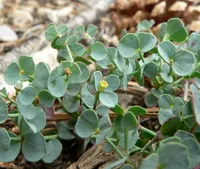
Horned spurge, Euphorbia brachycera, is a compact, clump-forming perennial often used in rock gardens, dry borders, and naturalistic plantings. It forms low, spreading mounds of narrow blue-green leaves with chartreuse to yellow-green flower-like bracts in spring.
This species is native to dry, open habitats in parts of the western United States and northern Mexico, so it naturally tolerates heat and drought once established. Its preference for well-drained, lean soil and full sun to light shade generally makes it low maintenance, as long as roots do not sit in water.
Understanding how to care for horned spurge mainly involves protecting it from excessive moisture and recognizing that its milky sap can irritate skin in sensitive individuals.

Care Difficulty
Easy Care

Light Preference
Full Sun

Water Requirements
Low Water

Temperature Preference
Cold Hardy

Hardiness Zone
4–8

Soil Texture
Sandy, Loamy, Rocky

Soil pH
Slightly acidic (6.5–7.0), Neutral (7.0)

Soil Drainage
Well-drained

Fertilization
Minimal (feed rarely)
Scan your plant to receive care tips personalized for your specific plant
Available on iOS and Android
This plant thrives in bright outdoor conditions with moderate direct sun exposure.
This drought-tolerant perennial prefers infrequent, deep watering in sharply drained soil.
This species prefers temperate outdoor conditions and tolerates moderate cold once established.
This species handles typical indoor and outdoor humidity well, so humidity control is rarely critical for horned spurge.
This plant prefers sharply drained, mineral-based soil that mimics dry, rocky habitats.
This species can be grown successfully in containers outdoors if its drought-adapted roots stay well drained.
This drought-tolerant perennial needs only light feeding, so focus on modest support rather than heavy fertilization for horned spurge.
Pruning Euphorbia brachycera is mainly done to keep clumps tidy and remove weak growth.
This species is usually grown in the ground, so focus on careful transplanting rather than frequent repotting.
Propagation of Euphorbia brachycera is commonly done by division, with seed as a slower alternative.
This hardy perennial tolerates typical cold winters in many temperate regions and usually needs only minimal attention.

Plant Health Check
Not sure what's wrong with your plant? Check your plant's health inside the app.
This species is native to the Rocky Mountains and nearby high plains, where it naturally grows on dry, often rocky slopes and open woodlands at relatively high elevations, tolerating significant temperature swings and intense sun.
Unlike many taller spurges, this plant forms tight, low cushions of stems and leaves, which helps reduce water loss and protect growing points from wind and cold in its native mountain habitats.
Its chartreuse flower-like structures, called cyathia, open relatively early in the growing season and provide nectar for small bees and other pollinators when few other perennials are in bloom.

Like other spurges, this species produces a white, latex-like sap that deters many herbivores and can irritate human skin and eyes, so any pruning or division is best done carefully with skin and eye protection.
This species forms low, slowly expanding clumps. It spreads by short rhizomes and self-seeding but is usually manageable in garden settings. Removing spent seed heads and dividing clumps periodically keeps growth within bounds when growing horned spurge.
Keep your plants happy and healthy with plant identification, disease detection, and easy care guidance.