Handle Sap Safely
Wear gloves and avoid touching your face or eyes when pruning or repotting, because the milky latex sap is irritating and should be rinsed off skin immediately with plenty of water.

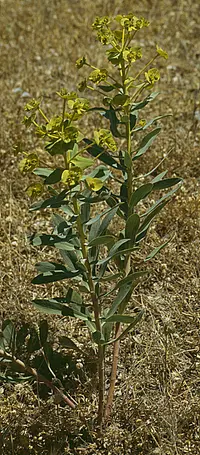
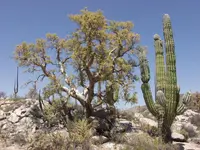
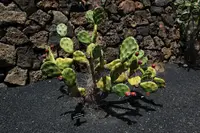
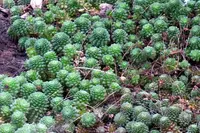
Euphorbia biumbellata is a succulent shrub from tropical Africa, valued for its thick, segmented green stems and minimal foliage. It forms a compact, architectural clump that suits bright indoor spaces and warm outdoor patios in mild climates.
This species stores water in its stems, so it tolerates short dry periods but reacts poorly to overwatering and cold, soggy soil. It prefers bright light, fast-draining substrate, and protection from frost.
Once its basic needs are understood, how to care for Euphorbia biumbellata is relatively straightforward, making it a good choice for growers comfortable handling succulent euphorbias.

Care Difficulty
Moderate Care

Light Preference
Partial Sun

Water Requirements
Moderate Water

Temperature Preference
Warm Climate

Hardiness Zone
Unknown

Soil Texture
Sandy, Loamy, Rocky

Soil pH
Slightly acidic (6.5–7.0)

Soil Drainage
Well-drained

Fertilization
Minimal (feed rarely)
Scan your plant to receive care tips personalized for your specific plant
Available on iOS and Android
This succulent shrub prefers bright, indirect light with some direct sun for compact growth.
This drought-tolerant species needs infrequent, deep watering and very fast-draining soil.
This species prefers warm, stable conditions and is sensitive to frost and prolonged cold.
This species prefers dry indoor air and does not need elevated humidity.
This succulent shrub needs a sharply draining, mineral-rich substrate to prevent root and stem rot.
This species is well suited to container growing when drainage and stability are prioritized.
This species generally grows well in modest soils, so fertilizing Euphorbia biumbellata is helpful but not essential in mild climates.
Pruning Euphorbia biumbellata is mainly done to maintain structure, remove damage, and manage size.
Container-grown plants benefit from occasional repotting or transplanting to maintain root health and stable growth.
New plants are most often raised from cuttings, with some growers also using seed for Euphorbia biumbellata.
This species is sensitive to freezing conditions and benefits from thoughtful winter protection in cooler regions.

Plant Health Check
Not sure what's wrong with your plant? Check your plant's health inside the app.
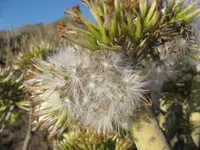
This species is named for its characteristic paired umbel-like flowering structures, where small cyathia (the specialized Euphorbia flower units) are grouped in a distinctive double arrangement that helps botanists recognize it in the field.
Like many members of Euphorbia, it produces a white, irritating latex sap that deters herbivores and can cause skin and eye irritation in humans, so any pruning or handling should avoid direct sap contact.
This species is native to parts of tropical Africa, where it grows in warm, seasonally dry habitats, a background that explains its preference for bright light and well-drained, relatively dry substrates in cultivation.
Lack of flowering often relates to insufficient seasonal light intensity, nutrient imbalance, or stress from recent repotting or pruning. Allow stable conditions, avoid frequent disturbance, and use a low-nitrogen fertilizer to support bud formation over leafy growth.
Keep your plants happy and healthy with plant identification, disease detection, and easy care guidance.