Euphorbia burmanni Care

Euphorbia burmanni

About Euphorbia burmanni

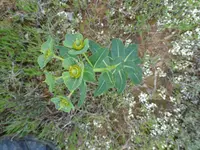
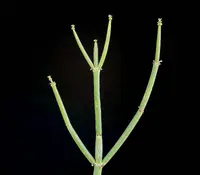
Euphorbia burmanni is a small, shrubby succulent from arid regions of southern Africa. It typically forms low, many-branched clumps with narrow, often leafless green stems. The plant stores water in its tissues and has a milky sap, a common feature in the Euphorbia genus. This adaptation makes it drought tolerant but sensitive to overwatering. It suits growers who prefer compact, architectural plants and can provide bright light and a very free-draining mineral soil mix. Understanding how to care for Euphorbia burmanni mainly involves balancing strong light with careful, infrequent watering.

Main Plant Requirements

Care Difficulty

Moderate Care

Light Preference

Full Sun

Water Requirements

Low Water

Temperature Preference

Tropical / Frost Sensitive

Hardiness Zone

10–12

Soil Texture

Sandy, Loamy, Rocky

Soil pH

Slightly acidic (6.5–7.0), Neutral (7.0)

Soil Drainage

Well-drained

Fertilization

Minimal (feed rarely)

Get Personalized Care Plan

Scan your plant to receive care tips personalized for your specific plant

Available on iOS and Android

How to Care for the Euphorbia burmanni

This drought-tolerant succulent needs strong light to stay compact and healthy.

  • Provide 6–8 hours of direct sun daily, ideally with morning sun and light afternoon shade in very hot, dry regions.
  • In mild climates it tolerates full sun all day, but watch for leaf scorch or bleaching during sudden heatwaves and gradually acclimate plants moved from shade.
  • In partial shade (3–4 hours direct sun) Euphorbia burmanni will survive but may stretch, becoming leggy and less dense.

This species prefers thorough but infrequent watering, with soil drying clearly between soakings.

  • Water only when the top 3–5 cm of soil are completely dry, using a deep soak that drains freely from the planting area or pot.
  • Reduce watering sharply in cooler months, allowing the root zone to dry almost fully; resume slightly more frequent watering as active growth resumes in warmer seasons.
  • Watch for yellowing, soft stems, or a sour smell as signs of overwatering, and wrinkling or slight leaf shrivel as early indicators that Euphorbia burmanni is ready for water.

This succulent favors warm, dry conditions and is sensitive to prolonged cold or frost.

  • Aim for daytime temperatures of 70–85°F (21–29°C) during active growth, with slightly cooler nights to mimic its natural habitat.
  • Protect the plant from temperatures below 40°F (4°C); tissue damage often occurs near 32°F (0°C), and true frost can kill stems or the entire plant.
  • It tolerates short hot spells up to about 95°F (35°C) if soil is fast-draining and air is moving, but growth may slow during extreme heat.

This species tolerates typical indoor humidity, so controlling air moisture is rarely critical.

This succulent prefers a very fast-draining, mineral-based substrate that mimics rocky, arid habitats.

  • Use a cactus/succulent mix amended with extra coarse sand or fine gravel at about 30–50% of the volume.
  • Aim for a gritty, open texture that allows water to pass through in seconds while leaving air spaces around the roots.
  • Keep pH slightly acidic to neutral, roughly 6.0–7.2, avoiding strongly acidic or alkaline mixes that limit nutrient uptake.
  • Avoid dense, peat-heavy or clay-rich substrates that stay wet, since Euphorbia burmanni roots are highly prone to rot in waterlogged conditions.

This species is well suited to container growing when the pot and drainage are chosen carefully.

  • Select a heavy terracotta or clay pot to allow faster evaporation and reduce the risk of the plant toppling as it gains height.
  • Choose a pot that is wider than it is deep so the shallow, spreading root system can anchor without holding excess wet soil.
  • Raise the container slightly on feet or spacers so drainage holes stay clear and water cannot pool under the base.

This drought-adapted succulent needs only light feeding to stay healthy in cultivation.

  • Use a dilute balanced liquid fertilizer (around 10-10-10 or 20-20-20 at 1/4 strength) during active growth in spring and summer.
  • Apply every 4–6 weeks if growth is modest; skip feeding if the plant is already vigorous.
  • Avoid organic compost-heavy mixes that stay wet, as Euphorbia burmanni prefers lean, sharply drained substrate.
  • Stop fertilizing in fall and winter when growth slows, as excess nutrients can cause weak, soft tissue.

Pruning is mainly used to maintain shape and remove damaged growth on Euphorbia burmanni.

  • Best time is late winter to early spring, before strong new growth begins.
  • Remove dead, damaged, or crossing stems first, then thin crowded shoots to improve light and air flow.
  • Use clean, sharp pruning shears and wear gloves to avoid contact with the irritating milky sap.
  • Light shaping cuts help keep a compact form and prevent top-heavy, easily broken stems.

Container-grown plants benefit from infrequent but careful repotting to refresh the root zone.

  • Repot every 2–3 years, or when roots circle the pot, emerge from drainage holes, or growth slows despite good care.
  • Schedule repotting in late winter or early spring so the plant can re-establish during the main growing season.
  • Choose a pot only 2–3 cm wider with excellent drainage and use a gritty cactus and succulent mix.
  • Handle the root ball gently, keep roots as intact as possible, then water lightly and shade for a few days to limit stress.

Propagation of this species is usually done by stem cuttings rather than by seed in home settings.

  • Take semi-firm stem cuttings in late spring or early summer, using a clean, sharp knife.
  • Let cuttings dry until the cut end calluses, reducing rot risk from the latex sap.
  • Insert cuttings into a very well-drained cactus mix and keep just slightly moist at 70–80°F with bright, indirect light.
  • Seeds can be sown in warm, bright conditions, but germination is slower and less predictable than cuttings.

This plant is sensitive to hard frost and benefits from basic winter protection in cooler climates.

  • In USDA zones below 10, grow in containers and move indoors before temperatures drop near 40°F.
  • Provide a cool, bright indoor spot and keep the soil almost dry to prevent root rot during dormancy.
  • In mild climates, use a light gravel mulch around the base to insulate roots and improve drainage in winter rains.

Care Tips

Safe handling routine

Always handle this plant with nitrile or latex gloves and wash tools afterward, as the white sap is irritating and can damage eyes and sensitive skin.

Gradual light hardening

If moving a plant from shade to stronger sun, increase light over 10–14 days by shifting it a little closer to the bright exposure every few days to prevent stem scorch and tissue stress.

Compact growth control

Pinch or tip-prune soft, elongating stems early in the growing season to maintain a compact, self-supporting form rather than waiting until they become weak and floppy.

Targeted pest inspection

Inspect narrow stem joints and any branching points every 2–3 weeks for mealybugs or scale, and treat small infestations promptly with a cotton swab dipped in isopropyl alcohol before they spread along the ridges.

Seasonal growth pause

During the plant’s natural rest period, reduce disturbance by limiting repotting, root disturbance, and unnecessary movement, which supports stable recovery and more predictable growth when caring for Euphorbia burmanni.

Common Pests and Diseases

Mealybugs

This pest commonly settles in leaf axils and along young stems, sucking sap and weakening the plant while leaving white, cotton-like clusters. Symptoms include stunted growth, yellowing, and sticky honeydew deposits that can lead to sooty mold.

Solution

Isolate the plant, then dab visible insects with cotton swabs dipped in 70% isopropyl alcohol and repeat weekly until no new pests appear. Increase light and airflow, avoid excess nitrogen fertilizer, and use a horticultural soap or neem oil spray directed into crevices if the infestation is more extensive.

Spider mites

These insects thrive on Euphorbia burmanni in hot, dry conditions and feed on the undersides of stems and leaves, causing fine stippling and a dull, dusty appearance. Symptoms include very fine webbing and gradual yellowing or bronzing of tissue.

Solution

Rinse the plant thoroughly under a gentle but firm stream of water, focusing on stem joints and undersides, and repeat every few days for 1–2 weeks. Raise humidity slightly, improve air circulation, and use a targeted miticide or insecticidal soap labeled for spider mites if washing alone does not control them.

Scale insects

This pest appears as small, brown to gray, shell-like bumps tightly attached to stems and sometimes leaf bases, where it feeds on plant sap. Symptoms include localized yellowing, reduced vigor, and sticky honeydew that may attract ants or lead to sooty mold.

Solution

Remove light infestations manually by scraping scale off gently with a fingernail or soft brush and wiping stems with a cloth lightly moistened with 70% isopropyl alcohol. For larger populations, apply a horticultural oil or insecticidal soap thoroughly to stems and crevices, repeating according to label directions until no new scale are seen.

Powdery mildew

This disease can develop on Euphorbia stems and leaves kept in stagnant, humid air with poor light, forming white, powdery patches on the surface. Symptoms include distorted new growth and a general decline in vigor if left unchecked.

Solution

Improve airflow and light levels, avoiding overhead watering so foliage stays dry, and promptly remove heavily affected segments. Apply a sulfur-based or potassium bicarbonate fungicide labeled for ornamental succulents, treating all surfaces lightly and repeating as recommended until new growth emerges clean.

Stem tip rot

This disease affects succulent stems when mechanical wounds or cold, wet conditions allow fungi or bacteria to enter, causing soft, dark, collapsing tissue at the tips. Symptoms include blackened or mushy segments that can spread downward if not removed.

Solution

Cut back affected stems into firm, healthy tissue with a sterile, sharp blade, then allow the cut surfaces to dry and callus in a warm, bright, dry spot before any replanting. Reduce watering frequency, avoid water sitting on stems, and protect the plant from cold drafts or prolonged temperatures below its preferred range to prevent recurrence of this issue while growing Euphorbia burmanni.

Interesting Facts

Southern African annual

This species is a small, short-lived annual euphorbia native to arid and semi-arid regions of southern Africa, where it appears briefly after seasonal rains and completes its life cycle rapidly before soils dry out.

Distinctive cyathium flowers

Like other Euphorbia species, it has a specialized inflorescence called a cyathium, but in this species the tiny cup-like structures and reduced petals are particularly inconspicuous, making it easy to overlook when not in seed.

Milky latex defense

The plant produces a white, irritant latex typical of Euphorbia; in this species the latex helps protect delicate seasonal tissues from herbivores in open, grazed habitats.

FAQs about Euphorbia burmanni

The milky sap is strongly irritating. It can cause skin redness, burning, and eye injury, and is harmful if swallowed. Keep pets and children away, wear gloves when handling, and avoid contact with eyes and mouth.

Grow Healthy Plants with Botan Care

Keep your plants happy and healthy with plant identification, disease detection, and easy care guidance.

Botan plant care app — identify plants on mobile

Explore More Plants