Safe handling setup
Place the plant in a low-traffic spot and keep nitrile gloves and eye protection nearby so you can safely handle its toxic, latex-filled stems during any work or inspection.

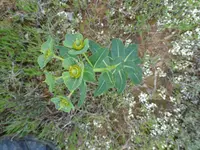
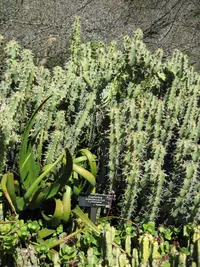
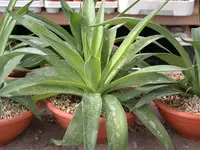
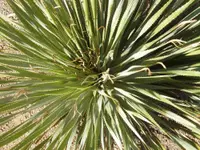
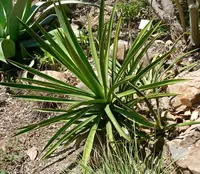
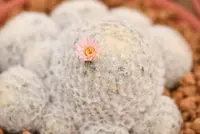
Euphorbia isatidifolia is a small shrubby succulent from arid regions of Madagascar, adapted to strong sun and poor, well-drained soils. It usually forms a compact clump with upright, often angular green stems and sparse foliage. The plant produces small, understated yellow-green cyathia, the specialized flower structures typical of Euphorbia species. Its drought tolerance and slow growth make it suitable for experienced collectors and careful beginners. The main challenges in how to care for Euphorbia isatidifolia are avoiding overwatering and providing enough light without prolonged frost exposure.

Care Difficulty
Moderate Care

Light Preference
Full Sun

Water Requirements
Low Water

Temperature Preference
Warm Climate

Hardiness Zone
Unknown

Soil Texture
Sandy, Loamy, Rocky

Soil pH
Slightly acidic (6.5–7.0), Neutral (7.0)

Soil Drainage
Well-drained

Fertilization
Minimal (feed rarely)
Scan your plant to receive care tips personalized for your specific plant
Available on iOS and Android
This drought-adapted succulent prefers bright, open exposure with some protection from harsh extremes.
This species stores water in its tissues and needs infrequent, measured watering to avoid root damage.
This plant thrives in warm, arid conditions and is sensitive to cold and prolonged damp.
This species tolerates typical indoor humidity and is not strongly humidity-sensitive.
This species needs a very fast-draining, mineral-rich mix that stays airy around the roots.
This species is well suited to container growing when drainage and stability are prioritized.
This species grows in lean soils and usually needs little supplemental feeding in the ground.
Pruning is mainly used to remove damaged tissue and maintain a stable, balanced form.
This plant is often grown in the ground, but container specimens benefit from careful, infrequent repotting.
Propagation is usually done in controlled conditions due to the toxic sap and specific rooting needs.
This species prefers mild, frost-free conditions and benefits from some winter protection in colder regions.

Plant Health Check
Not sure what's wrong with your plant? Check your plant's health inside the app.
This species is naturally restricted to the Cape Verde archipelago off West Africa, where it grows in dry, rocky habitats shaped by oceanic winds and low rainfall.
The leaves develop a characteristic bluish to gray-green tone, an adaptation linked to waxy surface coatings that help reduce water loss under strong sun and arid conditions.
Like many Euphorbia species, it produces a white latex sap that is chemically complex and irritant, discouraging herbivores and requiring careful handling to avoid skin and eye contact.
This species produces small nectar-rich structures that can attract bees, hoverflies, and sometimes small butterflies. Pollinator activity increases in warm, dry weather. Avoid broad-spectrum insecticides nearby, as these can reduce beneficial insect visits and overall pollination success.
Keep your plants happy and healthy with plant identification, disease detection, and easy care guidance.