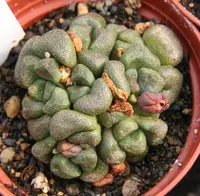
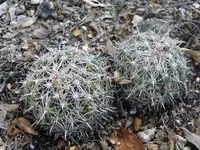
Euphorbia bussei Care

Euphorbia bussei

About Euphorbia bussei

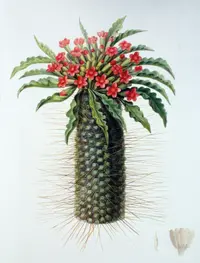
Euphorbia bussei is a succulent shrub from dry regions of East Africa, valued for its upright, many-branched stems and minimal foliage. The green, often segmented stems store water and give the plant a sculptural, architectural look that suits modern interiors and dry gardens.

In cultivation it grows slowly and remains relatively compact, which makes it suitable for containers. Like many succulent euphorbias, it prefers bright light, excellent drainage, and infrequent watering. Understanding how to care for Euphorbia bussei mainly involves avoiding overwatering and protecting it from cold and prolonged moisture.

The plant’s drought tolerance and modest growth rate make it a low-maintenance choice for growers who can provide strong light and a gritty, fast-draining soil mix.

Main Plant Requirements

Care Difficulty

Moderate Care

Light Preference

Full Sun

Water Requirements

Low Water

Temperature Preference

Tropical / Frost Sensitive

Hardiness Zone

10–12

Soil Texture

Sandy, Loamy, Rocky

Soil pH

Slightly acidic (6.5–7.0), Neutral (7.0)

Soil Drainage

Well-drained

Fertilization

Minimal (feed rarely)

Get Personalized Care Plan

Scan your plant to receive care tips personalized for your specific plant

Available on iOS and Android

How to Care for the Euphorbia bussei

This drought-tolerant succulent prefers bright, strong light similar to its native habitat.

  • Provide 6–8 hours of sun daily, with morning sun and light afternoon shade in hot, dry regions to prevent stem scorch.
  • It tolerates partial shade, but growth becomes more open and less compact if it receives under 4 hours of direct light.
  • If stems of Euphorbia bussei lean or stretch toward windows or open sky, increase light exposure or gradually move it to a sunnier position.

This species stores water in its tissues and prefers infrequent, deep watering.

  • Allow the top 3–5 cm of soil to dry completely before watering, then soak the root zone and let excess drain away fully.
  • In warm growing seasons, you may water every 10–21 days depending on sun, heat, and soil type; in cool or dormant periods, reduce to light, occasional watering.
  • Shriveling or soft, wrinkled stems indicate underwatering, while yellowing, mushy bases and a sour smell signal overwatering and poor drainage for Euphorbia bussei.

This succulent is adapted to warm, dry conditions and dislikes cold, damp weather.

  • Aim for 70–85°F (21–29°C) during active growth, with slightly cooler nights down to about 60°F (16°C) acceptable.
  • Avoid temperatures below 50°F (10°C); brief dips to 40–45°F (4–7°C) may be survived but can cause tissue damage, especially in wet soil.
  • The plant tolerates dry heat up to 95–100°F (35–38°C) if soil drains quickly, but protect from reflected heat and hot winds to limit stress and sunscald.

This species tolerates typical indoor humidity well and does not require special humidity management.

This succulent prefers a very fast-draining, mineral-rich substrate that prevents water from lingering around the roots.

  • Use a gritty mix such as 50–60% cactus potting mix blended with 40–50% coarse sand, pumice, or perlite.
  • Aim for slightly acidic to neutral pH, around 6.0–7.0, to support stable nutrient availability.
  • Ensure the structure stays loose and airy; avoid fine peat-heavy mixes that compact and hold water around the roots.
  • Avoid dense garden soil or clay-based mixes, which promote root rot and restrict oxygen movement in the root zone.

This species is well suited to container culture when the pot and substrate prevent waterlogging.

  • Choose a pot that is wider than it is deep to support its spreading root system while limiting excess wet compost below.
  • Select unglazed terracotta if extra evaporation is needed in cool or humid climates to reduce the risk of rot.
  • Weight the base with heavy gravel or use a broad, stable pot profile to reduce tipping if stems grow tall or unevenly.

This species grows on poor soils and needs only light, cautious feeding in cultivation.

  • Use a diluted balanced liquid fertilizer (around 10-10-10 NPK at 1/4 strength) for Euphorbia bussei during active spring–summer growth.
  • Feed every 4–6 weeks at most if growth appears pale or weak; skip if growth is firm and well-colored.
  • Avoid heavy compost or rich organic mixes that retain excess moisture, which can cause root problems.
  • Stop feeding in fall and winter when growth slows, to avoid soft, etiolated tissue.

Pruning is mainly used to maintain shape and remove compromised growth without stressing the plant.

  • Carry out light pruning in late winter or early spring before active growth begins.
  • Remove dead, damaged, or diseased stems first, then thin crowded branches to improve light and airflow.
  • Use clean, sharp pruning shears and allow the white latex sap to dry; avoid skin contact or wear gloves.
  • Limit cuts to minor shaping; heavy pruning can disfigure the form and trigger rot at large wounds.

This plant prefers stable conditions, so repot or transplant only when clear signs appear.

  • Repot every 3–4 years when roots circle the pot, emerge from drainage holes, or growth slows despite proper care.
  • Choose late spring as the best time, using a slightly larger container with very free-draining cactus or succulent mix.
  • Gently loosen the root ball, trim rotten roots, and keep as much healthy root system intact as possible.
  • After repotting, water lightly once, then allow the mix to dry well before the next watering to limit root stress.

Propagation of this species is usually done by stem cuttings rather than seed for reliable results.

  • Take semi-firm stem cuttings in late spring or early summer, avoiding very young or very old tissue.
  • Wear gloves and allow the milky sap to stop flowing and dry; then let cut ends callus for 2–3 days.
  • Insert callused cuttings into a sterile, gritty mix, keeping warmth (70–80°F) and bright, indirect light.
  • Water sparingly, just enough to prevent shriveling, until roots form and new growth confirms establishment.

Cold sensitivity means winter conditions must be managed carefully, especially in container-grown plants.

  • Treat Euphorbia bussei as frost-tender; avoid exposure below about 40°F, and keep completely frost-free.
  • Move pots indoors or into a greenhouse before the first frost, providing bright light and low to moderate watering.
  • In mild climates, use a very gritty soil and a gravel mulch to keep the root collar dry in cool, damp weather.
  • Maintain good air circulation and avoid splashing cold water on stems to reduce risk of cold-related rot.

Care Tips

Handle Sap Safely

Wear gloves and avoid touching your face when cutting or repotting, since the milky sap is an irritant and tools should be rinsed in soapy water afterward to prevent accidental contact.

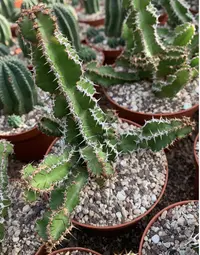
Staking Young Stems

Install a slim, sturdy stake near the base when stems are still flexible, tying them loosely with soft ties to keep the plant upright and reduce the risk of breakage as it elongates.

Root Zone Topdressing

Once a year, gently scrape off 1–2 cm of the old surface mix and replace it with fresh, gritty mineral substrate to refresh nutrients and improve surface drainage without disturbing the deep roots.

Controlled Offshoot Removal

If the plant produces unwanted side shoots, cut them off cleanly at the base with a sterile blade, allow cuttings to callus for several days, then root in a dry, sandy mix to propagate new plants.

Winter Light Positioning

During winter, move the pot to the brightest, most unobstructed window and rotate it 1–2 times per month so all sides receive enough light, which helps maintain compact form when growing Euphorbia bussei indoors.

Common Pests and Diseases

Spider mites

This pest often appears on stressed, very dry plants and causes fine webbing and tiny yellow stippling on stems and leaves. Symptoms include dull, dusty-looking surfaces and slow decline in vigor.

Solution

Isolate the plant, then rinse stems thoroughly under a gentle stream of lukewarm water to remove mites and webbing. Increase ambient humidity slightly without overwatering, and treat all surfaces with a miticidal soap or neem oil spray every 5–7 days for several cycles, ensuring good air movement around the plant.

Mealybugs

These insects form white, cottony clusters in stem joints and along ridges, sucking sap and weakening growth. Symptoms include sticky honeydew and deforming new tissue on this succulent euphorbia.

Solution

Quarantine the plant and dab visible mealybugs with cotton swabs dipped in isopropyl alcohol (70%). Follow with a thorough spray of insecticidal soap or neem oil, repeating weekly until no new insects appear, and inspect regularly around areoles and crevices as part of ongoing Euphorbia bussei care instructions.

Scale insects

This pest appears as small, brown or gray domes tightly attached to stems, especially along the green ridges. Symptoms include patchy yellowing and reduced growth as insects draw sap over time.

Solution

Carefully scrape or lift individual scales off with a fingernail or soft tool, then wipe stems with a cloth lightly moistened with isopropyl alcohol. After mechanical removal, apply horticultural oil or insecticidal soap to all stem surfaces and repeat treatment after 7–10 days, monitoring for any reinfestation.

Powdery mildew

This disease shows as a light, dusty white coating on green tissue, usually when airflow is poor and humidity fluctuates. Symptoms include dull, blotchy patches that can slightly deform new growth if ignored.

Solution

Improve air circulation and avoid overhead misting or crowding around the plant. Gently wipe affected areas and treat with a sulfur-based or potassium bicarbonate fungicide labeled for succulents, applying according to directions and keeping the plant in bright, dry, well-ventilated conditions.

Corking from sun or stress

This physiological disorder creates brown, corky, bark-like patches on lower or sun-exposed stem areas. Symptoms include rough, woody scarring that is usually not infectious but can follow sudden increases in light or irregular watering.

Solution

Adjust the plant gradually to higher light levels rather than moving it abruptly into full sun, and keep watering consistent for a succulent (allowing soil to dry between waterings). Remove only severely damaged segments if they threaten structural integrity, and maintain stable light and moisture to prevent new corking from forming rapidly.

Interesting Facts

Habitat in East Africa

This species is native to rocky slopes and open bushland of Tanzania and Kenya, where it grows in well-drained, often stony soils under strong sun and seasonal drought.

Shrub-like growth form

Unlike many succulent euphorbias that stay low and compact, this species can form a much-branched, shrub-like structure with upright, fleshy stems that become woody at the base over time.

Milky latex defense

Like other members of the genus, it produces a white, irritant latex sap that helps protect it from herbivores; the latex is particularly sticky and can cause strong skin and eye irritation on contact.

FAQs about Euphorbia bussei

Poor flowering is usually linked to insufficient light, nutrient-poor or overly rich soil, or stress from recent repotting. Stable conditions, moderate feeding, and strong light typically restore blooming without needing special Euphorbia bussei care instructions.

Grow Healthy Plants with Botan Care

Keep your plants happy and healthy with plant identification, disease detection, and easy care guidance.

Botan plant care app — identify plants on mobile

Explore More Plants