Euphorbia clementei Care

Euphorbia clementei

About Euphorbia clementei

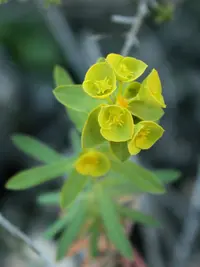
Euphorbia clementei is a small, shrubby succulent from arid regions of the Canary Islands, adapted to rocky slopes and strong sun. It forms compact clumps of upright, jointed stems with small, reduced leaves that appear mainly during active growth.

The plant stores water in its stems and has a milky sap, so it tolerates drought well but is sensitive to overwatering. Its tidy growth habit makes it suitable for containers and specialized dry gardens, especially in mild climates.

Those learning how to care for Euphorbia clementei should note its preference for bright light, fast-draining mineral soil, and light, infrequent watering once established.

Main Plant Requirements

Care Difficulty

Moderate Care

Light Preference

Full Sun

Water Requirements

Low Water

Temperature Preference

Warm Climate

Hardiness Zone

9–11

Soil Texture

Sandy, Loamy, Rocky

Soil pH

Slightly acidic (6.5–7.0), Neutral (7.0)

Soil Drainage

Well-drained

Fertilization

Minimal (feed rarely)

Get Personalized Care Plan

Scan your plant to receive care tips personalized for your specific plant

Available on iOS and Android

How to Care for the Euphorbia clementei

This drought-adapted succulent prefers bright, open exposures but needs protection from extreme afternoon scorch in hot climates.

  • Provide 6–8 hours of direct sun daily, ideally with strong morning sun and lighter exposure after 2–3 p.m. in regions above 90°F (32°C).
  • Tolerates light partial shade, but stems become weak and elongated in under 4 hours of direct sun or in consistently overcast sites.
  • In hot, arid summers, use coarse mulch or nearby rocks to reduce root-zone overheating while still allowing full overhead light.

This species is strongly drought-tolerant and needs infrequent, deep watering rather than shallow, frequent drinks.

  • Allow soil to dry completely, at least the top 5–8 cm, before watering; in very fast-draining ground this often means long dry intervals between natural rains.
  • Use sharply draining, gritty soil or rocky slopes so water clears the root zone within minutes; standing water or heavy clay leads to root rot and stem collapse.
  • In summer heat, slight wrinkling of stems signals time to water, while yellowing, soft tissue or cracking at the base indicate chronic overwatering.

This plant favors warm, dry conditions and is sensitive to prolonged cold and frost.

  • Optimal growth occurs around 70–85°F (21–29°C), with slower but acceptable growth down to about 60°F (16°C).
  • Avoid temperatures below 40°F (4°C); brief light frost may damage tips, while hard freezes kill stems and roots, so protect or move plants before cold snaps.
  • Tolerates short periods of heat up to 100–105°F (38–41°C) if soil is very free-draining and exposure is not combined with reflected midday heat from walls or paving.

This drought-adapted succulent performs best in relatively dry air and does not need elevated humidity.

  • Target 30–50% humidity, typical of most heated or air-conditioned homes, without any special humidification.
  • Tolerates much drier air, but combined with heat it may cause slight leaf shriveling or marginal browning.
  • Increase humidity only if growth looks slightly shriveled by grouping plants or placing the pot on a pebble tray, never by misting.

This species needs a very fast-draining, mineral-rich substrate that mimics rocky, arid soils.

  • Use a cactus/succulent mix amended with extra coarse sand or fine gravel to create a gritty, open texture.
  • Aim for pH 6.0–7.5, which most commercial cactus substrates already provide without modification.
  • Add 20–40% inorganic components such as pumice or perlite to improve aeration and prevent water retention around the roots.
  • Avoid dense peat-heavy mixes, unamended garden loam, or containers that stay wet for more than 1–2 days, as these promote root rot in Euphorbia clementei.

This species is well suited to container culture when the pot minimizes excess moisture and supports its form.

  • Choose a wide, heavier terracotta or ceramic pot to counterbalance the plant and reduce tipping in windy spots.
  • Select a pot only 2–4 cm wider than the root mass so the mix dries evenly rather than staying wet in unused volume.
  • Raise the container slightly on feet or pot risers so drainage holes stay clear and water cannot pool under the base.

This drought-adapted species needs minimal feeding, so focus on very light, infrequent nutrition for Euphorbia clementei in containers.

  • Use a low-dose, balanced liquid fertilizer (around 10-10-10) at 1/4 strength during active growth in spring–early summer.
  • Apply no more than once every 6–8 weeks to potted plants; avoid fertilizing in poor drainage or waterlogged soil.
  • Stop feeding in late summer and do not fertilize during fall–winter dormancy.
  • For long-term container culture, a small amount of slow-release granules or gritty compost mix can support steady, low-level nutrition.

Pruning needs are light and mainly focused on safety and plant health in Euphorbia clementei.

  • Carry out pruning in late winter or early spring before strong new growth begins.
  • Remove dead, damaged, diseased, or rubbing branches to maintain structure and reduce infection risk.
  • Thin crowded stems to improve light penetration and airflow, influencing a more open, stable form.
  • Use clean, sharp bypass pruners and wear gloves and eye protection to avoid contact with the irritating latex sap.

This species is usually grown in the ground, but container plants benefit from careful, infrequent repotting to reduce stress.

  • Check for roots circling the pot, emerging from drainage holes, or obvious slowing of growth as signs it needs more space.
  • Plan transplanting or repotting for late winter to early spring, when temperatures are mild and growth is just resuming.
  • Move into a pot only 2–5 cm wider, using a gritty, fast-draining mix to limit water retention around the roots.
  • Handle the root ball gently, keep roots at the same depth, water once to settle soil, then allow the mix to dry slightly between waterings.

Propagation is possible but should be done with care due to the irritating sap of Euphorbia clementei.

  • Use semi-hardwood stem cuttings taken in late spring–summer, when stems are firm but still actively growing.
  • Allow cut ends to dry and callus for 2–3 days before planting to reduce rot risk.
  • Root cuttings in a very well-draining, sandy mix under bright, indirect light and moderate warmth (70–80°F).
  • Wear gloves, avoid sap contact with skin or eyes, and label young plants clearly to prevent accidental ingestion.

This species is generally tolerant of mild, dry winters but may need extra care in colder or wetter regions.

  • In the ground, add a light, gritty mulch around the root zone to improve drainage rather than retain moisture.
  • Avoid winter soils that stay saturated, which increase root-rot risk in cool conditions.
  • Move container plants under cover or indoors before hard frost, keeping them cool, dry, and in bright light.
  • Do not water heavily in winter; allow the mix to dry almost completely between light waterings to match dormancy.

Care Tips

Rootbound management

Keep the plant slightly rootbound in a snug pot and only up-pot one size when roots circle the bottom, which helps maintain compact growth and reduces the risk of overwatering during caring for Euphorbia clementei.

Safe handling routine

Always use gloves and avoid touching your face when cutting or repotting, then rinse off any visible white sap with running water to minimize skin irritation and accidental transfer to pets or children.

Targeted stem support

If stems lean or become top-heavy, anchor a slim stake near the base and tie stems loosely with soft ties, allowing slight movement so the plant still strengthens its own tissue.

Bright dormancy spot

During its slower winter phase, move the plant to the brightest, coolest indoor location available and reduce disturbance so it can rest and rebuild carbohydrate reserves for the next growth season.

Preventing rot pockets

When repotting, gently firm soil around the base so no air pockets remain near the roots or stem, which helps prevent localized rot where excess moisture can collect.

Common Pests and Diseases

Powdery mildew

This disease causes a white, powdery film on stems and small leaves, especially under warm, dry conditions with poor air movement.

Solution

Remove heavily affected segments and dispose of them in household trash, then improve airflow and avoid overhead watering; if needed, apply a sulfur or potassium bicarbonate fungicide labeled for succulents, following directions carefully and keeping sprays off open wounds and flowers.

Cork disease

This disease leads to brown, corky, sunken lesions on stems that may spread along ribs and disfigure growth over time.

Solution

Cut out and discard affected stem sections with a sterile knife, allow wounds to dry and callus in a bright, dry place, then adjust care by reducing watering frequency and avoiding prolonged surface moisture to limit further infection while monitoring nearby plants for new lesions.

Spider mites

These insects feed on succulent tissue, causing tiny pale speckles, fine webbing in crevices, and dull, stressed-looking stems in hot, dry sites.

Solution

Rinse plants thoroughly with a firm stream of water, including all ribs and grooves, then repeat every few days and follow with targeted treatment such as horticultural oil or insecticidal soap, ensuring contact with hidden mites and keeping plants slightly more humid but still well ventilated.

Aphids

These insects cluster on tender new growth and flower stalks, sucking sap and leaving sticky honeydew that can attract sooty mold on the blue-green stems.

Solution

Physically remove colonies by rinsing or brushing off with water, then spot-treat remaining insects with insecticidal soap or a low-impact contact spray, repeating at short intervals and reducing high-nitrogen feeding that encourages soft, aphid-prone shoots while caring for Euphorbia clementei in containers or rock gardens.

Interesting Facts

Endemic Iberian species

This dwarf spurge is naturally restricted to parts of the Iberian Peninsula, mainly in semi-arid regions of southeastern Spain, where it grows in open, dry habitats with high sun exposure.

Specialized limestone preference

It shows a marked preference for calcareous, often rocky soils rich in calcium carbonate, which limits its distribution to limestone outcrops and similar substrates.

Compact cushion growth

The plant typically forms low, compact cushions or small tufts close to the ground, a growth form that helps reduce water loss and protects tissues from intense sun and wind in its native habitats.

FAQs about Euphorbia clementei

All parts contain a milky latex sap that is irritating and potentially toxic if ingested. Sap can burn skin or eyes and cause stomach upset. Keep away from children, pets, and use gloves when handling or pruning.

Grow Healthy Plants with Botan Care

Keep your plants happy and healthy with plant identification, disease detection, and easy care guidance.

Botan plant care app — identify plants on mobile

Explore More Plants