

Safe handling routine
Always wear disposable gloves and avoid touching your face when pruning or repotting, then wash tools and hands afterward to reduce irritation risk from the milky sap common in Euphorbia species.

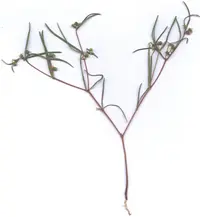
Chiricahua Mountain sandmat (Euphorbia florida) is a small, mat-forming perennial herb native to rocky slopes and open areas of the southwestern United States and northern Mexico. It typically grows low to the ground, with many slender stems and tiny leaves that create a fine, delicate texture.
This species often carries small, inconspicuous flowers that attract pollinating insects and contribute to dryland plant communities. It is naturally adapted to full sun, lean mineral soils, and dry conditions, which can make it challenging outside similar climates.
Gardeners who want to care for Chiricahua Mountain sandmat should provide strong light, sharp drainage, and protection from prolonged cold, wet weather.

Care Difficulty
Moderate Care

Light Preference
Full Sun

Water Requirements
Low Water

Temperature Preference
Warm Climate

Hardiness Zone
8–10

Soil Texture
Sandy, Loamy, Rocky

Soil pH
Slightly acidic (6.5–7.0), Neutral (7.0)

Soil Drainage
Well-drained

Fertilization
Minimal (feed rarely)
Scan your plant to receive care tips personalized for your specific plant
Available on iOS and Android
This desert perennial thrives in strong light and handles intense sun when established.
This species is drought-adapted and needs careful, sparing irrigation.
This warm-adapted species prefers hot, dry conditions but is vulnerable to hard frost.
This species handles low household humidity well and rarely needs special humidity management.
This desert euphorbia needs a sharply draining, mineral-rich substrate to prevent root rot.
This species can grow well in containers when drainage and stability are carefully managed.
Euphorbia florida is adapted to lean, rocky soils and needs only light, infrequent feeding in cultivation.
Pruning Euphorbia florida is mainly corrective, keeping plants tidy and preventing congestion.
Transplanting Euphorbia florida is done sparingly, as the plant dislikes frequent root disturbance.
Propagation of Euphorbia florida is most reliable from seeds, with stem cuttings used by more experienced growers.
In its native range Euphorbia florida is relatively cold tolerant but benefits from simple winter precautions in colder gardens.

Plant Health Check
Not sure what's wrong with your plant? Check your plant's health inside the app.
This species occurs naturally only in a limited region of southeastern Arizona and southwestern New Mexico, where it grows on rocky, well-drained slopes and desert grasslands.
It forms very low, mat-like patches close to the ground, with slender stems and small opposite leaves that help it cope with intense sun and drying winds in its native habitat.
Its small, inconspicuous cyathia (the specialized euphorbia flower structure) are adapted to attract local desert insects, providing nectar and pollen during warm seasons when other floral resources may be scarce.
The milky sap is irritating and potentially toxic if chewed or if it contacts skin or eyes. Keep pets and children from chewing stems, wash skin after exposure, and seek medical advice if ingestion occurs.
Keep your plants happy and healthy with plant identification, disease detection, and easy care guidance.

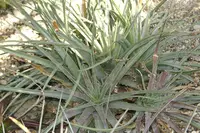
guapilla
Hechtia glomerata
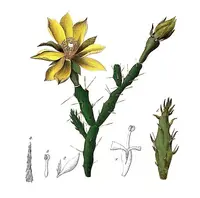
cockspur pricklypear
Opuntia pusilla
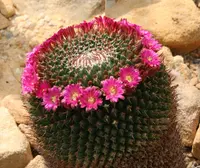
Mammillaria mystax
Mammillaria mystax
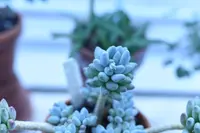
Pachyphytum hookeri
Pachyphytum hookeri
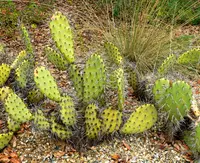
coastal pricklypear
Opuntia littoralis
Mammillaria zephyranthoides
Mammillaria zephyranthoides
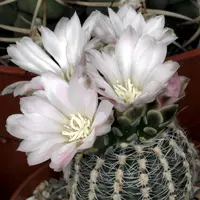
Gymnocalycium bruchii
Gymnocalycium bruchii
Shade Tonguefig
Glottiphyllum depressum