

Summer growth push
Take advantage of the active warm-season growth by lightly rotating the pot every 2–3 weeks so all rosettes receive similar light exposure and develop a compact, even mat rather than leaning toward one side.

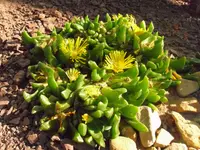
Glottiphyllum depressum, commonly called shade tonguefig, is a compact succulent from arid regions of South Africa. It forms low mats of smooth, tongue-shaped leaves that store water.
The plant stays close to the ground and can produce bright yellow, daisy-like flowers in good light. Its fleshy leaves and slow growth make it suitable for containers and small indoor collections.
This species prefers bright, indirect light, very free-draining soil, and careful watering that allows the roots to dry between waterings. These drought-adapted traits generally make it easy to care for Shade Tonguefig when overwatering is avoided.

Care Difficulty
Moderate Care

Light Preference
Full Sun

Water Requirements
Low Water

Temperature Preference
Tropical / Frost Sensitive

Hardiness Zone
10–11

Soil Texture
Sandy, Rocky, Loamy

Soil pH
Slightly acidic (6.5–7.0), Neutral (7.0)

Soil Drainage
Well-drained

Fertilization
Minimal (feed rarely)
Scan your plant to receive care tips personalized for your specific plant
Available on iOS and Android
This low-growing succulent prefers bright, gentle sun rather than intense, all-day exposure.
This succulent stores water in its leaves and needs infrequent but thorough watering.
This species thrives in mild, dry conditions and reacts poorly to prolonged cold and frost.
This succulent tolerates typical indoor humidity and prefers dry air conditions.
This plant needs a very fast-draining, mineral-based substrate to prevent root rot.
This species is well suited to container growing when drainage and shallow rooting habits are considered.
This compact succulent needs only light feeding to stay healthy in containers or rock gardens.
Pruning needs for this species are minimal and focus on hygiene rather than shaping.
This slow-growing succulent prefers infrequent repotting and benefits from gentle handling.
This plant is commonly propagated to expand clumps or share offsets with other growers.
This succulent is not fully frost hardy and benefits from thoughtful winter management in cooler climates.

Plant Health Check
Not sure what's wrong with your plant? Check your plant's health inside the app.
The yellow flowers open mainly in the late afternoon and evening, an adaptation to its arid South African habitat where cooler hours favor pollinator activity and reduce water loss from floral tissues.
This species forms opposite, flattened, tongue-shaped leaf pairs that lie close to the soil surface, helping shade the root zone and reducing evaporation in its native semi-desert environment.
Glottiphyllum depressum is naturally restricted to parts of the Little Karoo in South Africa, where it grows in shallow, rocky soils and often partly buried, a microhabitat that buffers it from rapid temperature swings and intense sun.
Flowering often declines when the plant is very young, recently repotted, or stressed by irregular watering or low light. Allow a cool, bright, dryish winter rest and avoid heavy feeding, which encourages leaves instead of flowers.
Keep your plants happy and healthy with plant identification, disease detection, and easy care guidance.

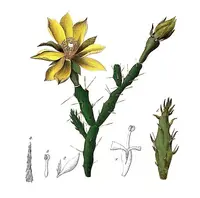
cockspur pricklypear
Opuntia pusilla
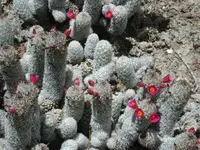
Mammillaria sphacelata
Mammillaria sphacelata
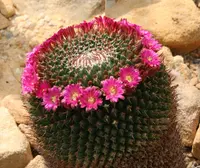
Mammillaria mystax
Mammillaria mystax
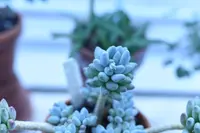
Pachyphytum hookeri
Pachyphytum hookeri
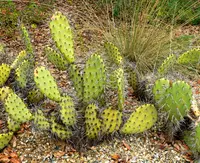
coastal pricklypear
Opuntia littoralis
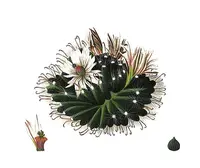
Mammillaria zephyranthoides
Mammillaria zephyranthoides
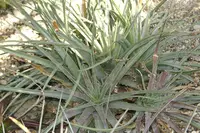
guapilla
Hechtia glomerata
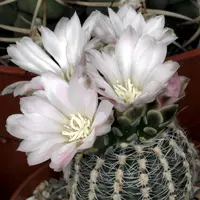
Gymnocalycium bruchii
Gymnocalycium bruchii