Euphorbia fragifera Care

Euphorbia fragifera

About Euphorbia fragifera

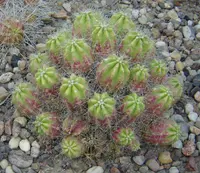
Euphorbia fragifera is a small, shrubby succulent from arid regions of North Africa, adapted to hot sun and poor, rocky soils. It forms low, branching clumps with thick, segmented stems and small, reduced leaves that drop in dry conditions.

The plant produces typical Euphorbia cuplike flowers, often surrounded by modest bracts, giving subtle seasonal interest rather than showy bloom displays. Its slow growth, drought tolerance, and compact habit suit collectors and experienced succulent growers.

Compared with many leafy houseplants, how to care for Euphorbia fragifera is more about restraint: strong light, minimal watering, and very free-draining, gritty soil are essential for long-term success.

Main Plant Requirements

Care Difficulty

Moderate Care

Light Preference

Full Sun

Water Requirements

Low Water

Temperature Preference

Warm Climate

Hardiness Zone

Unknown

Soil Texture

Sandy, Loamy, Rocky

Soil pH

Slightly acidic (6.5–7.0), Neutral (7.0)

Soil Drainage

Well-drained

Fertilization

Minimal (feed rarely)

Get Personalized Care Plan

Scan your plant to receive care tips personalized for your specific plant

Available on iOS and Android

How to Care for the Euphorbia fragifera

This drought-tolerant succulent prefers bright, open exposure with some protection from harsh midday sun.

  • Provide 6–8 hours of direct sun daily, ideally strong morning sun with light afternoon shade, especially in hotter regions.
  • In very hot, dry climates, use filtered light or 30–40% shade cloth during peak afternoon hours to prevent stem scorch and bleaching.
  • If stems elongate, lean, or lose strong color, light is insufficient; gradually increase sun over 7–14 days to avoid sunburn on Euphorbia fragifera.

This species stores water in its stems and needs infrequent but thorough watering in fast-draining soil.

  • Outdoors in warm seasons, water only when the top 3–5 cm of soil are completely dry, then soak the root zone once and allow excess to drain away.
  • Reduce watering sharply in cool seasons, sometimes to once every several weeks, keeping the root zone mostly dry but avoiding prolonged dust-dry soil for young plants.
  • Watch for yellowing, soft, or blackened stems as overwatering signs, and for wrinkling or slight stem shrinkage as a cue to water Euphorbia fragifera.

This plant prefers warm, arid conditions and is sensitive to prolonged cold and frost.

  • Aim for active growth temperatures of 70–85°F (21–29°C), with short peaks to 90–95°F (32–35°C) tolerated if soil is dry and airflow is good.
  • Protect from temperatures below 40°F (4°C); brief dips to 35°F (2°C) may be survived if dry, but frost can damage or kill tender stems.
  • In cooler seasons, keep it drier and above 50°F (10°C) to reduce rot risk, and avoid sudden swings over 20°F (11°C) within a day.

This succulent tolerates typical indoor humidity and does not require special adjustment.

  • Target 30–50% humidity, similar to most heated or air‑conditioned homes.
  • Dry air is usually tolerated; issues arise more from overwatering than from low humidity.
  • If stems shrivel while the soil stays dry for long periods, increase watering slightly rather than raising humidity.

This species needs a sharply draining, mineral-based substrate to prevent root and stem rot.

  • Use a sandy, gritty mix such as 50–70% inorganic materials (pumice, coarse perlite, gravel) with 30–50% cactus potting mix.
  • Aim for slightly acidic to neutral pH, around 6.0–7.2, which most commercial cactus mixes provide.
  • Increase aeration by avoiding fine peat-heavy products that compact and hold water around the roots.
  • For Euphorbia fragifera, avoid dense, moisture-retentive garden soil or mixes with high amounts of compost or coco coir.

This species is well suited to container growing due to its compact, drought-tolerant root system.

  • Choose a heavy clay or ceramic pot if the plant becomes top-heavy, to reduce tipping risk in outdoor wind or on balconies.
  • Select a pot only 2–3 cm wider than the root ball to keep the root zone from staying wet for long periods.
  • Ensure wide, unobstructed drainage holes and elevate the pot slightly so excess water can exit quickly and not pool under the base.

This drought-adapted succulent needs only light feeding to maintain steady growth without forcing weak, lush tissue.

  • Apply a low-dose balanced liquid fertilizer (around 10-10-10) at 1/4–1/2 strength every 6–8 weeks during spring–summer while Euphorbia fragifera is actively growing.
  • Use a cactus or succulent fertilizer, or a very thin layer of well-aged compost, rather than rich, high-nitrogen products.
  • Skip feeding in fall–winter when growth slows, especially in cooler or lower-light conditions.
  • Always water lightly before applying liquid fertilizer to reduce root burn and salt buildup in the potting mix.

This species needs minimal pruning, mainly to keep the plant safe, tidy, and structurally sound.

  • Carry out pruning in late spring or early summer, when growth is active and wounds seal more reliably.
  • Remove dead, damaged, diseased, or badly crossing stems, cutting back to healthy, firm tissue.
  • Use clean, sharp bypass pruners and protect skin and eyes from the irritating, toxic latex sap.
  • Shape lightly by shortening overly tall or awkward stems, avoiding heavy cuts that remove much of the green surface.

Container-grown plants benefit from infrequent repotting that refreshes the gritty mix without disturbing roots too often.

  • Check for roots circling the pot, pushing through drainage holes, or for slowed growth and fast-drying soil as signs to repot.
  • Plan repotting for late spring, moving Euphorbia fragifera into a pot only 2–5 cm wider with excellent drainage.
  • Handle the root ball gently and keep original soil around roots, only loosening lightly to limit stress.
  • Leave the plant slightly dry for a few days after repotting, then resume light watering once roots have settled.

Vegetative propagation is common but requires careful handling because of the caustic white sap.

  • Take 8–12 cm stem cuttings in late spring or early summer using a clean, sharp knife.
  • Allow cut surfaces to dry and callus for several days before planting to reduce rot risk.
  • Root cuttings in a fast-draining cactus mix, keeping warmth (70–80°F) and bright, indirect light.
  • Water sparingly until new growth appears, then transition to normal Euphorbia fragifera care instructions.

This succulent prefers mild, dry winters and is not reliable in prolonged freezing conditions.

  • In ground, it may tolerate brief light frosts if soil drains very sharply and stays relatively dry.
  • Add a light, gritty mulch around the root zone to shed winter moisture rather than hold it.
  • Move containers indoors or to a cool, bright, frost-free spot when temperatures approach 32°F.
  • Keep winter watering minimal, letting the mix dry almost completely between light drinks to prevent root rot.

Care Tips

Safe handling routine

Always wear gloves and long sleeves when cutting or repotting, and keep paper towels ready to blot the white latex sap immediately so it does not contact skin, eyes, or other plants.

Sap-sealing technique

After making any cut, let the latex bleed for a few seconds, then gently rinse the wound under cool running water or mist it, which helps the sap coagulate faster and reduces the risk of rot or fungal entry.

Targeted pest patrol

Inspect the ribs and areole-like points with a magnifying glass every 2–3 weeks, and spot-treat early mealybug or scale infestations with a cotton swab dipped in 70% isopropyl alcohol rather than spraying large areas.

Controlled branching cuts

If a taller plant needs to branch, remove the growing tip during warm, active growth and support the main stem with a stake so the plant does not lean while new side shoots develop.

Gradual light shifts

When moving the plant between indoor and outdoor locations or to a brighter window, increase light exposure in 1–2 hour increments over 7–10 days to prevent the stems from corking or scalding while growing Euphorbia fragifera.

Common Pests and Diseases

Mealybugs

This pest commonly settles in stem angles and along ridges, feeding on plant sap and causing stunting and yellowing of segments. Symptoms include white, cottony clusters and sticky honeydew on the ribs.

Solution

Isolate the plant, then dab visible insects with cotton swabs dipped in 70% isopropyl alcohol and repeat weekly until clear. Improve light and airflow, and for larger infestations use a systemic insecticide labeled for succulents, following directions carefully.

Spider mites

These insects favor dry, warm conditions and can appear on thin ribbed segments, causing fine stippling, dull color, and eventual bronzing of tissue. Symptoms include very fine webbing in crevices between ribs and slow decline of new growth.

Solution

Rinse stems thoroughly with a strong but controlled stream of lukewarm water, then increase ambient humidity slightly around the plant without overwatering the soil. For persistent cases, apply a miticide or insecticidal soap to all rib surfaces and repeat at 5–7 day intervals to break the life cycle.

Scale insects

This pest attaches firmly to ribs and along the base of spines, sucking sap and producing honeydew that may lead to sooty mold growth. Symptoms include hard, brown or gray bumps that do not brush off easily and gradual weakening of stems.

Solution

Manually remove scales with a soft brush or cloth and 70% isopropyl alcohol, paying attention to grooves and spine bases. For recurring problems, use a systemic insecticide suitable for succulents and monitor new growth closely as part of long-term Euphorbia fragifera care.

Powdery mildew

This disease can occasionally develop on shaded or overcrowded plants, forming white, powdery patches on stems and younger segments. Symptoms include dull, patchy discoloration and slowed growth in affected areas.

Solution

Improve light, reduce overcrowding, and ensure good air circulation around the plant while avoiding overhead watering. Remove heavily affected segments if feasible and apply a sulfur-based or potassium bicarbonate fungicide labeled for ornamentals, coating all green tissue lightly.

Corking and sunscald

This physiological problem appears when plants experience sudden intense sun or major stress, causing brown, corky patches or bleached areas on the ribs. Symptoms include dry, firm, tan to gray lesions that do not spread like rot but can distort the plant surface.

Solution

Move the plant to bright but filtered light and acclimate gradually to stronger sun over 1–2 weeks. Remove only badly damaged sections that compromise structure; maintain stable watering and avoid additional stress until new, healthy growth appears.

Interesting Facts

Strawberry-like stem texture

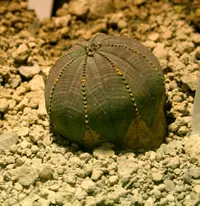
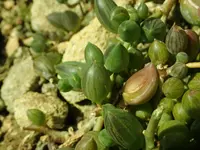
This species develops clustered, warted stem segments whose surface pattern and rounded tubercles resemble a cluster of unripe strawberries, which is the origin of the epithet fragifera, meaning strawberry-bearing.

Highly localized distribution

Euphorbia fragifera is known from a very restricted natural range in the Arabian Peninsula, where it grows in specific arid habitats and is not widely reported outside its native region.

FAQs about Euphorbia fragifera

This species performs best outdoors in warm, bright, dry conditions that mimic its native habitat. Euphorbia fragifera indoor care is possible near a very bright window, but growth is slower and flowering is usually reduced.

Grow Healthy Plants with Botan Care

Keep your plants happy and healthy with plant identification, disease detection, and easy care guidance.

Botan plant care app — identify plants on mobile

Explore More Plants