Pinch for Bushiness
Pinch back soft shoot tips every 3–4 weeks through early summer to keep plants compact, increase branching, and extend the flowering display when growing graceful spurge in containers or beds.

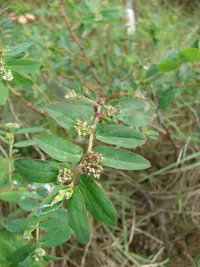
Graceful spurge, Euphorbia hypericifolia, is a compact, fine-textured perennial often grown as an annual in gardens and containers. It forms airy mounds covered with tiny white or pale pink bracts that resemble delicate flowers.
The plant is native to the Americas and adapts well to warm, bright conditions in ornamental beds, mixed containers, and edging. It typically has a bushy, branching habit that blends easily with other plants without overwhelming them.
Euphorbia hypericifolia is generally easy to grow, as it tolerates heat, short dry spells, and average, well-drained soil. These traits make it straightforward to care for graceful spurge in sunny, low-maintenance plantings.

Care Difficulty
Easy Care

Light Preference
Full Sun

Water Requirements
Moderate Water

Temperature Preference
Tropical / Frost Sensitive

Hardiness Zone
10–11

Soil Texture
Sandy, Loamy, Organic-rich

Soil pH
Acidic (5.5–6.5), Slightly acidic (6.5–7.0)

Soil Drainage
Well-drained

Fertilization
Light (every 4–6 weeks)
Scan your plant to receive care tips personalized for your specific plant
Available on iOS and Android
This sun-loving annual thrives in bright conditions but benefits from some protection from harsh midday rays.
This drought-tolerant species prefers infrequent, deep watering and fast-draining soil.
This warm-season plant grows best in stable, moderate warmth without frost exposure.
This species accepts a wide humidity range and rarely needs special humidity management indoors.
This plant prefers a light, sharply draining substrate that does not stay wet for long.
This species is well suited to container growing on patios, balconies, or as a seasonal bedding pot accent.
This plant responds well to light, consistent feeding during its active growing season.
Thoughtful pruning keeps Euphorbia hypericifolia compact, branching well, and flowering strongly.
This species tolerates modest root crowding, so repotting or transplanting is only needed when growth clearly slows.
New plants are most often produced from softwood cuttings or seeds taken from mature Euphorbia hypericifolia.
This warm-season plant is frost sensitive and needs protection in regions with cold winters.

Plant Health Check
Not sure what's wrong with your plant? Check your plant's health inside the app.
This species produces masses of tiny white bracts around its true flowers, creating a hazy, cloudlike effect that can cover the entire plant for long periods in warm conditions.
Native to tropical and subtropical regions of the Americas, this plant continues flowering through high temperatures and short dry spells, which makes Euphorbia hypericifolia care relatively forgiving in hot climates.
When stems or leaves are damaged, the plant releases a white latex sap that deters many herbivores and can irritate human skin and eyes, a typical but well-developed chemical defense in the genus Euphorbia.
This species produces many small nectar-rich flowers that draw in bees, hoverflies, and small butterflies. It is useful in pollinator-friendly plantings, especially when combined with other long-blooming, pesticide-free garden plants.
Keep your plants happy and healthy with plant identification, disease detection, and easy care guidance.