

Safe sap handling
Always wear gloves and avoid touching your face or eyes when cutting or repotting, then rinse tools and any sap-contaminated surfaces with soapy water to prevent skin irritation from the toxic latex.

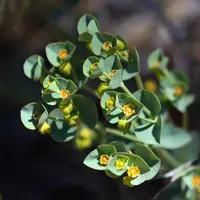
Woodland spurge (Euphorbia lurida) is a perennial, clump-forming plant known for its upright stems and narrow leaves, often topped with yellow-green bracts. It has a tidy, structured habit that fits well into naturalistic borders and woodland-style plantings. In nature, it is typically found in open woodlands and scrubby habitats in parts of southern Africa. This origin gives it a preference for bright light with some protection from harsh midday sun, and soils that drain well but do not stay extremely dry for long periods. Its moderate growth rate and relatively low maintenance needs make it manageable for gardeners who want to learn how to care for Woodland Spurge without complex routines.

Care Difficulty
Moderate Care

Light Preference
Partial Sun

Water Requirements
Low Water

Temperature Preference
Warm Climate

Hardiness Zone
9–11

Soil Texture
Sandy, Loamy, Rocky

Soil pH
Slightly acidic (6.5–7.0), Neutral (7.0)

Soil Drainage
Well-drained

Fertilization
Minimal (feed rarely)
Scan your plant to receive care tips personalized for your specific plant
Available on iOS and Android
This drought-tolerant Euphorbia prefers bright conditions with some protection from intense midday rays.
This species is drought-tolerant and needs infrequent but deep watering once established.
This hardy Euphorbia prefers moderate warmth but tolerates a wide outdoor temperature range.
This species handles typical indoor humidity well, so humidity management is usually not critical.
This species needs a sharply drained, mineral-rich substrate to prevent root rot.
This species is suitable for container growing when drainage and stability are carefully managed.
Euphorbia lurida is adapted to lean soils and needs only light, controlled feeding in cultivation.
Euphorbia lurida benefits from occasional light pruning to maintain a stable, healthy clump.
This species is usually grown in the ground and only needs infrequent transplanting or container repotting.
Euphorbia lurida is most often propagated from cuttings, with care taken around the toxic sap.
This species is fairly cold tolerant in suitable climates but benefits from simple winter precautions, especially in containers.

Plant Health Check
Not sure what's wrong with your plant? Check your plant's health inside the app.
This species is native to arid parts of South Africa’s Karoo region, where it grows as a small, many-branched shrub adapted to rocky, well-drained slopes and flats.
Like many spurges, it produces a white, milky latex that deters herbivores and can irritate skin and eyes, providing an effective chemical defense in exposed habitats.
Its so-called flowers are actually cyathia, a specialized inflorescence type unique to Euphorbia, with reduced true flowers surrounded by petal-like structures and nectar glands that attract pollinators.
This species can self-seed and slowly form clumps, but it is not usually aggressively spreading in typical garden conditions. Remove spent flower heads before seeds drop if you want to limit spread and keep a more contained planting.
Keep your plants happy and healthy with plant identification, disease detection, and easy care guidance.

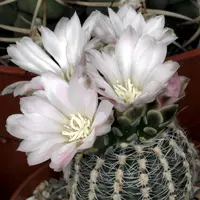
Gymnocalycium bruchii
Gymnocalycium bruchii
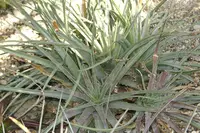
guapilla
Hechtia glomerata
Mammillaria zephyranthoides
Mammillaria zephyranthoides
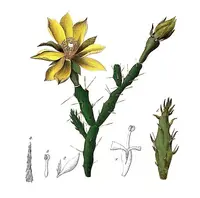
cockspur pricklypear
Opuntia pusilla
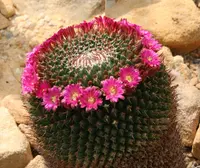
Mammillaria mystax
Mammillaria mystax
Pachyphytum hookeri
Pachyphytum hookeri
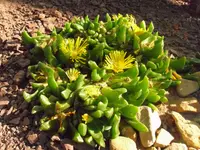
Shade Tonguefig
Glottiphyllum depressum
Chiricahua Mountain sandmat
Euphorbia florida