

Root-zone containment
Grow this plant in a wide, shallow container and top-dress with a 1–2 cm layer of coarse grit or small gravel to stabilize the mat-like stems and keep the crown dry and well aerated.

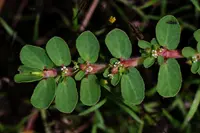
Mendez's sandmat (Euphorbia mendezii) is a compact, low-growing succulent shrub in the spurge family. It typically forms small, branching mounds with narrow leaves. Tiny, cup-shaped floral structures give it a fine, delicate look rather than showy blooms.
This species is native to arid regions of the southwestern United States and northern Mexico, where it grows in rocky, well-drained soils. Its drought tolerance and slow growth make it relatively low maintenance when conditions are right.
Understanding how to care for Mendez's Sandmat mainly involves providing strong light, very sharp drainage, and avoiding prolonged cold and excess moisture.

Care Difficulty
Moderate Care

Light Preference
Full Sun

Water Requirements
Low Water

Temperature Preference
Warm Climate

Hardiness Zone
9–11

Soil Texture
Sandy, Loamy, Rocky

Soil pH
Slightly acidic (6.5–7.0), Neutral (7.0)

Soil Drainage
Well-drained

Fertilization
Minimal (feed rarely)
Scan your plant to receive care tips personalized for your specific plant
Available on iOS and Android
This small Euphorbia thrives in bright, dry habitats with strong light but benefits from some daily protection from intense sun.
This species is drought tolerant and prefers infrequent, deep watering that allows the soil to dry between soakings.
This succulent Euphorbia prefers warm, dry conditions and is sensitive to cold, especially prolonged frost.
This species is adapted to dry conditions and usually does not need elevated humidity indoors.
This plant prefers very fast-draining, mineral-rich soil that mimics arid, rocky habitats.
This species is well suited to container growing due to its preference for controlled, fast-draining substrates.
This drought-adapted species needs only light feeding, especially when grown in lean, well-drained soil.
Pruning Euphorbia mendezii is mainly done to maintain a compact shape and remove unhealthy material.
This plant grows slowly and dislikes frequent disturbance, so repotting or transplanting is needed only occasionally.
Propagation is possible but should be done carefully due to the plant’s milky latex sap and slow growth.
This species prefers mild, frost-free conditions and benefits from some winter protection in colder regions.

Plant Health Check
Not sure what's wrong with your plant? Check your plant's health inside the app.
This species is naturally restricted to arid coastal and inland areas of Baja California, Mexico, where it grows in open, rocky desert habitats with very sparse vegetation.
Its tiny cyathia (euphorbia-type flowers) have conspicuous nectar glands that help attract small insects, an important adaptation for pollination in its dry, open habitat.
Wild populations are considered vulnerable because of habitat disturbance, including grazing, off-road vehicle use, and land development, which can easily damage its low, sparse colonies.
This species forms low, spreading mats but is not usually aggressive in managed gardens. It expands slowly by short stems rather than runners. Occasional trimming along borders keeps it neatly contained and prevents unwanted encroachment into neighboring plantings.
Keep your plants happy and healthy with plant identification, disease detection, and easy care guidance.

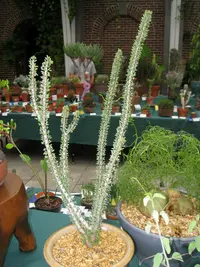
Namaqua Porkbush
Portulacaria namaquensis
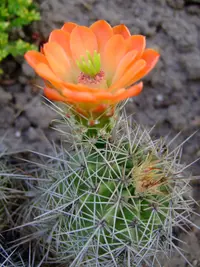
scarlet hedgehog cactus
Echinocereus coccineus
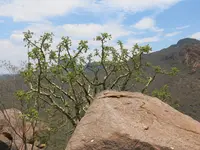
Paper Tree
Commiphora marlothii
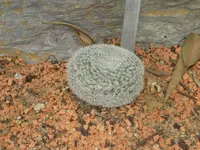
Mammillaria perbella
Mammillaria perbella
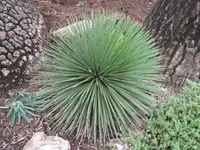
hedgehog agave
Agave stricta
Opuntia megapotamica
Opuntia megapotamica
narrow-leaved iceplant
Conicosia pugioniformis
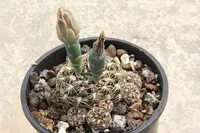
Gymnocalycium calochlorum
Gymnocalycium calochlorum