Namaqua Porkbush Care (Portulacaria namaquensis)

Also known as: Namaqua Spekboom, Namaqualand Ceraria
Namaqua Porkbush

About Namaqua Porkbush

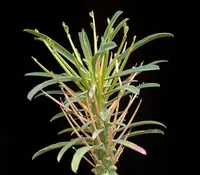
Portulacaria namaquensis, commonly called Namaqua porkbush, is a small succulent shrub from arid regions of Namibia and South Africa. It naturally forms low, branching clumps with thick, jointed stems and small, fleshy leaves adapted to store water. Growth is slow to moderate and usually compact in containers.

This species is drought tolerant and prefers bright, dry conditions and sharply draining, sandy or gritty soil. It is generally considered a forgiving succulent, but consistent overwatering will quickly damage roots and stems.

For anyone learning how to care for Namaqua Porkbush, its main needs are strong light, careful watering, and protection from prolonged cold or excess humidity.

Main Plant Requirements

Care Difficulty

Moderate Care

Light Preference

Full Sun

Water Requirements

Low Water

Temperature Preference

Tropical / Frost Sensitive

Hardiness Zone

10–11

Soil Texture

Sandy, Loamy, Rocky

Soil pH

Slightly acidic (6.5–7.0), Neutral (7.0)

Soil Drainage

Well-drained

Fertilization

Minimal (feed rarely)

Get Personalized Care Plan

Scan your plant to receive care tips personalized for your specific plant

Available on iOS and Android

How to Care for the Namaqua Porkbush

This succulent prefers bright, strong light and can handle significant direct sun when acclimated slowly.

  • Provide 6–8 hours of sun daily; morning sun with light afternoon shade suits most outdoor conditions, especially in hot, dry regions.
  • Namaqua Porkbush tolerates light or dappled shade for part of the day, but growth becomes sparse and leggy in less than 4 hours of direct light.
  • In intense summer sun, especially during 1–4 p.m., protect from scorching with shade cloth or filtered light to prevent leaf burn and stress.

This drought-adapted succulent needs infrequent, deep watering in fast-draining soil.

  • Water only when the top 3–5 cm of soil are completely dry; in hot active growth this may be every 7–14 days, less often in cool weather.
  • For Portulacaria namaquensis, use gritty, sharply draining soil and containers or beds that never hold standing water to reduce root rot risk.
  • Signs of overwatering include yellow, translucent, or mushy leaves, while wrinkling, soft but shriveling leaves signal the need for a thorough soak.

This species prefers warm, dry conditions and is sensitive to prolonged cold and frost.

  • Aim for 65–85°F (18–29°C) for best growth; brief spikes to 90–95°F (32–35°C) are tolerated if soil is dry and air is moving.
  • Protect from frost; damage often starts below 32°F (0°C), and sustained exposure under 28°F (-2°C) can kill stems and roots.
  • In regions with cold winters, keep the plant drier and sheltered once temperatures fall below 50°F (10°C) to reduce cold-related root problems.

This succulent tolerates a wide humidity range and usually does not need special humidity control indoors.

  • Thrives at 30–50% relative humidity, similar to most heated homes.
  • Handles very dry air well as long as light and watering are appropriate.
  • Watch for soft, pale, or stretched growth as a sign of overwatering rather than humidity stress.
  • If air is extremely dry and hot, increase air movement instead of misting, which can promote rot.

Portulacaria namaquensis prefers a lean, fast-draining, mineral-based substrate that mimics arid habitats.

  • Use a gritty mix such as 50–70% inorganic material (pumice, perlite, coarse sand) with 30–50% low-organic cactus potting mix.
  • Aim for slightly acidic to neutral pH around 6.0–7.2, which most commercial succulent mixes already provide.
  • Improve aeration by using particles in the 3–6 mm range so water moves quickly through the root zone.
  • Avoid dense peat, unamended garden soil, or water-retentive compost blends that stay wet for more than 2–3 days.

This species is well suited to container growing due to its compact, shrubby growth habit.

  • Choose a shallow to medium-depth pot, as the relatively fine root system spreads more than it dives deeply.
  • Select unglazed terracotta if extra evaporation is needed to keep the mix dry between waterings.
  • Use a pot shape wider than tall to improve stability as branches thicken and the plant becomes slightly top-heavy.

This drought-adapted succulent needs only light feeding to support steady growth in pots.

  • Use a balanced liquid fertilizer (around 10-10-10) or cactus feed diluted to 25–50% strength for Namaqua Porkbush.
  • Apply once every 4–6 weeks during spring–summer when growth is active.
  • Avoid heavy organic compost or rich slow-release pellets that keep soil wet.
  • Stop feeding in autumn–winter, especially in cool conditions, to prevent soft, weak growth.

Pruning helps Portulacaria namaquensis keep a compact, branching form and removes weak growth.

  • Best time is late winter to early spring, before strong new growth begins.
  • Use clean, sharp scissors or pruning shears to remove dead, damaged, or crossing stems.
  • Shorten overly long shoots just above a node to encourage dense side-branching.
  • Avoid removing more than 25–30% of foliage at once to limit stress.

Container-grown plants benefit from occasional repotting to refresh soil and give roots space.

  • Repot every 2–4 years, or when roots circle the pot, water drains too quickly, or growth slows.
  • Choose late winter to early spring, using a slightly larger container with fast-draining cactus or succulent mix.
  • Gently loosen circling roots, trim any rotten sections, and keep the original root ball mostly intact.
  • After repotting, water lightly once, then let the mix dry almost fully before the next watering to reduce stress.

Portulacaria namaquensis is most commonly propagated from stem cuttings under warm, dry conditions.

  • Take 5–10 cm semi-firm stem cuttings in late spring or summer.
  • Remove lower leaves, then air-dry cut ends for 1–3 days until a dry callus forms.
  • Insert cuttings into dry, gritty cactus mix and provide bright, indirect light.
  • Water very sparingly until roots form, then increase watering slightly once new growth appears.

This species is sensitive to hard frost and needs protection in cold-winter climates.

  • Keep above 30–35°F; aim for 40–55°F indoors with bright light in winter.
  • Move container plants indoors or into a cool greenhouse before first frost.
  • Water much less in winter, allowing soil to dry almost completely between waterings.
  • In mild climates, use a light mineral mulch around the root zone to improve drainage in cool, wet weather.

Care Tips

Root-zone stability

Use a heavy, low pot or add a layer of coarse gravel at the bottom of the container to keep the plant from toppling as stems become woody and top-heavy.

Controlled stem training

While stems are still flexible, gently wire or brace them to a small stake to create the desired branching structure, then remove supports once the wood hardens and can hold its own shape.

Intentional leaf thinning

Pinch off a small number of inner leaves on dense branches to improve airflow and light penetration, which helps reduce the risk of fungal spotting in prolonged damp weather.

Dry overwintering routine

In cooler months, keep the plant in the brightest possible location and reduce handling, repotting, and any unnecessary disturbance so that stored stem moisture is not stressed by additional growth demands.

Propagate as insurance

Take a few healthy stem cuttings during active growth, let them callus for several days, then root them in a separate tray so you always have backup plants in case of accidental overwatering or damage when growing Namaqua Porkbush.

Common Pests and Diseases

Mealybugs

This pest feeds on succulent stems and leaves, sucking sap and excreting sticky honeydew that can cause sooty mold and slow growth.

Solution

Isolate the plant, then dab visible insects with cotton swabs dipped in 70% isopropyl alcohol and rinse the plant with a gentle water spray; repeat weekly until no new insects appear and reduce excess fertilizer that promotes soft, vulnerable growth.

Spider mites

These insects thrive in hot, dry indoor air and cause fine webbing, pale stippling on leaves, and overall dulled appearance.

Solution

Shower the plant with a strong but controlled stream of lukewarm water to wash off mites, increase humidity around the plant without overwatering, and repeat rinsing every few days; use an insecticidal soap or horticultural oil labeled for succulents if webbing and damage persist.

Scale insects

This pest appears as small, hard bumps on stems and leaf joints, drawing sap and causing yellowing or thinning of foliage over time.

Solution

Gently scrape or peel off individual scales with a fingernail or soft tool, wipe stems with a cloth lightly moistened with diluted alcohol, and maintain good light and moderate watering so the plant can recover while monitoring monthly for any re-infestation.

Edema

Symptoms include corky, raised spots or blisters on leaves caused by the plant taking up water faster than it can transpire, which is common when watering heavily in cool, low-light conditions.

Solution

Allow the soil to dry more between waterings, avoid sudden heavy soaking after a dry period, and provide stronger light and good air movement so transpiration balances water uptake, which supports more stable Portulacaria namaquensis plant care.

Interesting Facts

Fog-harvesting leaves

This species grows in the arid Namaqualand region, where its tiny, club-shaped leaves efficiently capture moisture from coastal fog and dew, helping the plant survive with minimal rainfall.

Crassula family outlier

Although it resembles some Portulacaria afra forms, this species is a distinct taxon adapted to much drier, rockier habitats in northwestern South Africa and southern Namibia, with more compact growth and thicker, bluish foliage.

Natural rock crevice specialist

In habitat it often anchors itself in narrow rock fissures and cliff faces, where its roots exploit tiny pockets of grit and organic matter, stabilizing the plant against heat, wind, and erosion.

Botan icon

Did you know?

In its native Namaqualand and Richtersveld ranges, this species contributes to the region’s famous spring-flowering succulent landscapes, forming part of one of the world’s most botanically diverse arid floras, despite growing in some of the lowest-rainfall zones in southern Africa.

FAQs about Namaqua Porkbush

Brown leaves usually come from underwatering, intense direct sun scorch, or sudden cold exposure. Check soil moisture, protect from frost, and trim only fully dead tissue. Adjust conditions gradually so the plant can recover new healthy growth.

Grow Healthy Plants with Botan Care

Keep your plants happy and healthy with plant identification, disease detection, and easy care guidance.

Botan plant care app — identify plants on mobile

Explore More Plants