Coastal Beach Sandmat Care (Euphorbia mesembryanthemifolia)

Coastal Beach Sandmat

About Coastal Beach Sandmat

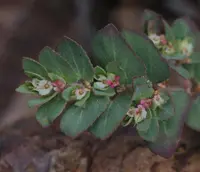
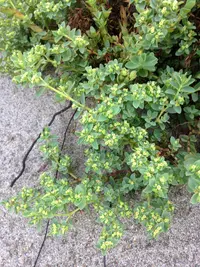
Coastal beach sandmat (Euphorbia mesembryanthemifolia) is a low, spreading succulent shrub native to sandy shorelines in tropical and subtropical coastal regions of the Americas. It often forms mats or small mounds with narrow, fleshy leaves and small, clustered flowers.

This species is adapted to salty winds, strong sun, and poor, fast-draining soils, which makes it resilient but also specific in its needs. Gardeners who want to care for Coastal Beach Sandmat must provide similar conditions, especially sharp drainage and plenty of light.

Because it is a true coastal plant, it tends to struggle in heavy, rich, or consistently wet soils and in deep shade. In suitable conditions, it is generally low maintenance and steady growing.

Main Plant Requirements

Care Difficulty

Easy Care

Light Preference

Full Sun

Water Requirements

Low Water

Temperature Preference

Tropical / Frost Sensitive

Hardiness Zone

10–12

Soil Texture

Sandy, Loamy, Rocky

Soil pH

Slightly acidic (6.5–7.0), Neutral (7.0)

Soil Drainage

Well-drained

Fertilization

Minimal (feed rarely)

Get Personalized Care Plan

Scan your plant to receive care tips personalized for your specific plant

Available on iOS and Android

How to Care for the Coastal Beach Sandmat

This coastal succulent thrives in strong light and handles intense sun when acclimated.

  • Provide 6–10 hours of direct sun daily, ideally with morning and midday sun; light afternoon shade helps in very hot inland sites.
  • Coastal Beach Sandmat tolerates light partial shade, but plants become looser and may flower less if they receive under 4–5 hours of sun.
  • In summer, introduce plants gradually to harsher sun to prevent leaf scorch; in low-light seasons, avoid shading from buildings or taller plants.

This species prefers dry, fast-draining conditions and is highly drought tolerant.

  • Allow sandy or rocky soil to dry fully between waterings; in pots, wait until the top 3–5 cm feels completely dry before adding water.
  • Increase watering slightly in active warm-season growth when stems look firm; reduce sharply in cool seasons to prevent root rot in Euphorbia mesembryanthemifolia.
  • Watch for yellowing, mushy stems as a sign of overwatering, and shriveling or limp stems as mild underwatering; improve drainage with coarse sand or grit if water lingers.

This coastal euphorbia prefers warm, frost-free conditions with good air movement.

  • Ideal growing temperatures are 70–85°F (21–29°C), with steady warmth supporting dense foliage and flowering.
  • It tolerates brief drops to about 40°F (4°C) but is damaged or killed by frost; protect from cold snaps with covers or relocation in marginal climates.
  • In hot regions, it handles 95–100°F (35–38°C) if soil is very well drained and roots are not waterlogged, but strong sun plus reflected heat may require slight afternoon shade.

This coastal succulent tolerates a wide humidity range and rarely needs special adjustment indoors.

  • Aim for 30–50% humidity, similar to a typical dry indoor room or breezy porch.
  • Dry air is usually acceptable; problems arise more from wet soil than low humidity.
  • Mild leaf shriveling signals overall moisture stress; manage this Coastal Beach Sandmat by adjusting watering, not by adding humidity.

This species prefers very lean, fast-draining, sandy soil that mimics coastal dunes.

  • Use a gritty cactus mix with at least 50–70% mineral material such as coarse sand, pumice, or small gravel.
  • Maintain a soil pH around 6.0–7.5; avoid strongly acidic or salty commercial mixes not labeled for succulents.
  • For Euphorbia mesembryanthemifolia outdoors, amend heavy or loamy ground with sand and fine gravel to improve drainage and aeration.
  • Avoid dense, peat-heavy, or water-retentive substrates that stay wet longer than 1 day after watering.

This species adapts well to container growing when the pot is set up to stay dry and stable.

  • Choose a wide, shallow pot to match its spreading root system and keep the plant from toppling in wind.
  • Use unglazed clay if possible, as it speeds evaporation and keeps the root zone drier after rain or watering.
  • Raise the container slightly on feet or bricks so drainage holes never sit in standing water on trays or patios.

Euphorbia mesembryanthemifolia is adapted to nutrient-poor coastal soils and needs only light feeding in cultivation.

  • Use a diluted balanced liquid fertilizer (around 10-10-10) at 1/4–1/2 strength during active growth in spring–summer.
  • Apply no more than every 6–8 weeks if growth appears pale or weak, especially in sandy containers.
  • Avoid feeding in fall–winter when growth slows, as excess nutrients can cause soft, weak tissue.
  • In very poor sandy soils, a small amount of slow-release fertilizer or thin compost layer can support growing Coastal Beach Sandmat.

Pruning Euphorbia mesembryanthemifolia is mainly needed to control spread and remove damaged growth.

  • Carry out light pruning in late winter or early spring before strong new growth starts.
  • Remove dead, damaged, or crossing stems first, then thin overly crowded areas to maintain an open, low mound.
  • Use clean, sharp pruners and avoid crushing stems; wear gloves to avoid contact with the milky sap.
  • Moderate tip trimming can encourage branching and a denser shape without greatly affecting flowering.

This coastal species is usually grown in the ground; container plants or nursery stock may need only infrequent repotting or gentle transplanting.

  • Transplant in late spring or early summer once soil is warm and risk of frost has passed.
  • Look for roots circling the pot, slow growth, or plants drying out very fast as signs a container specimen needs a larger pot.
  • Move up only 1 pot size with a sharply draining sandy mix, disturbing roots as little as possible to reduce stress.
  • Water lightly after transplanting, then allow soil to dry between waterings to encourage new root establishment.

Euphorbia mesembryanthemifolia is most often propagated from seeds or short stem cuttings under warm, bright conditions.

  • Sow fresh seeds in spring in a sandy, well-drained mix, keeping it slightly moist and warm (70–80°F) until germination.
  • For cuttings, take non-flowering tip pieces in late spring–summer and let the cut ends dry and callus for 1–2 days.
  • Insert cuttings into gritty, barely moist substrate and place in bright, indirect light with good air circulation.
  • Handle milky sap carefully and use gloves; avoid overwatering to prevent rot during rooting.

This coastal euphorbia is frost sensitive and needs protection in regions with cold winters.

  • In mild climates (above 30–32°F), a light mulch around the root zone helps buffer short cool spells.
  • In colder areas, grow in containers and move plants indoors or into a frost-free greenhouse before first frost.
  • Provide a cool, bright indoor spot with sharply drained soil and reduce watering so the root zone stays mostly dry.

Care Tips

Safe sap handling

Wear gloves and avoid touching your face when cutting or moving stems, as the milky latex sap can irritate skin and eyes; rinse tools and any affected skin with plenty of clean water after work.

Low-profile wind control

In exposed coastal or balcony sites, keep plants low and wide by pinching back long, floppy shoots so the plant resists wind damage and sand abrasion better over time.

Salt spray management

If grown slightly inland or in urban areas near roads, occasionally hose off foliage in the morning to remove accumulated salt or dust that can clog leaf surfaces and slow growth.

Targeted self-seeding

To maintain a natural-looking groundcover, leave a few mature seed heads on the healthiest plants and lightly disturb the surrounding sandy soil so seed can settle and establish in small patches you choose.

Companion groundcover use

Use this species to stabilize sandy or loose soils around paths or coastal-style beds, then lightly top-dress with clean sand or fine gravel once a year to keep stems rooting along the surface and improve growing Coastal Beach Sandmat performance.

Common Pests and Diseases

Spider mites

This pest commonly attacks euphorbias in hot, dry, coastal or indoor conditions, causing fine stippling, pale patches, and webbing on stems and leaves. Symptoms include slowed growth and a dull, dusty appearance on foliage.

Solution

Rinse plants thoroughly with a firm stream of water, focusing on stem nodes and undersides of leaves, then repeat every few days until activity declines. If needed, apply an insecticidal soap or neem oil spray in the early morning, and increase humidity and air movement without overwatering to make conditions less favorable for mites.

Mealybugs

These insects often settle in stem joints and along ribbed or succulent parts, where they appear as white, cottony clusters and excrete sticky honeydew that can attract sooty mold. Symptoms include distorted new growth and general plant weakening over time.

Solution

Remove visible insects with a cotton swab dipped in 70% isopropyl alcohol, then rinse the plant to dislodge hidden clusters. For larger infestations, use a systemic insecticide labeled for succulent euphorbias or repeated applications of insecticidal soap, isolating the plant from others during treatment as part of basic Euphorbia mesembryanthemifolia plant care.

Scale insects

This pest appears as small, brown to gray, shell-like bumps on stems and along leaf midribs, often blending with the plant’s texture. Symptoms include yellowing areas around feeding sites and gradual vigor loss.

Solution

Gently scrape or rub off individual scales with a soft brush or cloth, then wash the plant to remove residues. Follow with a horticultural oil or neem oil spray that thoroughly wets stems and leaf bases, and repeat at 7–10 day intervals to target newly emerged crawlers.

Powdery mildew

This disease occasionally affects plants in humid, shaded, or poorly ventilated coastal sites, forming white, powdery patches on leaf surfaces and young stems. Symptoms include distorted growth and reduced photosynthesis if coverage is heavy.

Solution

Remove and discard heavily infected leaves to reduce spore load, then improve light exposure and airflow around the plant. If needed, apply a sulfur-based or potassium bicarbonate fungicide labeled for ornamentals, coating all leaf surfaces and repeating as directed until new growth appears clean.

Stem canker

This disease can develop where stems are wounded by mechanical damage, salt-laden wind, or insect feeding, leading to sunken, dark lesions that may girdle the stem. Symptoms include localized blackening, cracking, and dieback above the affected area.

Solution

Prune out infected stem sections well below the visible lesion using clean, sharp tools, and dispose of removed material away from healthy plants. Disinfect tools between cuts with alcohol, avoid overhead watering in cool periods, and reduce mechanical stress so new wounds do not become infection sites.

Interesting Facts

Coastal dune specialist

This species is naturally restricted to sandy coastal habitats, often stabilizing dunes and upper beaches where few other vascular plants tolerate the shifting, salty substrate.

Salt and spray tolerant

Its succulent, narrow leaves and thick cuticle help it withstand salt spray and periodic sand burial along tropical and subtropical shorelines.

Milky latex defense

Like many Euphorbia species, it produces a white, sticky latex sap that deters herbivores; the sap is irritating to skin and eyes and should be handled with care during Euphorbia mesembryanthemifolia care.

FAQs about Coastal Beach Sandmat

This species forms low, creeping mats and can spread steadily where conditions suit it, especially in sandy, disturbed areas. It is not usually a problem in home gardens, but edging or containers help limit spread if needed.

Grow Healthy Plants with Botan Care

Keep your plants happy and healthy with plant identification, disease detection, and easy care guidance.

Botan plant care app — identify plants on mobile

Explore More Plants