California Pricklypear Care (Opuntia × occidentalis)

Also known as: Western Prickly Pear
California Pricklypear

About California Pricklypear

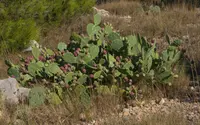
California pricklypear, Opuntia × occidentalis, is a shrubby cactus native to dry, rocky habitats in California and parts of the southwestern United States. It forms spreading clumps with flat, pad-like stems and showy yellow to orange flowers followed by colorful, edible fruits.

The pads are thick and jointed, armed with obvious spines and tiny barbed hairs that can irritate skin if handled carelessly. This species is adapted to sun, heat, and drought, which makes it relatively easy to grow in arid and coastal climates.

It prefers strong light, very well-drained, lean soil, and infrequent watering once established. Understanding these natural conditions helps plant owners care for California Pricklypear successfully in gardens and xeric landscapes.

Main Plant Requirements

Care Difficulty

Easy Care

Light Preference

Full Sun

Water Requirements

Low Water

Temperature Preference

Warm Climate

Hardiness Zone

8–11

Soil Texture

Sandy, Loamy, Rocky

Soil pH

Slightly acidic (6.5–7.0), Slightly alkaline (7.0–7.5)

Soil Drainage

Well-drained

Fertilization

Minimal (feed rarely)

Get Personalized Care Plan

Scan your plant to receive care tips personalized for your specific plant

Available on iOS and Android

How to Care for the California Pricklypear

This sun-loving cactus thrives in open, bright conditions typical of dry, exposed sites.

  • Provide 6–10 hours of direct sun daily; full sun is ideal in most coastal and inland locations for growing California Pricklypear.
  • In very hot inland summers, prioritize strong morning sun with light afternoon shade to prevent pad scorching and sunburned, bleached patches.
  • Plants in too much shade grow thin, stretched pads and may lean or flop; increase sun exposure gradually over 1–2 weeks to avoid shock.

This species prefers infrequent, deep watering that fully dries out between events.

  • Water only when the top 5–8 cm of soil are completely dry; in-ground plants in arid climates may need water every 2–4 weeks in summer, less in spring and fall.
  • Use very fast-draining, gritty soil to prevent standing water; soggy conditions cause yellowing pads, soft spots, and root rot.
  • Reduce or stop watering in cool winter months, resuming slowly when new pad growth appears on Opuntia × occidentalis in spring.

This cactus is adapted to warm, dry climates with a fairly wide temperature tolerance.

  • Active growth is strongest at 70–90°F (21–32°C); short periods up to about 100°F (38°C) are tolerated if soil drains well and roots are not waterlogged.
  • Mature plants handle brief light frosts around 25–30°F (-4– -1°C), but repeated hard freezes can scar or kill younger pads.
  • In colder regions, choose a warm, south-facing, wind-sheltered site and avoid low frost pockets where cold air accumulates in winter.

Humidity is rarely a concern for this desert cactus in typical household or outdoor conditions.

This cactus needs very fast-draining, mineral-heavy soil to prevent root rot.

  • Use a coarse, sandy or gritty mix with 50–70% mineral material such as pumice, perlite, or crushed granite.
  • Combine cactus mix with extra coarse sand or fine gravel to increase drainage and air spaces around roots.
  • Aim for slightly acidic to neutral pH around 6.0–7.5, avoiding peat-heavy mixes that stay wet and compact.
  • Avoid dense clay, unamended garden soil, or any medium that stays wet for longer than 1–2 days after watering when planning Opuntia × occidentalis care instructions.

This species is well suited to sunny container growing outdoors in warm climates.

  • Choose a wide, low, heavy pot to counterbalance the spreading pads and reduce the risk of the container tipping in wind.
  • Select unglazed clay or terracotta to allow faster evaporation and help keep the root zone dry between waterings.
  • Raise the pot slightly on feet or bricks so drainage holes never sit in pooled water and runoff clears quickly after rain or irrigation.

This drought-adapted cactus needs only light feeding in containers or very poor soils.

  • Use a low-nitrogen, balanced cactus fertilizer (for example 5-10-10) or a sparse topdressing of compost in spring.
  • Feed container-grown California Pricklypear 1–2 times during the warm growing season only.
  • Dilute liquid fertilizer to 1/4–1/2 strength to avoid soft, weak growth.
  • Avoid feeding in fall and winter when growth slows or stops.

Pruning is mainly used to manage size and remove damaged pads on Opuntia × occidentalis.

  • Carry out pruning in late winter to early spring before strong new growth starts.
  • Remove dead, diseased, storm-damaged, or crossing pads at their joint with clean, sharp pruners or a knife.
  • Thin crowded pads to improve light penetration and airflow, which supports healthier growth and flowering.
  • Wear thick gloves and use tongs or a pad gripper to handle spiny segments safely.

This species is often grown in the ground, but container plants or young specimens may need occasional transplanting.

  • Transplant or repot in late spring to early summer once soil has warmed and frost risk has passed.
  • Look for roots circling the pot drainage holes, soil drying extremely fast, or stalled growth as cues to move up 1 pot size.
  • Loosen the root ball gently, set into a fast-draining cactus mix, and keep the plant slightly higher than before to prevent rot.
  • Water lightly after transplanting, then allow soil to dry between waterings to reduce root stress and encourage re-anchoring.

Propagation is commonly done from stem pads, with seeds used mainly for breeding or restoration work.

  • Take healthy, mature pads in late spring or early summer using sterilized, sharp tools and protective gloves.
  • Allow cut pads to dry and callus for 5–14 days in a shaded, airy place to reduce rot risk.
  • Plant callused pads upright in gritty, fast-draining cactus mix, burying the base 2–3 cm deep.
  • Keep in bright, indirect light and maintain barely moist soil until rooting, then transition to typical dry intervals.

Established plants are fairly cold tolerant but benefit from some winter management, especially in containers or marginal climates.

  • Most plants tolerate light frost; sustained temperatures below about 15–20°F can damage pads, especially on young specimens.
  • Apply a 5–8 cm layer of coarse, dry mulch around the root zone in fall, keeping it away from direct stem contact.
  • In very wet winters, improve drainage or slightly mound soil so pads stay above standing water.
  • Move container plants to an unheated, bright, frost-free space and water sparingly to keep soil almost dry.

Care Tips

Use gravel collar

When planting in the ground, top-dress the root zone with a 3–5 cm ring of coarse gravel to keep pads dry at the base and greatly reduce rot in wet seasons.

Pad support staking

If a heavy pad starts to lean, insert a short, sturdy stake and loosely tie the pad with soft nursery tape so joints do not crack under their own weight or wind load.

Safe pad harvesting

Harvest pads with long tongs and cut at the joint with a clean, sharp knife, leaving a small stub on the mother pad to lower infection risk and maintain the plant’s shape.

Controlled spread management

Limit unwanted spreading by removing and discarding or replanting detached pads promptly, as even a single pad left on the soil surface can root and form a new clump.

Winter rain protection

In regions with cold, wet winters, set up a simple clear plastic or polycarbonate rain shield over the plant to keep the crown dry while allowing full light, which is especially helpful when growing California Pricklypear in marginal climates.

Common Pests and Diseases

Cochineal scale

This pest appears as white, cottony or crusty patches on pads, often with red staining when crushed. These insects suck sap, weakening pads and causing yellowing and reduced growth.

Solution

Prune and discard heavily infested pads, avoiding contact with skin and eyes when the red dye is released. For lighter infestations, spray pads thoroughly with a strong jet of water, then treat remaining clusters with cotton swabs dipped in isopropyl alcohol or use a horticultural oil labeled for cacti, applied in dry, warm but not hot weather.

Opuntia mealybug

This pest forms fluffy white masses in pad joints and around areoles, leading to stunted growth and pad distortion. These insects feed on plant sap and often attract sooty mold through their honeydew excretions.

Solution

Isolate affected plants, then physically remove colonies with a soft brush or cotton swab dipped in 70% isopropyl alcohol. Follow up with a low-residue insecticidal soap or horticultural oil, applied in the evening to avoid sunburn, and repeat every 7–10 days until no new insects appear.

Cactus longhorn beetle

This pest chews large, ragged holes in pads, while larvae tunnel inside tissues and can cause entire pads or sections to collapse. Symptoms include wilted or yellowing pads and visible dark beetles near the plant at dusk.

Solution

Hand-pick and destroy adult beetles in the evening or early morning and remove and dispose of any pads showing tunneling or internal decay. Reduce nearby debris and dense groundcovers that shelter adults, and in heavily affected desert-edge areas consider physical barriers or relocating young plants away from beetle hotspots when planning how to take care of California Pricklypear.

Fusarium pad rot

This disease causes sunken, dark, sometimes reddish-brown lesions that may spread inward, leading to soft, decaying areas in pads. Symptoms include localized collapse of tissues around wounds or insect damage points.

Solution

Cut out infected pads well back into healthy, firm tissue using a sterile knife, and discard all diseased material in the trash. Keep pads dry, avoid overhead watering, disinfect tools between cuts with alcohol, and reduce wounding by controlling insect pests and avoiding mechanical damage.

Bacterial soft rot

Symptoms include rapidly spreading, foul-smelling, watery decay that often starts at a wound or where water accumulates. Affected pads may turn translucent, collapse, and detach from the plant.

Solution

Promptly remove and discard all soft, mushy tissue, cutting into firm, healthy pad and sterilizing tools between cuts with alcohol. Improve air circulation, keep pads dry, avoid water pooling in pad joints, and do not compost infected material, as the bacteria spread easily in wet conditions.

Interesting Facts

Hybrid origin clarity

This taxon is considered a nothospecies, meaning it is a naturally occurring hybrid, most often regarded as derived from crosses among coastal members of the Opuntia littoralis complex and related pricklypear species in southwestern California and Baja California. Its hybrid origin is reflected in variable pad size, spine number, and growth habit within different local populations.

Southern California stronghold

Opuntia × occidentalis is strongly associated with coastal sage scrub and chaparral communities in southern California, especially on dry slopes and rocky outcrops from roughly Ventura County south into Baja California. It often forms conspicuous thickets that can shape local plant communities by trapping windblown seeds and providing nurse sites for other species.

Distinctive yellow blooms

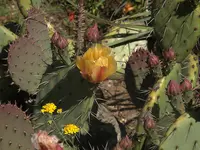
The pads produce showy, bright yellow flowers that can have an orange or reddish tinge near the center, typically blooming in late spring to early summer in its native range. These flowers are important nectar and pollen sources for native bees and other pollinators along the California coast.

Botan icon

Did you know?

In parts of coastal southern California, Opuntia × occidentalis has been used in habitat restoration projects as a structural component of living fences and wildlife-friendly barriers, because its dense, spiny pads deter human access while still offering food and shelter for birds, insects, and small mammals.

FAQs about California Pricklypear

This species can spread steadily through pads rooting where they touch soil, forming wide clumps over time. It is not usually invasive, but in dry, open sites it needs planned spacing and occasional thinning to stay contained.

Grow Healthy Plants with Botan Care

Keep your plants happy and healthy with plant identification, disease detection, and easy care guidance.

Botan plant care app — identify plants on mobile

Explore More Plants